
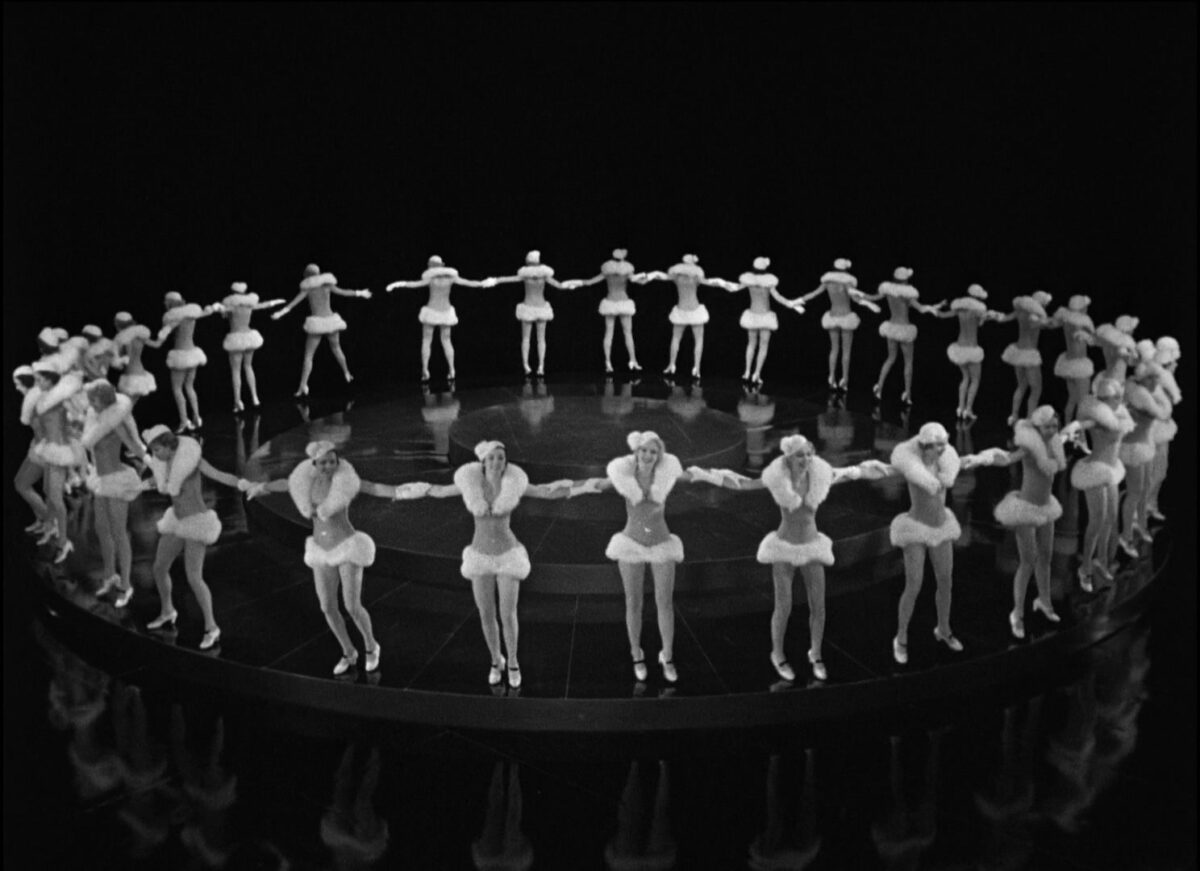
Come and meet those dancing feet
Sometimes movies of great historical import, turning points in the development of the medium, are tough to sit through. Other times they are a delight. Happily, 42nd Street, a film that declared a cinematic future for musicals, is the latter. With 42nd Street, you can feel, practically in real time, the crew trying to sort out how to leverage musical storytelling as synchronized sound matured. Early sound musicals in the first couple years of the 1930s had already done a sugar-rush-and-crash routine with audiences as the “people sing on camera” novelty drew viewers in for a year or so, then quickly bored them as the product was often stiff and unconvincing. And then along comes this Warner Bros. put-on-a-show contraption in 1933, puffing out its chest and insisting, no, actually, we’re here, confident and cinematic.
42nd Street is a movie remembered for some of the 1930s’ most dynamic and exciting musical productions, although its strange structure makes you wait most of the runtime for that glory. For the first 75 minutes, it’s barely even “a musical,” but instead a light drama-comedy about the business of putting on a musical. We get just enough rehearsal-room snippets to keep us enticed before the stunning grand finale architected by the visionary musical director and choreographer Busby Berkeley.
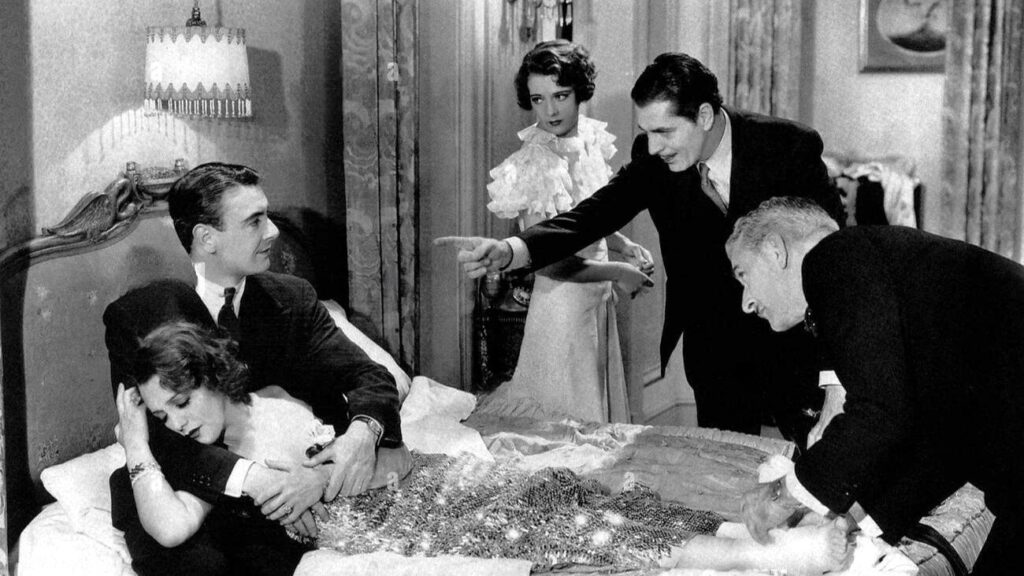
The story is a Depression-era backstage hustle: A ragtag cast and crew prepare a Broadway show (entitled Pretty Lady, and which has no discernible narrative). The show needs to get on its feet, fast, and everybody involved is running some version of a con: some financial, others romantic. The producer Abner Dillon (Guy Kibbee) is an old-school entertainment fat cat who is shameless about using his casting couch to cast and seduce pretty ladies. As the movie pre-dates the Hays code, it doesn’t really bother pretending this story. In fact, the movie’s entire moral universe both frank and devoid of pure villainy. Abner is sleazy, sure, but he’s also kind of a dope, and the whole production machine seems to run on the unspoken agreement that everyone is, at minimum, complicit that he keeps his wallet open without asking questions.
Our human entry point into the saga, and the closest we have to a pure hero, is Peggy Sawyer (Ruby Keeler), a wide-eyed chorus hopeful who gets scooped up into the production’s swirling ecosystem, which is both a meat grinder and filled with normal humans. The movie throws her into the deep end almost cruelly, but she hangs in there with help from the veteran chorus girls (including future star Ginger Rogers) who decide she’s one of them. The film’s ensemble is huge and occasionally hard to track (so many matching hair bobs; so many Betty Boop faces), but the upside is that the film has a real sense of a workplace: not a mythic stage-door fantasy, but a crowded, gossipy, stressed-out operation with their own inner lives.
The secondary protagonist is director Julian Marsh (Warner Baxter), an anxious grump known for getting the job done. But he treats Pretty Lady like it’s going to kill him — because, according to a doctor in the film’s opening, it literally might. Early on, he has this great undercurrent of resentment about authorship: he does more bleeding for the production than anyone else, and it might cost him his life, but the stars are the ones who get the love and headlines. That idea sits in the background like a low hum while the movie keeps busy with light romantic drama, rehearsal chaos, and the backstage pleasure of watching a project teeter on the edge of collapse for an hour-plus straight.
And after that hour-plus, when we finally get the show, is when 42nd Street finally stops being about a musical, and actually becomes one: a revolutionary, reality-defying, almost dreamlike payoff of musical cinema.
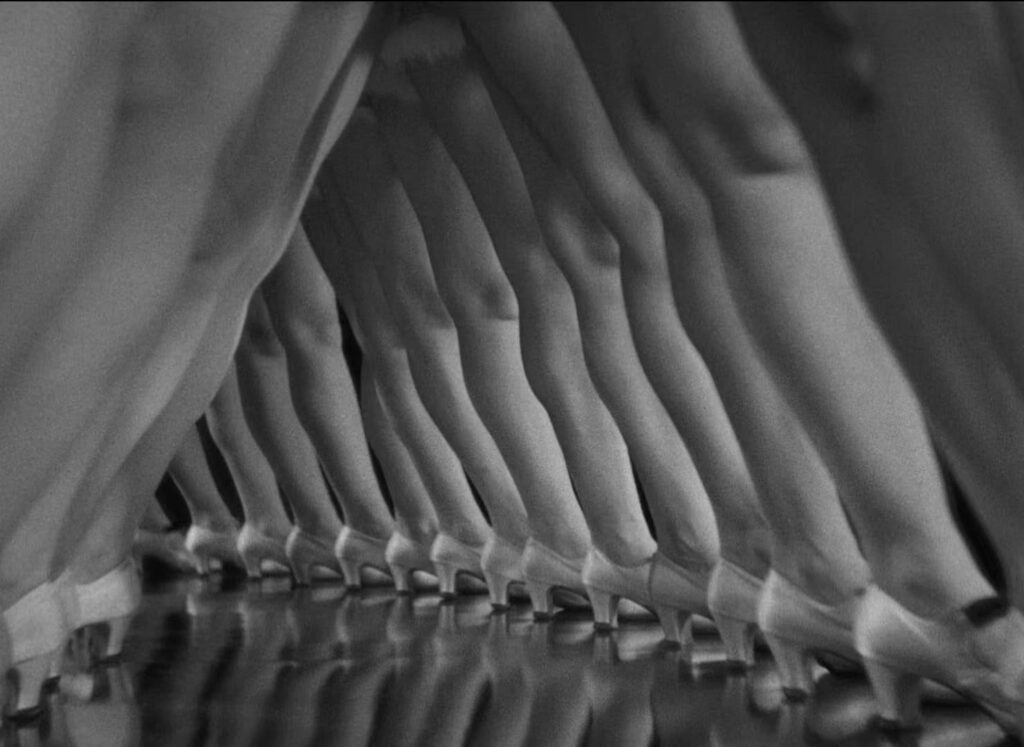
This closing segment, the Busby Berkeley material, is more than a wondrously produced sequence of three great songs. It’s a declaration of independence from the stage. The camera starts doing things that the stage’s flat proscenium would never allow: swooping, soaring, reorienting space so that bodies become geometry and choreography becomes architecture. The sets shift and unfold like mechanical magic tricks as space contracts and expands with each cut. In the movie’s most famous image, a chorus line becomes a moving corridor of sexual thrill and sensory possibility, the camera sliding under a forest of V-shaped legs. The shot is both an achievement both mechanical precision and artistic beauty, and isn’t that the history of cinema’s development in a nutshell?
Lest we forget the humans at the film’s center in all that razzle-dazzle, 42nd Street offers us one last stinger: after all that work, after a show that explodes into the infinite possibilities of movies as a medium through the visionary and tireless work of the director, the praise goes where praise usually goes: to the performer out front, Peggy Sawyer, the face in the spotlight. Marsh hears theatergoers discussing it with a mixture of exhaustion, pride, and quiet defeat. It’s a punchline and an immediate bit of self-reflection for the nascent artform of film: viewers remember the names and faces on the poster, but the medium is really about the synthesis and vision of everyone in the cast and crew putting the material together.
42nd Street is, for most of its duration, a meat-and-potatoes backstage dramedy that is quite charming but risks being a bit by-the-numbers. And then, in its closing act, it explodes into a kaleidoscope of audiovisual musicality and, in the process, ushers movie musicals into their modern form.
Is It Good?
Very Good (6/8)
Related Articles
Dan is the founder and head critic of The Goods. Follow Dan on Letterboxd. Join the Discord for updates and discussion.