
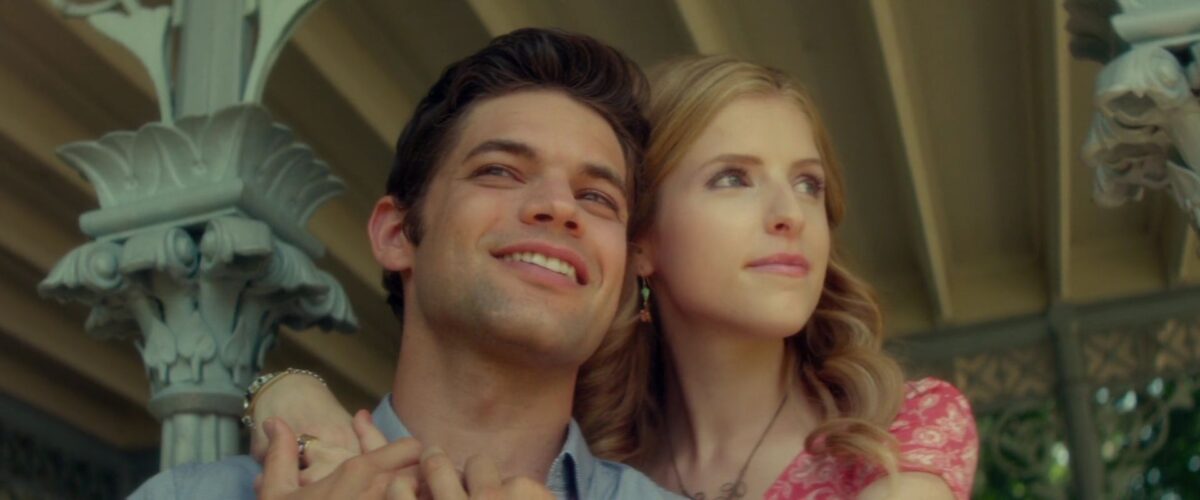
The past-cried tears
In the late ‘90s, musical playwright Jason Robert Brown married an actress named Terri O’Neill. The public record does not have a lot of info on their marriage, but they separated in 2000. It appears to have been an acrimonious divorce, including a non-disclosure settlement forbidding Brown from writing about O’Neill. Brown responded, of course, by immediately writing a musical about his relationship with O’Neill: an emotional, sung-through two-hander about a doomed marriage told through a complicated chronological structure. The show premiered in Chicago in 2001 and eyed Broadway, but O’Neill sued Brown, forcing him to rewrite a few parts, and the show landed a bit later than expected off-Broadway to strong reviews and theater awards buzz.
After its short run, the play became a cult hit on the college circuit. Many of its traits made it appealing for university theater departments: meaty leading roles for actors-in-training; a complex and varied book; a fascinating structure that probably feels galaxy-brained when you’re 19; a small cast (you can stage it with just the two leads and a couple of bit parts); and big feelings of passionate love, ambitious dreams, and devastating heartbreak. College kids eat that stuff up.
In 2013, the Brown spearheaded a brief off-Broadway revival of the show, and it generated enough buzz to earn a film adaptation. Richard LaGravenese helmed the film production, also receiving the writing credit (though it’s by reputation a very faithful adaptation). Even with its lean budget, the film flopped, grossing less than a million in a limited release and not leaving a huge footprint. But the stage show has remained a staple; just a week or two ago, a new London run starring Ben Platt and Rachel Zegler was announced.
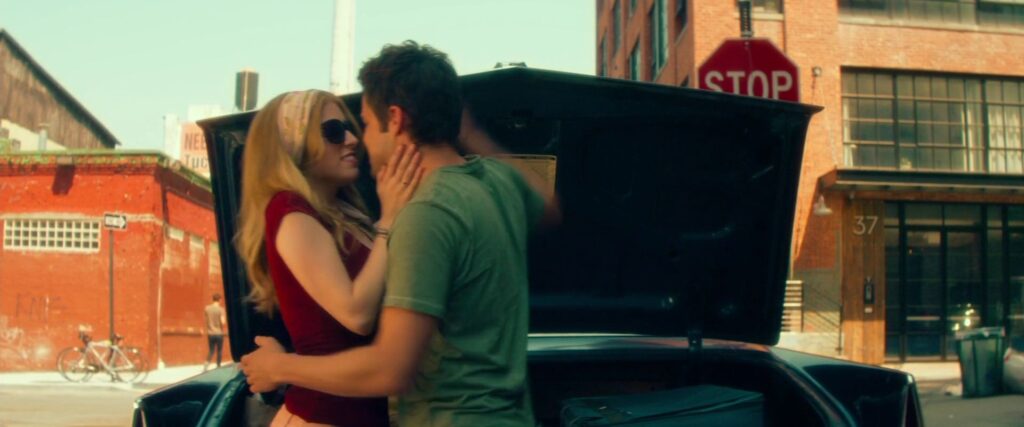
In The Last Five Years, the two protagonists recall their relationship in opposite time vectors, like Memento. Cathy (Anna Kendrick) starts at the end: the relationship is over and she’s left alone with the crater. Jamie (Jeremy Jordan) starts at the beginning: the relationship is new, sparkling, full of possibility, and he can’t believe his luck. The narrative structure is a key part of its hook: Cathy’s songs step backward in time toward the first date, while Jamie’s step forward toward the breakup. They cross only briefly, in the middle, at their wedding, when they sing the film’s only duet.
On paper, this is a clever mechanism for dramatizing how two people can live the same years and come away with incompatible narratives: early joy curdling into resentment, and meanwhile tragedy melting away as the powerful love lingers. In practice, it feels like a lot of wheel spinning and complication to capture what is ultimately a somewhat predictable arc. And all the hopping sometimes gets confusing if you try to keep track of it schematically; I ultimately found it better to treat it as a (500) Days of Summer-style impressionistic collage than a clean narrative.
Even with the overwrought structure, moments of the movie have terrific power. Like La La Land a couple years later, it intertwines the themes of creative fulfillment with romantic destiny. The pair start their relationship as hungry and young. Jamie’s ascent as a writer is swift, almost lottery-like; Cathy’s path is grindy, humiliating, and full of auditions where you know verdict before you get the call from your agent. The story investigates the tension between Cathy’s failure and Jamie’s success, and depicts the ache of watching someone you love succeed while you’re stuck treading water. And it also treats the mirror image sympathetically: Cathy’s grumpiness about her failure makes it harder for Jamie to savor his wins. Your relationship, initially built as “two dreamers against the world” becomes “one dreamer with a spotlight” and “one dreamer staring, blindingly, into it.”
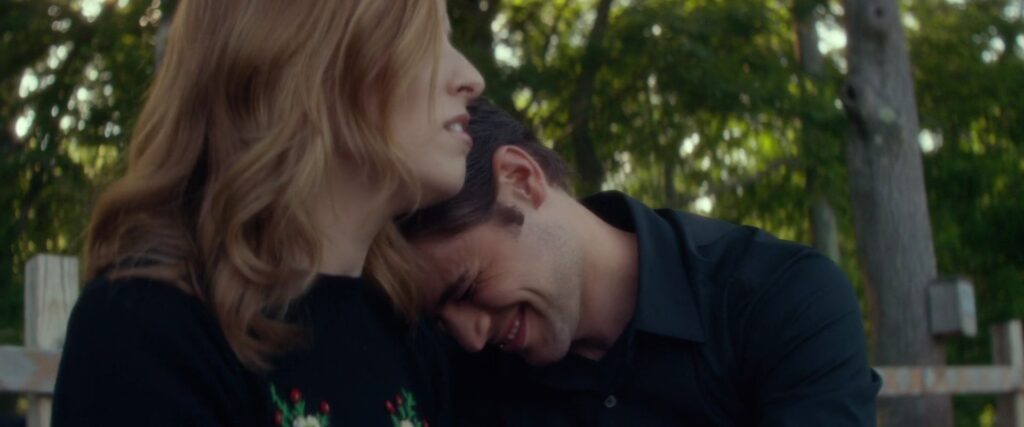
The film also becomes a story about the moral hazards of success and access to power. Jamie is charismatic, talented, and increasingly hard to defend as the years stack up. Cathy, for all her prickly moments and self-pity, remains the story’s emotional anchor, the underdog the story uses to show the pain of being the one who’s still waiting for the phone to ring. Meanwhile, Jamie’s increasing indulgence and distance from Cathy definitely positions him as the film’s villain by credits even though the movie gives us a few moments to sympathize with him.
As a piece of filmmaking, The Last Five Years is very modest and often flat in its staging. LaGravenese (better known as a writer than director) leans too hard makes the film too shaky-handheld, the camera right in the faces of the actors, in a that way many late ’00s/early ’10s indies used as shorthand for authenticity and emotional immediacy. But the film’s modesty can also read as a kind of verité earnestness, the tension between the expressive music and dingy filmmaking lending the film some curious power. I suspect it’s unintentional, but the movie depicts a clash between two levels of reality: the heightened cinematic reality of Broadway actors breaking into song, versus the grittier realism of the lo-fi filmmaking style and the grinding-for-success story.
The film’s music has the trouble that many sung-through musicals do, in that most of the sequences don’t really stand out. The whole experience has excellent, arch emotionality to it, but only a few numbers pop: the pair of opening numbers of totally contrasting moods, “Still Hurting” and “Shiksa Goddess” are both potent. My favorite mid-movie number is “The Schmuel Song,” a standalone number that also offers the most dynamic lighting and presentation of the film.
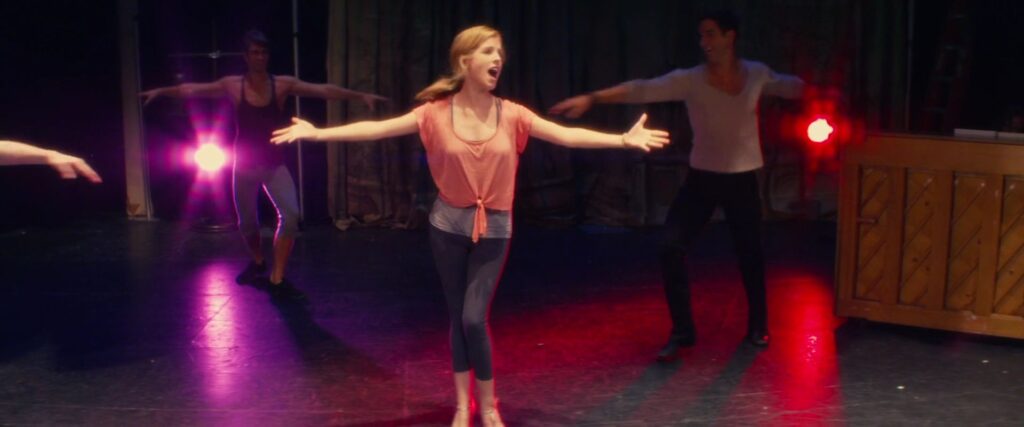
The performances do a lot of heavy lifting. The film comes right on the tailwind of Pitch Perfect when Hollywood briefly realized they had both a terrific screen presence and a delightful singer. (Studios don’t make as many musicals as they should, so she hasn’t had as many opportunities to wield her voice this side of the Trollses.) I tend to prefer her in a comic mode than a dramatic one, but I still enjoyed her here. Jordan, one of the signature Broadway tenors of his era, is a powerhouse of musical charisma, the kind of voice that it makes sense to build a movie around. He’s not much of a screen actor qua actor, but the movie mainly needs him to smile and sing and ossify into nastiness, so he’s a great fit.
The Last Five Years far from a clean knockout. The structure can feel like a brain teaser stapled to a fairly straightforward romantic tragedy, and the translation from stage abstraction to screen literalism occasionally exposes the seams. I imagine on stage the story feels more subjective and Rashomon than it does here. But it’s still a sincere, aching little movie with two committed leads, a handful of sequences that land, and an unusual willingness to let a musical shamelessly—where nobody is dancing, and the songs are mostly just people trying to talk themselves into being okay.
Is It Good?
Good (5/8)
Related Articles
Dan is the founder and head critic of The Goods. Follow Dan on Letterboxd. Join the Discord for updates and discussion.