
Something borrowed, something purple
The Color Purple has been through so many layers of adaptation at this point that it’s practically a game of telephone. Alice Walker’s Pulitzer-winning 1982 novel became Steven Spielberg’s 1985 film, which became a Broadway musical, which became this: a 2023 film that reportedly stitches together the Spielberg screenplay and the stage show’s musical numbers into one Frankensteinian whole.
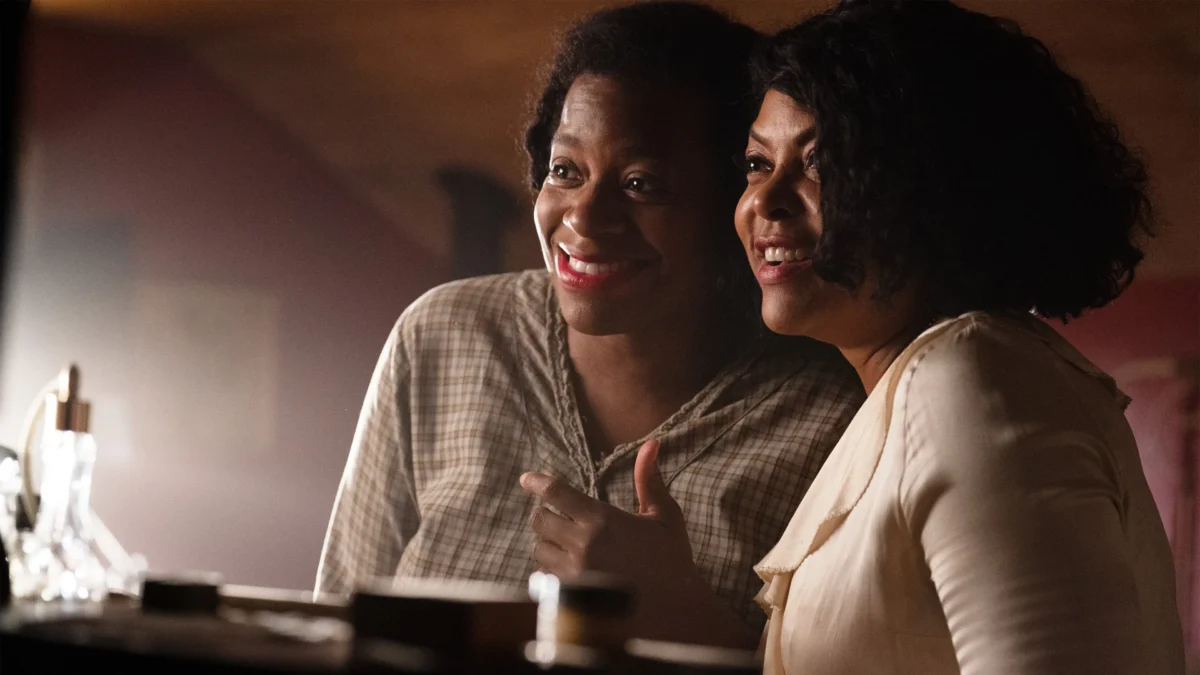
The story follows Celie (Fantasia Barrino), a woman whose life is a cavalcade of horrors from minute one. She’s bearing her father’s children as a girl, married off to the cruel and unfaithful Mister (Colman Domingo), separated from her beloved sister Nettie (Halle Bailey), and ground down by poverty, abuse, and isolation in the early twentieth-century South in a metaphor for the widespread cruelty culture inflicted on Black people. A turning point arrives with Shug Avery (Taraji P. Henson), Mister‘s glamorous lover, who becomes an unlikely source of tenderness for Celie. Meanwhile, Sophia (Danielle Brooks), who married Mister‘s son, gets one of the film’s roughest arcs in a story full of them: she mouths off to a white woman, strikes a white man, and disappears into prison for six years. The plot churns through decades of suffering at a pace that makes your head spin, punctuated by abrupt time jumps.
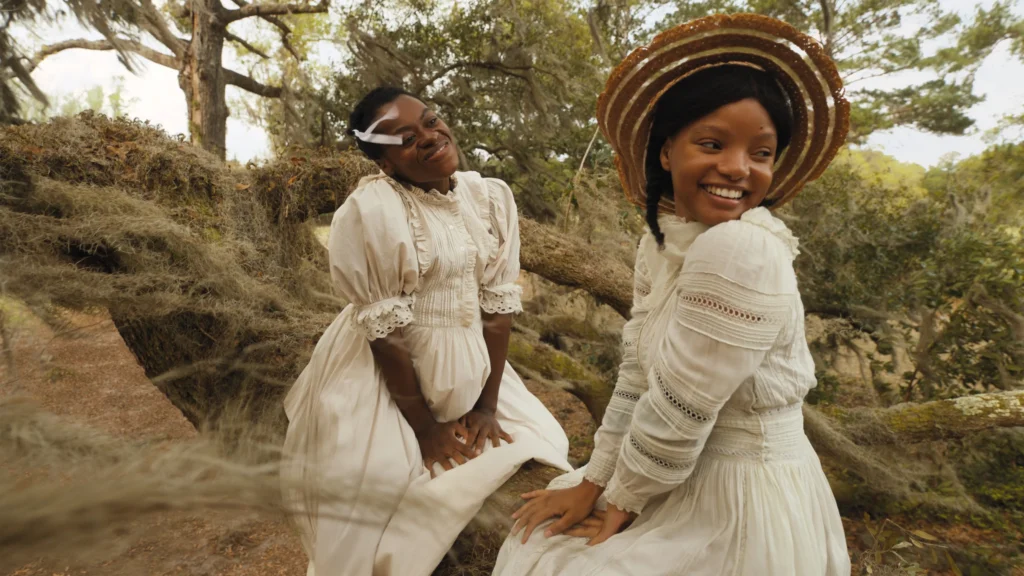
Everyone in this cast is ridiculously charming. Barrino, an American Idol back when that was a big deal (and one of the best talents the show ever discovered), sings with incredible firepower, though she’s a fairly stagey actress. Domingo is one of the most handsome and magnetic screen presences working today, which creates a strange dissonance when his character is supposed to be a monster. Brooks gives the film’s best supporting performance, completely controlling the screen. Henson brings electricity to Shug so you believe she’s a star. It is, on a pure talent level, an outstanding cast. It’s always a delight to soak in these people singing and dancing, because what’s better in life than watching beautiful, charismatic performers do their thing?
The problem is that the material does not align with the medium choice. Musicals are great at heightening emotion, laying out story and character development with kinetic and melodic emphasis. Singing about falling in love hits harder than just watching it happen, because the emotional power of a number is more sweeping than mere dialogue. But The Color Purple is relentless tragedy: incest, domestic abuse, sexual violence, crushing poverty. When you’re processing all of that and then a big choreographed production kicks in, the tonal whiplash is intense. It starts to feel almost cartoonish, not because the performances are lacking, but because the form and the content keep pulling in opposite directions. Spielberg’s 1985 version had some tonal issues, too (slapstick energy rubbing against dark subject matter), and this adaptation exacerbates it.
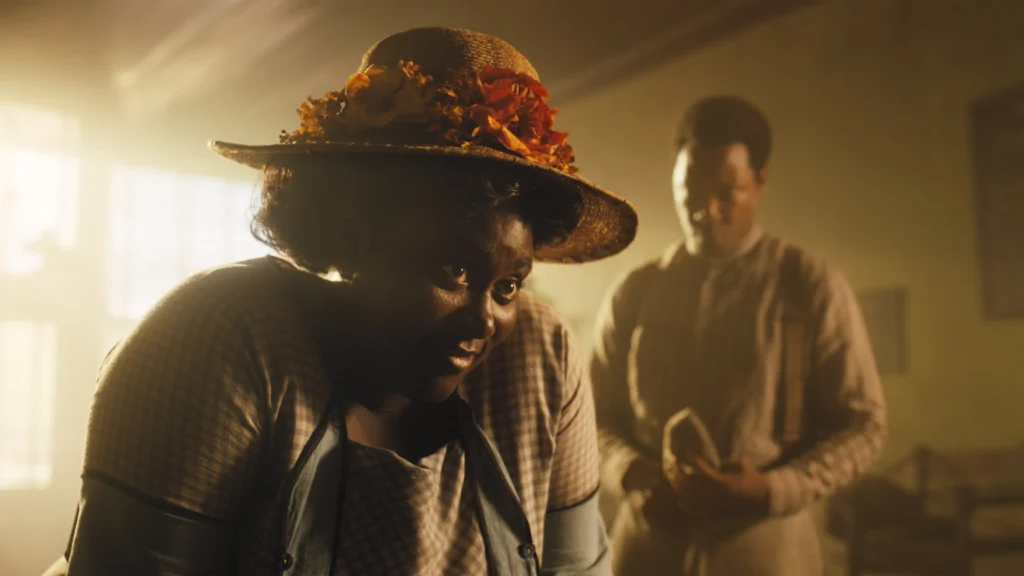
Visually, it’s an ostentatious affair with mixed results. Cinematographer Dan Laustsen, a bold-choice guy fresh off John Wick and Guillermo del Toro’s films, leans into his post-Janusz Kamiński shtick, bathing the interiors in aggressive backlighting that turns an almost entirely Black cast into silhouettes. The exteriors fare much better in the lighting scheme: lush, sun-soaked landscapes with vivid color. Perhaps some of that is thematic, with the inside spaces representing a crushing and flattening of life for Celie. I do admire some genuinely inventive transitions in the editing: a bedsheet flapped across the frame becomes a wipe into the next scene, a reflection in the shot serving as the frontier of a time jump. That’s fun filmmaking.
The final act brings a bunch of plot points: a redemption arc for Mister that’s a little underwhelming, a reunion with Nettie and Celie’s long-lost children, and a big emotional picnic finale that makes the movie’s clearest gestures toward something larger, the hope for an upward trajectory of a community, not just one woman. And it earns some of its catharsis. But the road there is a slog of convoluted plotting and unrelenting bleakness that the musical numbers don’t elevate so much as jerk around.
I will always be grateful for a big, colorful musical made with real talent. And in slices, The Color Purple works. But it adds up to less than it should, a film that can’t figure out its own identity.
Is It Good?
Nearly Good (4/8)
Related Articles
Dan is the founder and head critic of The Goods. Follow Dan on Letterboxd. Join the Discord for updates and discussion.