
Caught in the undertone
I was nine years old when The Blair Witch Project came to theaters, so much too young to see something rated R. But my older cousin did see it, and he told me that not only was the movie not scary, it was actually a funny movie. Many years later I finally saw the film and found it pants-crappingly scary (and I still do). When I asked my cousin about his previous assessment after I saw it, he told me he just couldn’t take it seriously: He never believed the characters were real people, so the idea of being scared by some shaking tents and sticks on the ground was silly to him.
I bring this up because, despite the wildly different scenario and presentation, Undertone falls into the same “suggestion is scarier than showing” discipline as Blair Witch, and I risked slipping into my cousin’s thought process while watching it. It is a flimsy and, frankly, ridiculous horror scenario. Still, I ended up liking the creepy, minimal Undertone. (I refuse to use the all-lowercase stylization of its marketing.)
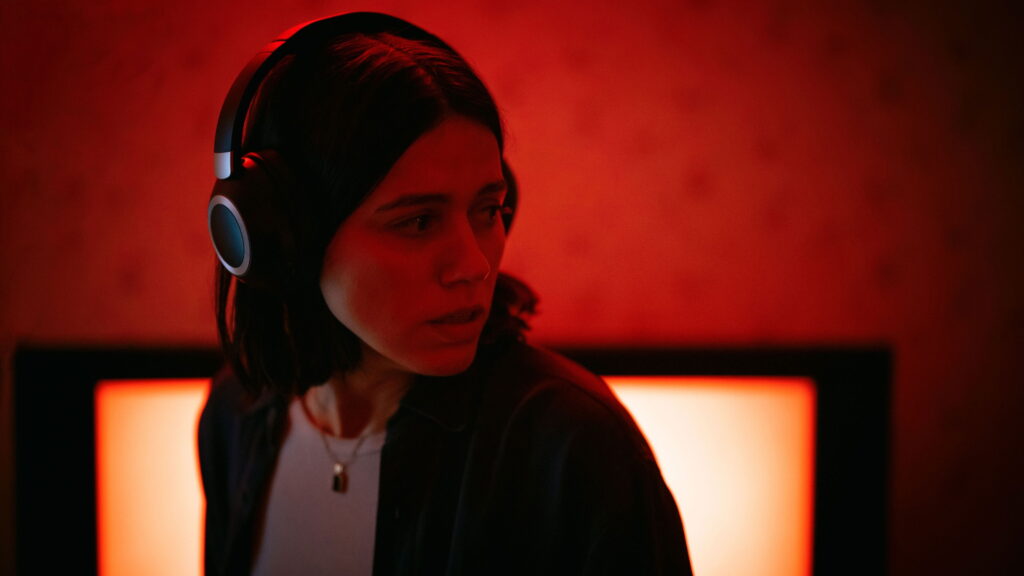
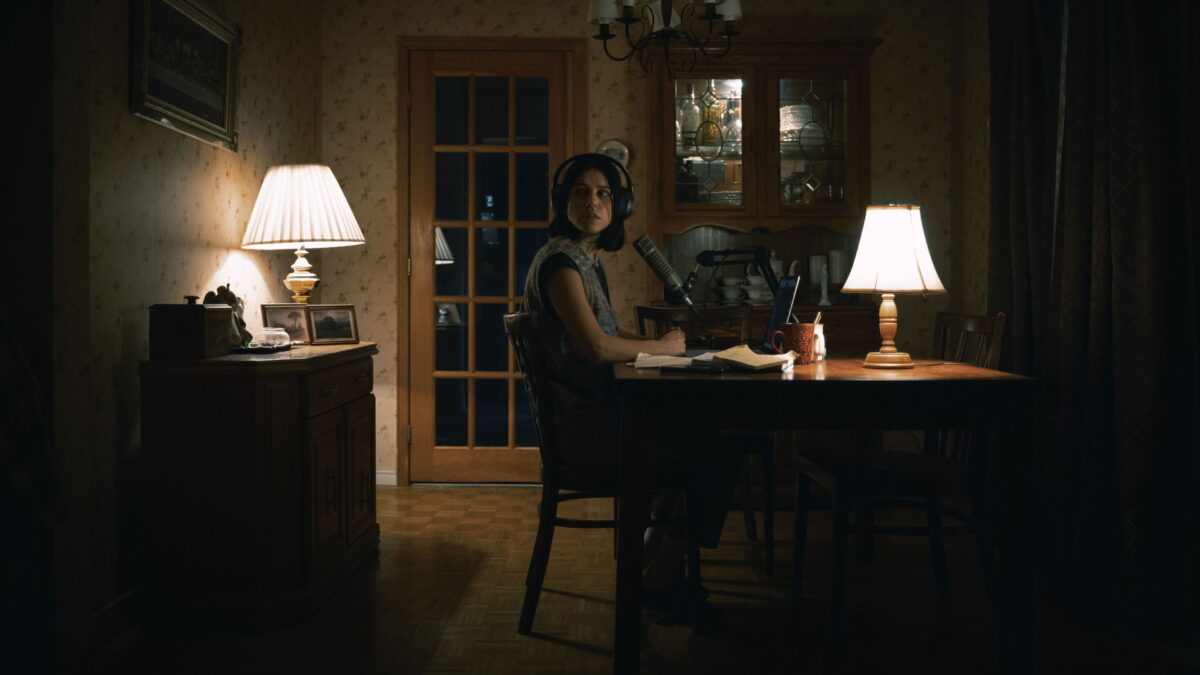
The story follows Evy (Nina Kiri), a podcaster who is the resident skeptic of a podcast investigating reports of paranormal activity, while co-host Justin (Adam DiMarco, here only heard) is the believer. Evy’s in the midst of a dark period in her life following a recent breakup and tending to her dying mother. Evy and Justin record a series of episode digging through audio files recording a couple experiencing a purported demonic possession, when strange occurrences mirroring the audio begin occurring in Evy’s own life. It’s a cute twist on found footage, as the “footage” here is almost entirely audio with reaction shots of Evy’s face. Kiri spends nearly the whole 90 minutes alone on screen, headphones on, while writer-director Pierce Tuason pins inside a single confined space, which he recorded in his childhood home in Rexdale, Ontario.
The reason the movie ultimately works is that it takes its podcast trappings and leans into them, which is to say: the sound design is at the center of the experience, and it is quite good. Undertone’s audio is claustrophobic, layered, unnervingly physical. When Evy slides her headphones on, the mix cleverly simulates the muffled quiet of noise-cancellation, so that whenever something eventually creeps into her audio space, it is muted and disorienting. As she listens to fuzzy recordings, the audio from her headphones and from the happenings around her blur together. I’ve never witnessed horror cinema be so audio-forward before, but it freaked me the heck out.
Cinematographer Graham Beasley does terrific work in support with a minimal, moody visual schema, shooting in an unusually wide aspect ratio (A couple of reviews declare it is shot in something called “BeezVision,” 2.12:1, that I cannot find much info about anywhere). The long, panoramic view of darkness somehow feels more claustrophobic than a square frame would. The camera frequently drifts and pans away from Kiri toward dark peripheral corners of the house, moving more and more and Kiri becomes more frightened herself. It’s a pretty sharp little formal toolkit: visual negative space married to suffocating aural uncanniness, the two reinforcing each other until you’re begging to be let out.
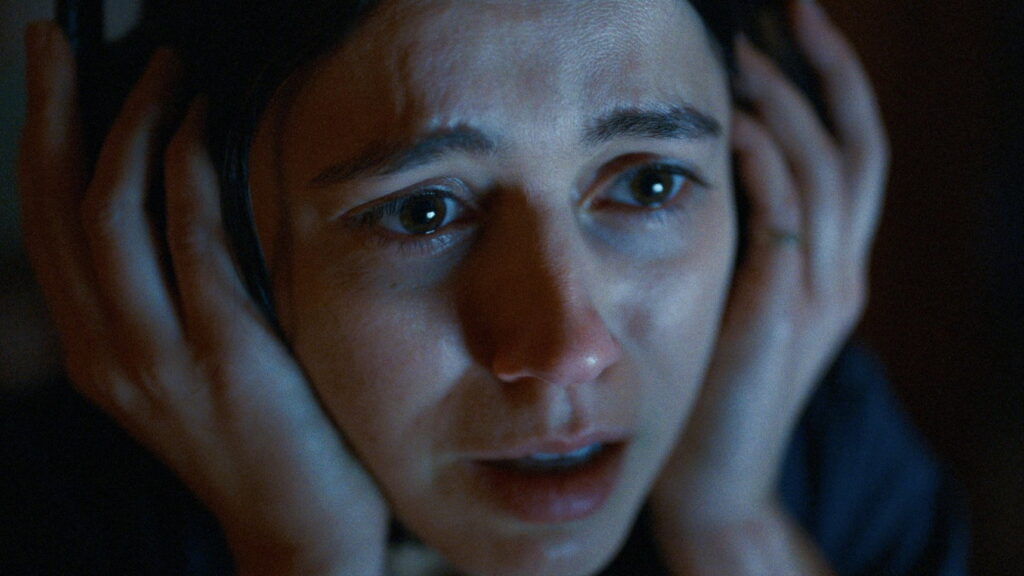
Kiri herself is a real find, too. She has an expressive, pleasant face, which she needs, because she has no scene partner to pair with for most of the runtime. Her slide from rational skepticism to unmoored dread is the movie’s central arc, and she does a nice job with it.
So the mood is outstanding, but the actual narrative setup is flimsy as can be. Undertone has about as thin a story and mythology as any horror movie, even fellow formal-focused works like Blair Witch and Skinamarink. Strip away the atmosphere and you’re essentially left with “say nursery rhymes backwards; summon a demon.” The film gestures toward some potentially rich thematic material: Evy is processing her mother’s looming death while contemplating becoming a mother herself, so the source and destination of life are sort of floating in the air around her… but “gestures” is the operative word. Nothing gets investigated with any depth; it’s all suggestion. And unlike the sound design, suggestion isn’t enough to convey a concept.
The depiction of podcasting is also hilariously off-base: episodes of this show apparently run about ten minutes long, with most of that time devoted to playing other audio. They also let listeners dial in live like it’s a radio show from 1992. (It is, at least, less ridiculous than the podcasting in Dear Christmas, but we ought not set the bar quite that low.) This and the repeated emphasis on nursery rhymes are where the film threatens to introduce mood-piercing goofiness that transforms the gloom to mirth, though it doesn’t slip quite that far.
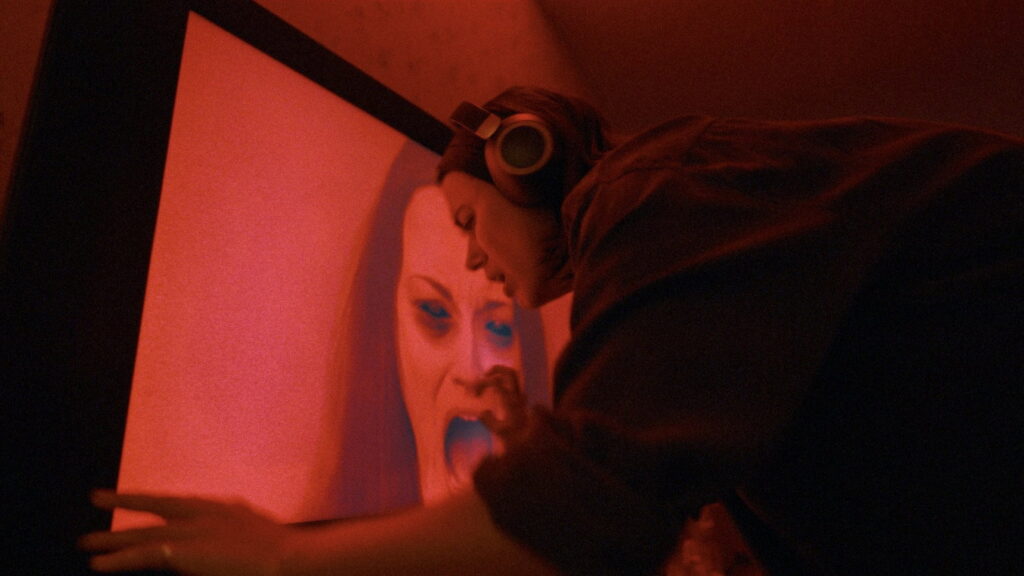
The Paranormal Activity films are the most obvious comparison points to Undertone (appropriately, Tuason has already been hired to make the next film in that franchise), though it’s operating in a similar horror space to the recent and much more radical Skinamarink. Undertone is a much gentler version of that project, audio-first where Skinamarink is image-first, compact and clear where Skinamarink is punishing and recalcitrant. Tuason is working in a mode that’s designed not to alienate, which makes his film less potent, but considerably easier to recommend.
So, in sum, a story that doesn’t survive ten seconds of scrutiny, and a thematic throughline that evaporates on contact. But the craft and care are genuine, the central performance from Kiri quite watchable, and the audio-horror gimmick rewarding. Undertone is a small, confident little creeper that really unnerved me.
Is It Good?
Good (5/8)
Dan is the founder and head critic of The Goods. Follow Dan on Letterboxd. Join the Discord for updates and discussion.