
Cabin fever
Cabin in the Sky deserves to be remembered as more than a curiosity of representation, though that context inevitably shapes how you approach it. This 1943 MGM musical with an entirely Black cast was produced by the legendary Freed Unit (an early iteration of it) and directed by future Best Director Vincente Minnelli in his feature debut. It was meant to be the first in a line of musicals showcasing Black talent at MGM. It ended up being the only one. That’s a shame, because what they put together here is an entertaining Faustian fable with a ridiculously charismatic cast, some knockout musical numbers, and a climax that literally brings the house down.
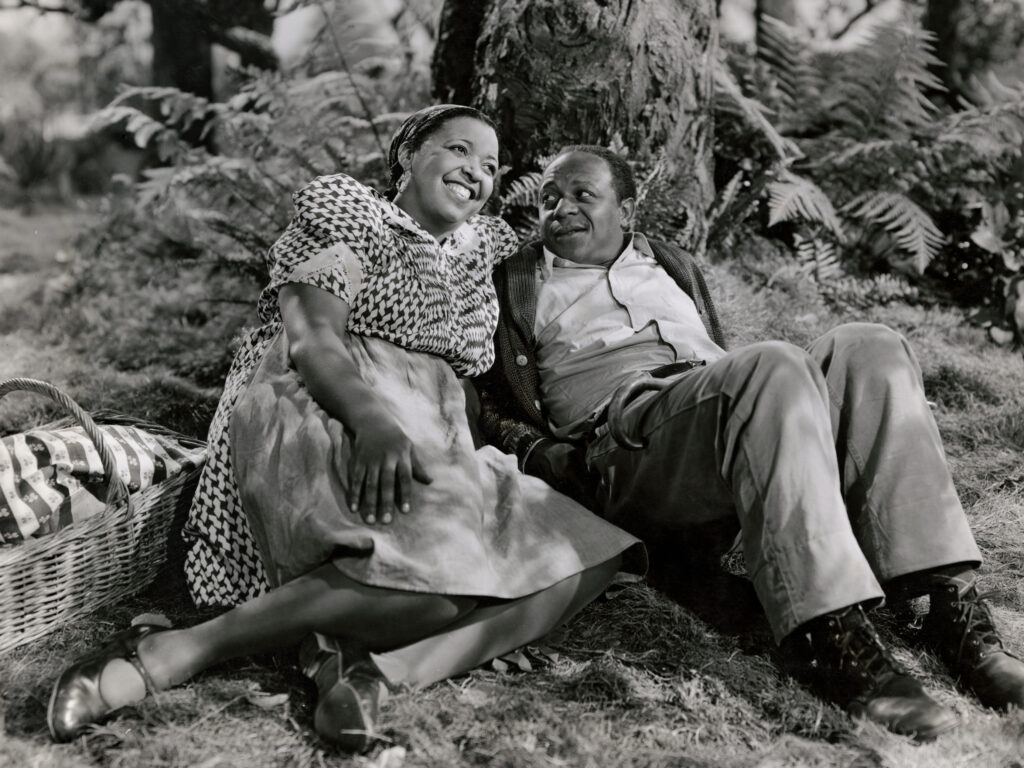
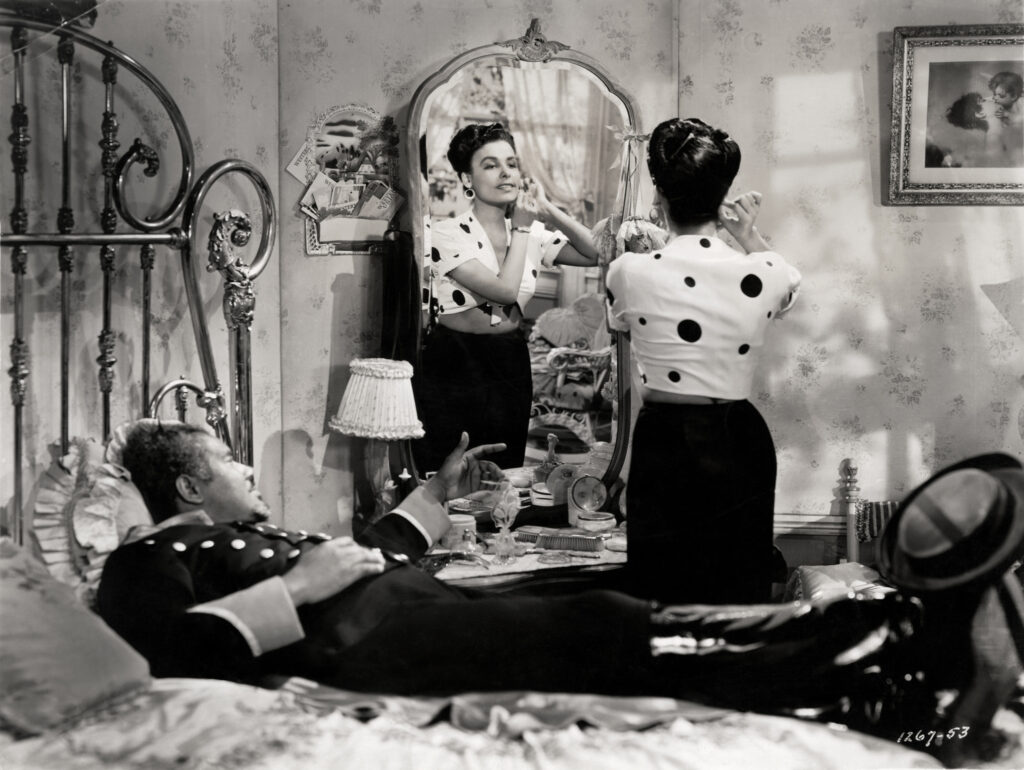
Little Joe Jackson (Eddie “Rochester” Anderson) is a small-town gambler married to the saintly Petunia (Ethel Waters), a woman so devoted to his well-being that you spend half the movie wondering what she actually sees in him. The other half, you spend wondering the same about the smoldering Georgia Brown (Lena Horne), who also apparently has a history with this guy. Whatever Little Joe’s got, it’s not on the surface. (Maybe he just needs to put on a hat and I’d be on his side. The hats in this film are incredible and worth the price of admission alone. Rule of thumb: the more ostentatious the brim, the more villainous the wearer.)
When Joe’s attempt at staying away from dice go awry (some thugs literally tempt him out of a church service), he gets shot during a gambling dispute, and his soul becomes the stakes in a cosmic tug-of-war between the forces of heaven and hell. The General (Kenneth Spencer), a deep-voiced military angel in a truly marvelous – a white drum-major uniform with a plumed hat – negotiates a six-month reprieve and return to Earth. On the other side is Lucifer Jr. (Rex Ingram), sporting Afro hairhorns, wielding an evil cackle so glorious he should have been handed an Oscar on the spot and which he thankfully deploys at least 75 times. Lucifer Jr. schemes to drag Joe back into sin. The deal: wherever Joe’s soul stands in the moral ledger after six months determines his eternal destination.
The angel-and-devil-on-your-shoulder dynamic is played with a lightness that keeps the moralizing from ever tipping into full sermon mode, partly because the villains are so much fun. Lucifer Jr.‘s “Ideas Team,” a boardroom of devil-horned schemers (one of whom is Louis Armstrong), cook up the plan to make Joe rich and let temptation do the rest. The film offers a silliness to the infernal bureaucracy that pairs nicely with the genuine warmth of the earthbound scenes. (It was a nice palate cleanser after the under-thought and over-cooked afterlife in Eternity.)
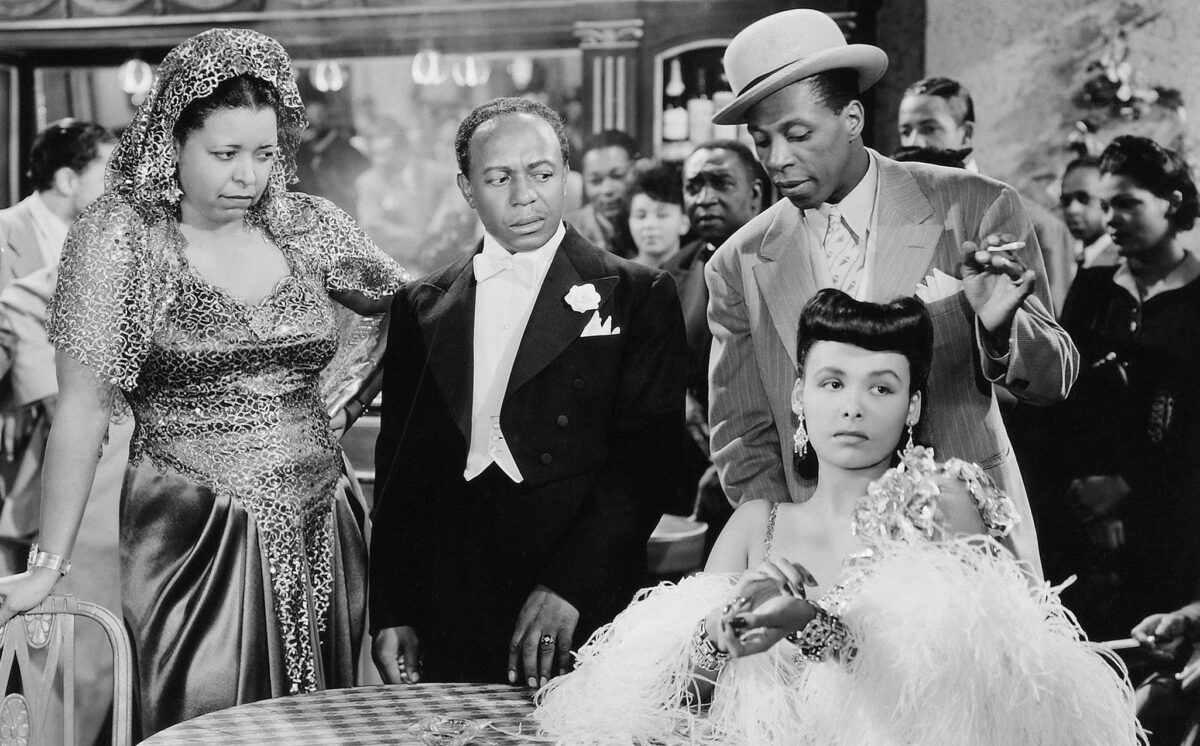
The film does trade in stereotypes. There’s no pretending otherwise when you’re dealing with a 1940s Hollywood depiction of a Black community. But it also gives its characters more dimension than that framing might suggest. Anderson’s Joe is charming and physically gifted: He carries himself with terrific slapstick bumbling for most of the film, then breaks out into some of the slickest dance moves you’ve ever seen when the music picks up. Waters radiates a radiant maternal warmth that never reduces Petunia to a type, and her late-film pivot to jealous provocation at the nightclub is both funny and surprisingly layered, even sad. Ingram is having an absolute ball as Lucifer Jr., and every single one of his reaction shots lands. (His slow emergence from behind a bar in the climax is genuinely one of my favorite bits of comic blocking in any movie I can recall seeing; I was cackling.)
The first half is a smidge stagey and flat. You can feel Minelli building his chops as he translates the 1940 stage show of the same name. But once the action moves to the nightclub in the second half, the movie catches fire. These are the scenes that Busby Berkley consulted on; they have a similar geometric structure and kinetic grace that 42nd Street‘s climax has. The musical numbers build on each other here, with some repeated in different styles to emphasize character arcs. Long, gliding camera takes capture packed crowds of extras and acrobatic individual dancers whose limbs move with an almost inhuman fluidity. Domino Johnson (John W. Sublett) tears up the floor with his cane routine. Armstrong plays trumpet for a bit. Duke Ellington’s band lights up the joint. And the climax, a full-scale tornado that rips the set apart around the actors while a fistfight rages, is a triumph of spectacle that would be impressive in any era. I was basically jumping up and down watching it.
The coda, though, nearly loses me. After all that cosmic drama, the film reveals that most of the story was a vision Joe had while unconscious, effectively undoing the character growth of both leads with a reset-button “it was all a dream” reveal. It’s the one choice that keeps this from its knockout punch. But that nightclub climax is so exhilarating, and the ensemble so uniformly winning, that I can’t hold the finale against the rest of it too much. Cabin in the Sky is a charming, funny, surprisingly rich little musical, and a memorable spotlight on its extraordinary Black cast.
Is It Good?
Very Good (6/8)
Related Articles
Dan is the founder and head critic of The Goods. Follow Dan on Letterboxd. Join the Discord for updates and discussion.