
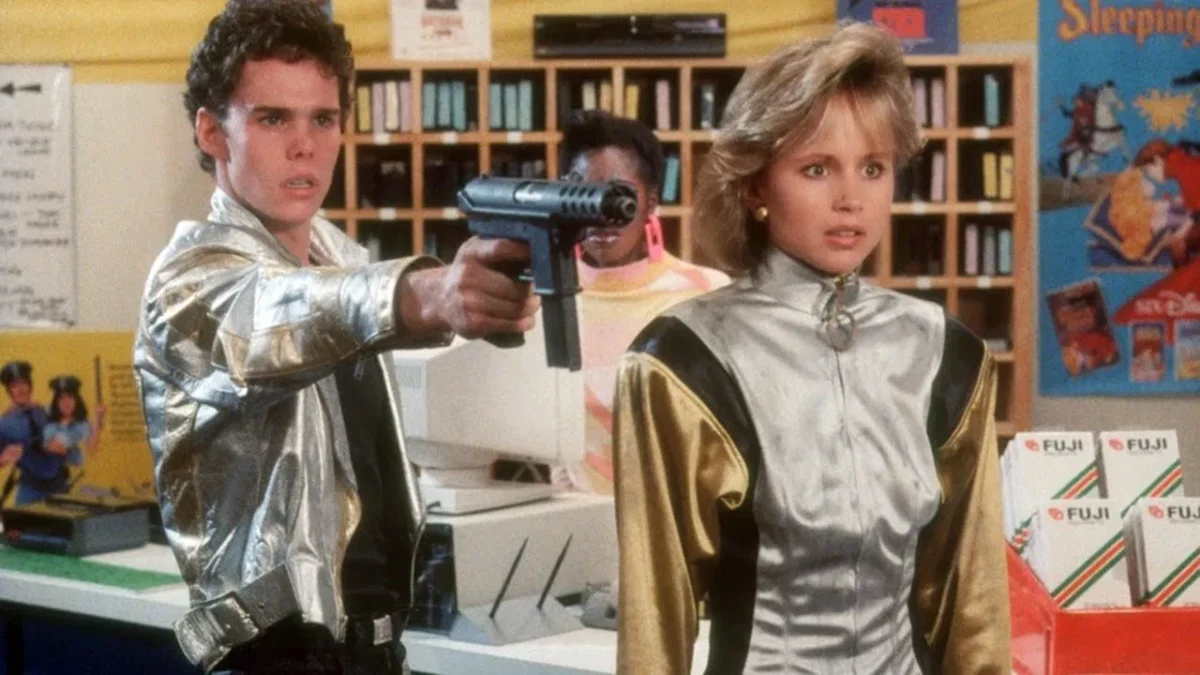
Be kind, control mind
For whatever reason, the 1980s remain an endless well of bizarre and inventive thrillers, the kind that surprise you when you find them playing on cable at 1 AM or on a muted bar TV. Jeff Lieberman is exactly the type of filmmaker this era produced in abundance and then promptly forgot: a writer-director with genuine instincts and a handful of scrappy, weird credits who was largely ignored or dismissed in his time, only to find an appreciative audience decades later through the DVD and streaming pipeline. He’s built a rep as a director whose work rewards the patient crate-digger willing to sift through the detritus of a bygone VHS rental ecosystem.
Remote Control might be Lieberman’s most poetic film in that regard: a movie about a killer video tape that shows up in video stores and brainwashes audiences into killing the people around them. Before long, we learn it was planted there by aliens to brainwash the populace into violence. The aliens embed their signal inside a fake 1950s B-movie (also called “Remote Control”), and anyone who watches it appears in the film and turns into a mind-controlled killer. It is, by any reasonable standard, a ridiculous premise. I found the silliness charming: there’s a campy, lightweight fun to the whole thing that mirrors the retro sci-fi the film lovingly pastiches.
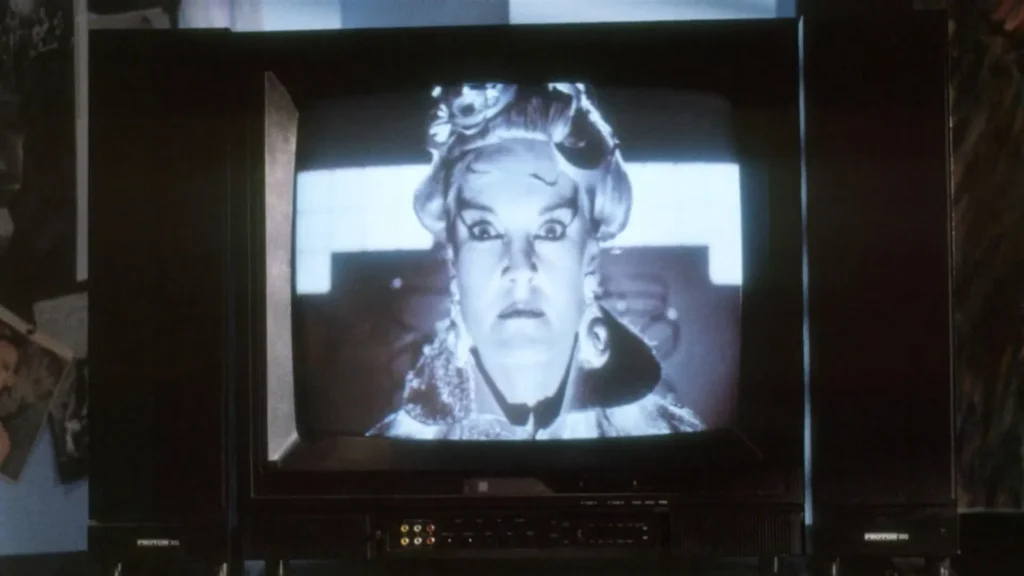
The first half adopts something close to a slasher structure: one elaborate death scene after another, each triggered by a different mind-controlled viewer. The killer keeps shifting based on who’s been watching the tape, which gives the film a propulsive unpredictability even as the individual scenes play out in a similar cadence. The connections to Halloween III: Season of the Witch are hard to miss: a TV screen that causes mass violence, a loopy second half that goes fully off the rails, though the tone is even zestier here than that infamous lark. The Ring was also on my mind: a cursed videotape that dooms you also drives the plot, but Remote Control is never scary.
The black-and-white film-within-a-film sequences are the film’s most interesting visual work. Cinematographer Tim Suhrstedt shoots the fake ’50s footage with period fidelity, and the eerie, anachronistic quality of those scenes gives the movie a texture that occasionally feels flimsy elsewhere. The production design, too, is a singular achievement: a melding of the most extreme 1980s fashion tendencies with 1950s futurism that results in hairstyles and costumes that are buckets of fun. It reminded me of a heightened, low-budget Back to the Future in its production, complete with a pink coupe that feels plucked from a sock-hop parking lot.
The film does have a bit of an identity problem. It is neither fish nor fowl, sometimes playing as a spoof of old-fashioned sci-fi, other times trying to work as a straight thriller more reminiscent of its era, and the result is a quirky tonal mishmash. Lieberman himself has stated the film was doomed by its budget, estimating it needed at least $10 million to realize the concept but working with only $3 million, and you can feel the constraint in the seams. And yet the movie mostly navigates the problem with a light but unflinching chaotic energy, so long as you don’t take it too seriously. I wasn’t complaining about the low budget even in the space age finale sequence.
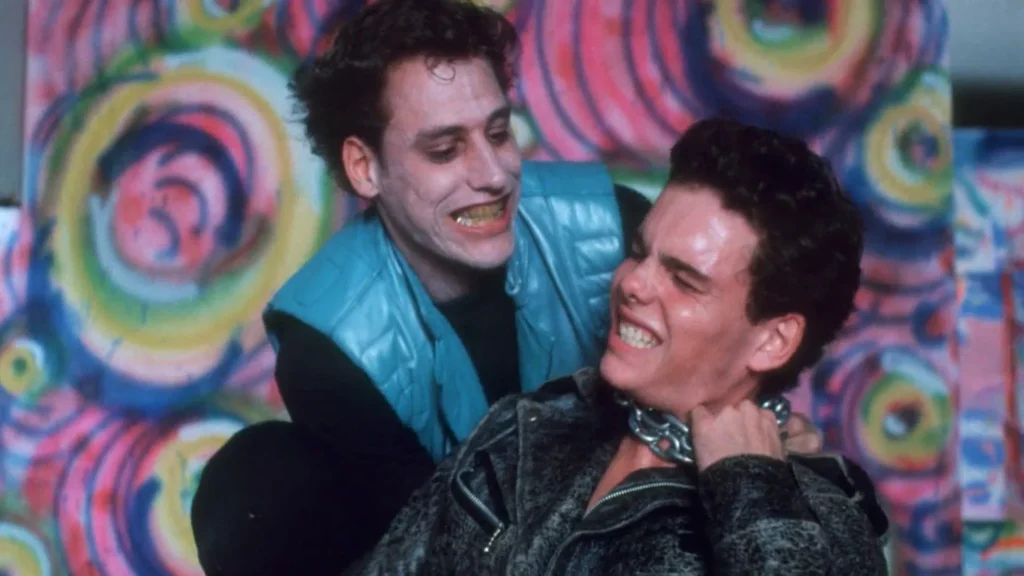
Cosmo (Kevin Dillon) is a functional genre protagonist but not much more; Dillon is handsome and energetic, but not especially charismatic, and the scenario’s brisk runtime and nonstop commotion limit how far he can develop the character. But I did find something fascinating in the film, a definite queer undertone: Cosmo grows close to Georgie (Christopher Wynne) as the walls close in around the alien conspiracy, a modern and controlling media landscape that doesn’t understand him, while his chemistry with Belinda (Deborah Goodrich, cute as a button), the ostensible romantic pairing, is underwhelming by comparison. One treat is an early appearance by Jennifer Tilly, though her quick exit from the film is a genuine waste. Her brief screen time is among Remote Control’s more disappointing missed opportunities.
Following its VHS release, the film essentially vanished for decades before Lieberman secured the rights and produced a limited-edition Blu-ray with a 2K transfer and feature-length commentary in 2013. It has since cultivated a devoted cult following among ’80s genre-movie-heads, and is currently receiving renewed attention for its inclusion in the Criterion Channel’s “VHS Forever” collection and a shoutout in the documentary Videoheaven. Remote Control is a messy, goofy, tonally confused little movie that has more personality in its production design alone than most polished studio product. It’s the kind of film that justifies the crate-dig.
Is It Good?
Good (5/8)
Dan is the founder and head critic of The Goods. Follow Dan on Letterboxd. Join the Discord for updates and discussion.