
Treguna Mekoides Trecorum Satis Dee
After Walt Disney’s death in 1966, the studio rifled through its development pile for projects that could keep the machine running, and what they found was a property originally acquired as a Mary Poppins insurance policy: an adaptation of Mary Norton’s novels about British children having magical adventures with a peculiar woman, optioned years earlier just in case the Poppins rights fell through. They didn’t, of course, so the Norton books sat on a shelf until the studio needed them. With the massive success of Mary Poppins, and few other ideas for what to do in the wake of Walt’s death, Disney got the band back together hoping to strike gold again. Writer Don DaGradi returned, pulling from two of Norton’s books, The Magic Bedknob and Bonfires and Broomsticks, into a screenplay that smushed the books’ stories and titles together. David Tomlinson, who played Mr. Banks, returned in a larger, goofier role. Director Robert Stevenson joined, and once again applied a blend of live action and animation, with the Sherman brothers penning a bunch of originals to turn the film into a musical. By nearly every metric of production DNA, Bedknobs and Broomsticks is a Mary Poppins knockoff. And while lightning doesn’t entirely strike twice, Bedknobs and Broomsticks remains a delightful achievement of craft and weird ambition, with an absolute stunner of a finale.
The setup is darker than Poppins, which both clouds the carefree tone and increases the stakes. It’s 1940 in England, the Blitz is on, and three orphaned children are evacuated from London to the countryside, where they’re foisted upon Eglantine Price (Angela Lansbury), a spinster studying witchcraft through a correspondence course. Her master plan: become powerful enough to help win the war. It’s an absurd goal stated with total sincerity, and Lansbury plays it with a prim, no-nonsense resolve that makes you want to follow her into battle against the Third Reich. The WWII backdrop creates a tonal juxtaposition with the whimsy that shouldn’t work, but it ultimately gives the story a clarity that Poppins sometimes floats above. In short, you’ve got actual dangers to survive and villains to conspire against.
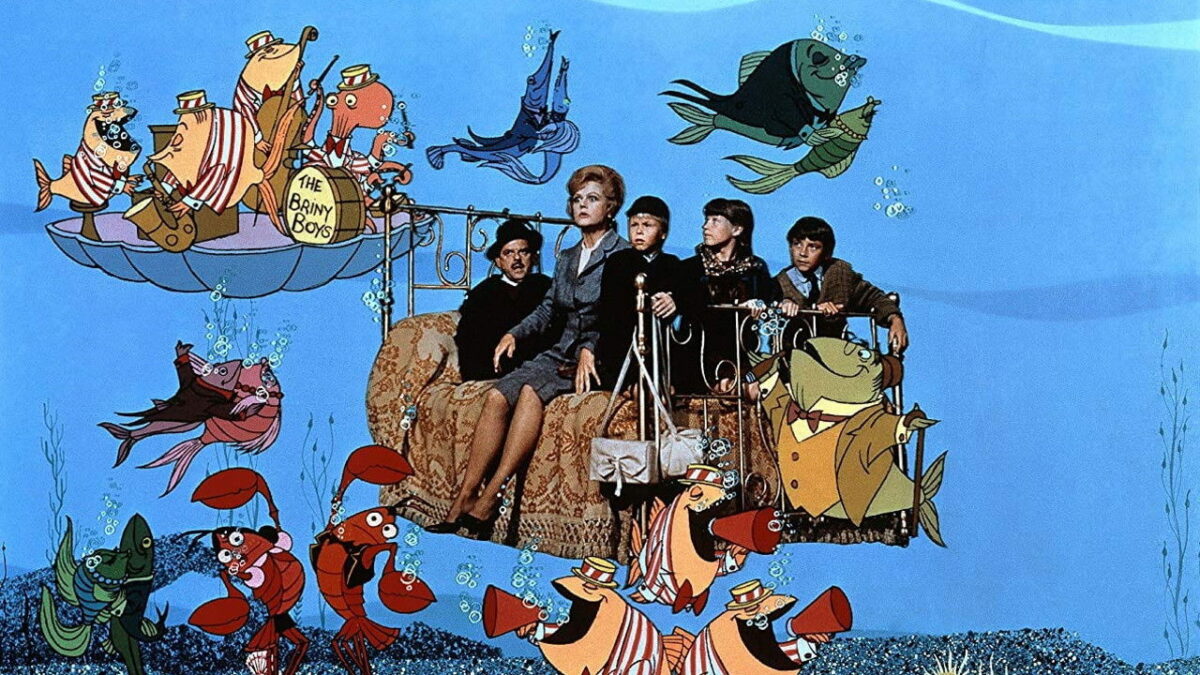
Where Bedknobs stumbles is in its middle-act structure, which plays like a carrot-on-a-stick fetch quest that would make The Rise of Skywalker blush. Price tracks down the con-man professor who runs her magic lessons; he’s Professor Emilius Browne (Tomlinson), a bumbling street magician who didn’t realize his hawked material contained real spells. Alas; half of the spell she wants is missing, so they visit the Bookman, a bookseller who carries himself like a mob boss (genuinely funny). One his books points them to a magical island that happens to be animated, which requires an extended detour including… a soccer match? And still they’re shuffling around for the next MacGuffin. It’s a thing to find a thing to find a thing, and the connective tissue between set pieces doesn’t have the organic flow of the similarly episodic Poppins, where every sequence belonged exactly where it was.
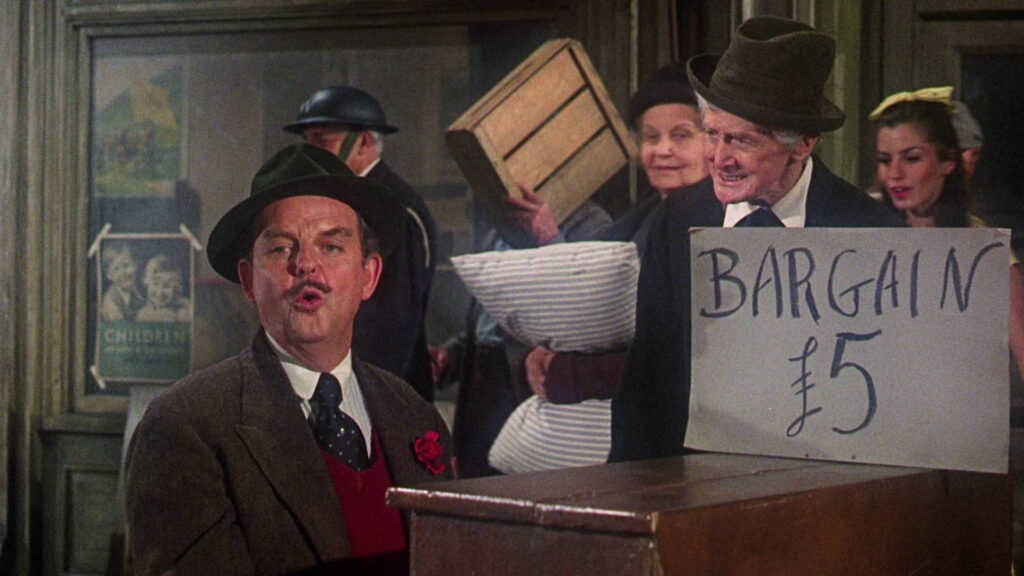
The Sherman Brothers songs, meanwhile, are strong though inevitably sound a bit like the Poppins B-sides. The tunes and wordplay remain sharp, even sophisticated, especially in “Portobello Road,” a wondrous and sprawling number showcasing the many cultures of the British Empire converging in a London market. Its elaborate production would be the clear standout scene of the film if not for the grand finale.
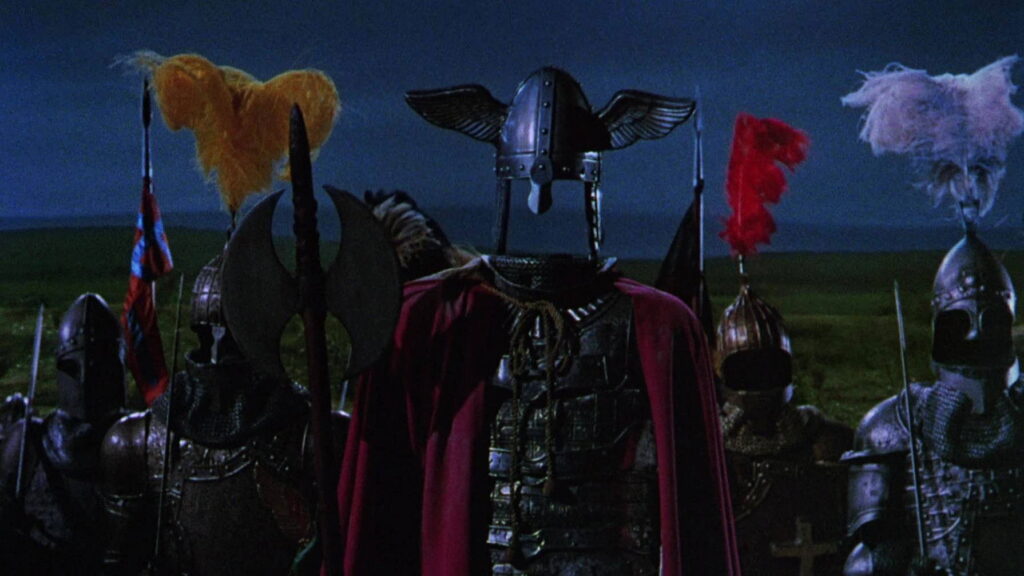
The climax earns back every minute of wheel-spinning that preceded it. Price finally masters the spell she’s been hunting for, Substitutiary Locomotion, which brings inanimate objects to life. When Nazis arrive, she casts it on a military equipment museum. What follows is one of the great sequences in Disney history: the suits of armor rise from their pedestals and march against a German commando raid on the English coast. A whole lineup of living weapons spanning centuries of British warfare charges down the villains: Cavaliers and Roundheads fighting side by side, disembodied horse armor charging with lances, a seven-foot executioner’s suit emerging from the darkness. A military drum beats itself to set a rhythm for the charge. The practical effects are astonishing; the shadows alone feel impossible, each individual item given space and heft, defying green-screen flatness. The entire sequence plays like a reverse D-Day invasion filtered through a child’s imagination of what war looks like, funny and frightening in equal measure. When Price gets blasted off her broomstick and the armor deflates like punctured balloons, it’s creepy and beautiful and exactly perfect as a grace note.
Bedknobs and Broomsticks will always live in the shadow of its older sibling, and that shadow is partly self-imposed: You can’t reassemble the same creative team to build the same kind of movie and then ask people not to compare. Some of the whimsy doesn’t land with the same magic and instead feels cloying. The structure meanders. But the overall impact of the film is quite strong: the effects are remarkable, the shenanigans pleasant, and the music enjoyable throughout. Lansbury is no Julie Andrews, but still a delight and more idiosyncratically British. They don’t make them like this anymore, and they barely made them like this then.
Is It Good?
Very Good (6/8)
Related Articles
Dan is the founder and head critic of The Goods. Follow Dan on Letterboxd. Join the Discord for updates and discussion.
3 replies on “Bedknobs and Broomsticks (1971)”
I’ve said it before and will say it again: MARY POPPINS is Great, but I love BEDKNOBS AND BROOMSTICKS far more.
If nothing else, it is deeply amusing to imagine Doctor Henry Jones Junior showing up to try working out what the HECK just happened after Miss Eglantine pulls out all the stops and being just smitten.
I can respect the take even if I’m not there with you. My podcast co-host liking Bedknobs more than Poppins is actually why he assigned me to watch it in the first place!
Different strokes for different folks!🙂