
It's a cruel summer
It takes a certain intestinal fortitude to be a true coming-of-age movie die-hard. To love the genre is to willingly relive the most humiliating stretch of once’s life: the hormones, the unending string of bad decisions, the social pratfalls you still wake up thinking about fifteen years later. (Okay, fine, twenty years later.) Many of the best entries don’t soften that; they take the full brunt of second-hand embarrassment with pride. Griffin in Summer lives very much in that vein — a queer theatre-kid cringe comedy that’s constantly daring you to look away and then rewarding you for sticking it out.
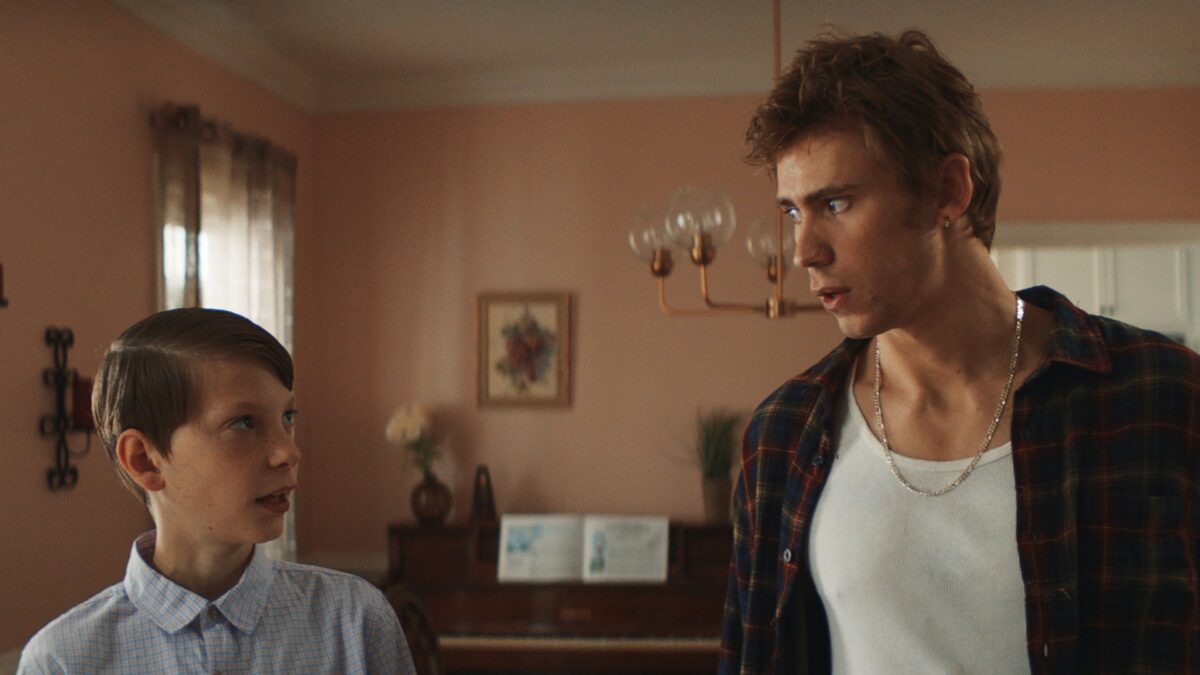
Fourteen-year-old Griffin Nafly (Everett Blunck) is an aspiring playwright in a drab suburb, dreaming of his future in New York while his real life falls apart. His mom Helen (Melanie Lynskey) is slogging through a messy divorce from Owen’s dirtbag dad, material that Griffin strip-mines for his new play, a hilariously overcooked divorce drama (“Who’s Afraid of Virginia Woolf meets American Beauty” he brags) mounted in the family garage. His friend Kara (Abby Ryder Fortson) agrees to direct, but she also has a new boyfriend and out-of-town summer plans, which only sharpens Griffin’s sense that the world is moving on without him.
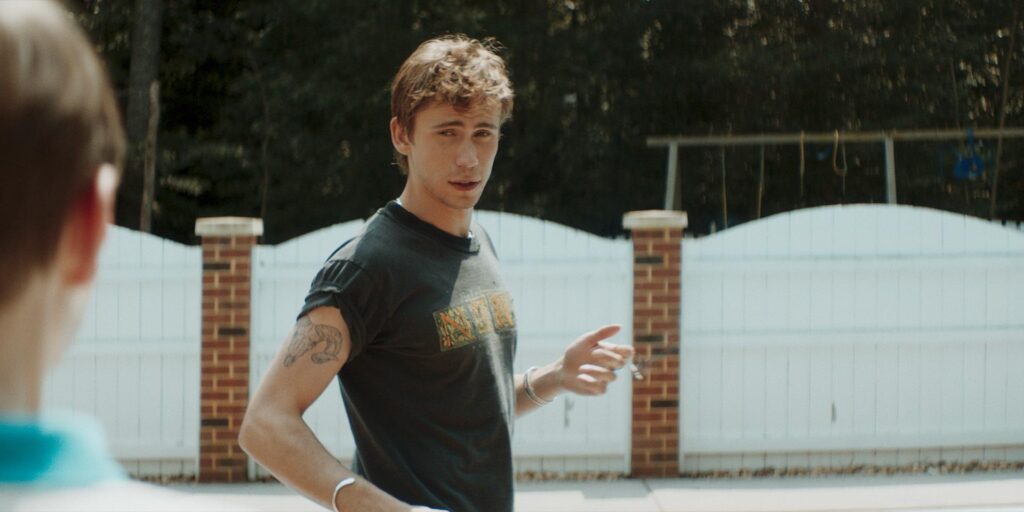
In comes Brad (Owen Teague), the handsome twenty-something handyman hired to fix the backyard pool, whom we in the audience immediately clock as a burnt-out would-be actor and possible cautionary tale for Griffin’s future. Griffin, instead, just sees the dreamiest and deepest man in his little hometown. Griffin offers Brad access to the liquor cabinet and a steady stream of flattery. He also tries to drag Brad further and further into his play and his life. It should not shock you to learn this culminates in some catastrophically bad decisions and awkward scenarios.
Nicholas Colia, a debut director and screenwriter, understands the theater-kid psyche with almost unnerving precision. Like 2023’s Theater Camp, Griffin in Summer pokes at the way young drama nerds can position themselves as the most emotionally attuned people in the room while also being the most narcissistic. Griffin is constantly insisting he’s “in touch” with the adult pain around him, then transmutes into misguided posturing that shows no self-awareness. Griffin is hard to spend time with at moments, but the movie never turns him into the villain; it lets us see the big, bruised heart underneath his self-possession.
That balance is what keeps the movie from tipping into pure mortification porn. Many of the situations are skin-crawlingly uncomfortable — Griffin’s impulsive crush on Brad, his hilariously misbegotten play script, Brad’s aloof pretentiousness — but Colia treats it all with a kind of rueful tenderness. The film is honest about how wildly out of line Griffin’s behavior can be while still remembering that he’s fourteen, desperate, and improvising adulthood based on half-understood turbulence around (and inside) him.
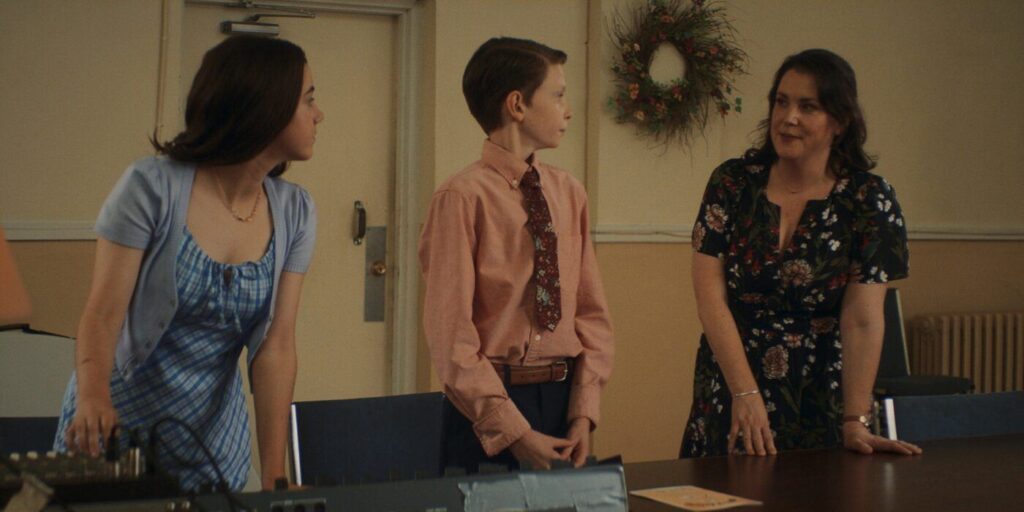
The cast is a huge part of why this works. Blunck is absolutely fearless as Griffin, riding right up to the edge of intolerable and then finding the tiny, wobbling note of vulnerability that brings you back. I stopped seeing “a solid child performance” and started seeing a kid so pressurized in his own head he might spontaneously combust, so, kudos, Blunck. Lynskey, one of the warmest screen presences of her generation, makes Helen a heartbreaking but sympathetic figure. Teague absolutely nails a complicated character, caught in himbo limbo between wandering dreamer and loser; Brad is just profound enough and just handsome enough that Griffin’s worship makes perfect, panful sense. Fortson continues her run as one of the most grounded teen performers around (see: Are You There God? It’s Me, Margaret.), giving Kara a patience and self-respect that the movie clearly admires even as we detect her own arc and growth happening in parallel. Kathryn Newton has a small, astonishingly funny performance as Brad’s girlfriend that is so well-developed in two scenes that I want to watch a whole movie about her.
Underneath all the squirming is a classic “let’s put on a show” narrative. Griffin’s play is his attempt to exorcise basically everything at once: his anxiety, his first real romantic obsession, his parents’ toxicity. Colia makes a smart choice by refusing to declare the play either an unmitigated trainwreck or a secret masterpiece. It’s obviously the work of someone who has something real to say but insufficient wisdom or expertise to say it. That in-between space is one of the truest depictions of youthful artistic yearning I’ve seen in a while.
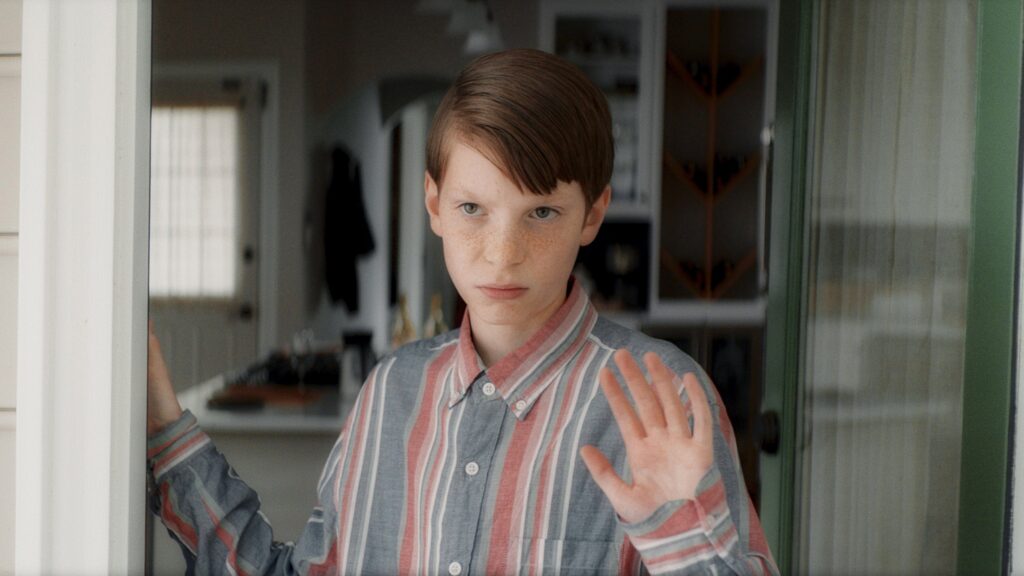
Formally, Colia mostly eschews art-film flourishes or stylization — critics have called this Wes Anderson-like, but that’s more in sarcastic dramedy mood than in fussy visuals. The movie has the bright texture and pace of a single-camera sitcom: clean coverage and editing, a punchline never too far away. Calling out its legible simplicity might sound like a knock, but it’s not at all. Its look and mood honestly helps make Griffin in Summer a breath of fresh air: The world needs storytellers that refuse to compromise on comic tone while still depicting dramatic material.
Griffin in Summer doesn’t nail every gag; a few of the broader bits feel like they belong in a different, edgier movie that the film (thankfully) always pulls back from becoming. But as a queer coming-of-age story about getting carried away with your own dreams, it’s remarkably assured. It understands that adolescence means some mistakes must be made first-hand to be learned from for our souls and selves to be properly forged. That’s why we gluttons for coming-of-age stories keep signing up for the discomfort: we’re chasing that same affirmation Griffin finally earns, that the future might be a little brighter than today.
Is It Good?
Good (5/8)
Dan is the founder and head critic of The Goods. Follow Dan on Letterboxd. Join the Discord for updates and discussion.