
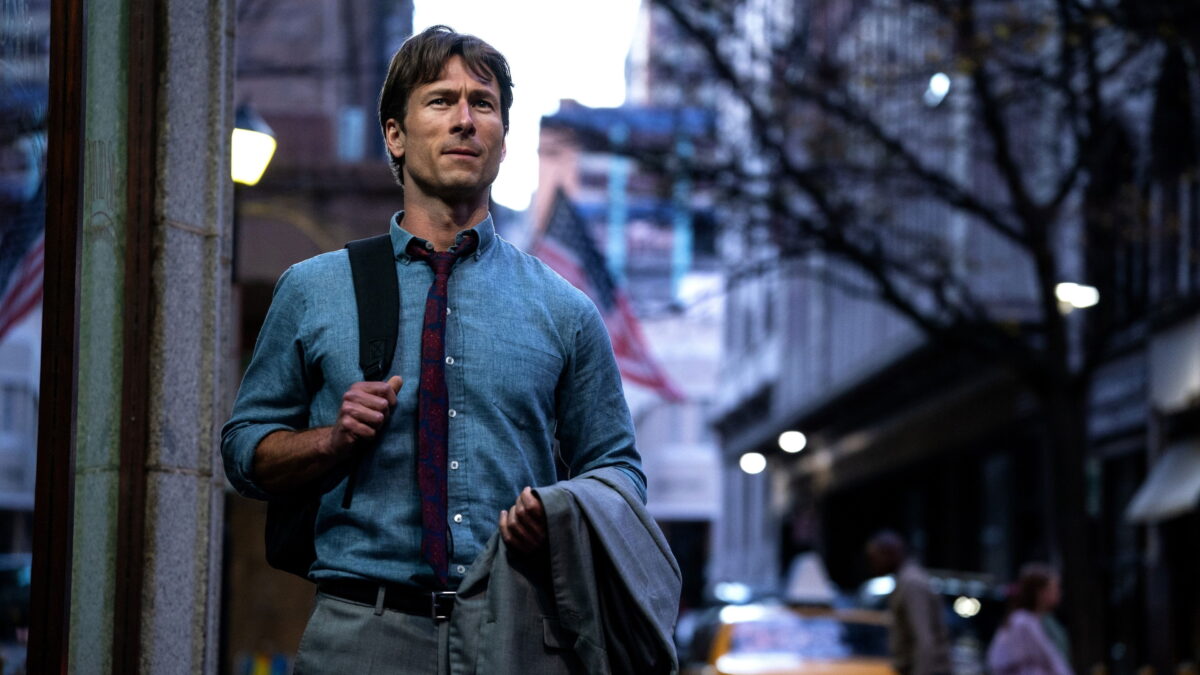
Kind hearts and corporate deaths
It is impossible to watch How to Make a Killing without thinking about Hit Man. Once again, Glen Powell plays a charming nobody who stumbles into a string of corpses and a subsequent moral identity crisis, in a movie that bounces between thriller, comedy, and overcooked character sketch. Once again, he carries the whole enterprise on sheer wattage with a scintillating female costar he shares great chemistry with.
But the main reason I kept thinking of Hit Man is remembering what my dear friend Nate had to say about that film, and about modern movies in general, which is that too many of them now feel compelled to march up to the audience, grab us by the lapels, and explicate every theme and narrative implication in fine, humiliating detail. How to Make a Killing is tremendously guilty of that sin. It is, frankly, the single largest mark against an otherwise delightful little yarn, a throwback crime caper with some excellent casting and fizzy genre energy. But in case it wasn’t exceedingly obvious from roughly the two-minute mark that this is another screed against the dangers of unrestrained capitalism, Powell’s voiceover will be happy to clarify.
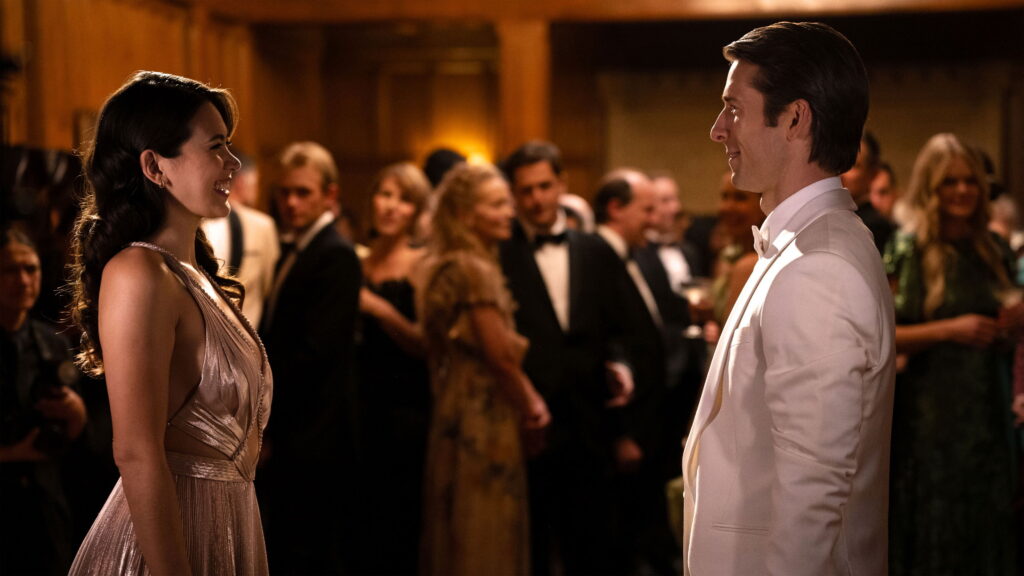
The scaffolding here is a loose modern reimagining of the beloved 1949 Ealing classic Kind Hearts and Coronets (more technically, adapted from the same 1907 source novel by Roy Horniman), transposed from Edwardian England to contemporary New York. Our Cary Grant stand-in is Powell’s Becket, who narrates his own story to a prison priest four hours before his execution. The thematic target is the capitalistic myth of meritocracy, and rendering the kind of exploitation required to become wealthy as murderous violence is a sound and fun concept, albeit one explored by a hundred films of this ilk the past ten years.
The cast is overall quite fun: Jessica Henwick is just tremendously likable as the romantic interest, and comic actors Zach Woods and Topher Grace hold up well next to the likes of Ed Harris. But the affair is entirely led by Powell, who is doing a little bit of everything these days. He’s good here, though almost on autopilot; I tend to like him best when he gets pushed into confronting that fact that he’s this charismatic but also a dweeb at heart (see: his Linklater pairings). But he achieves that goal of getting you to root for a morally bankrupt protagonist.
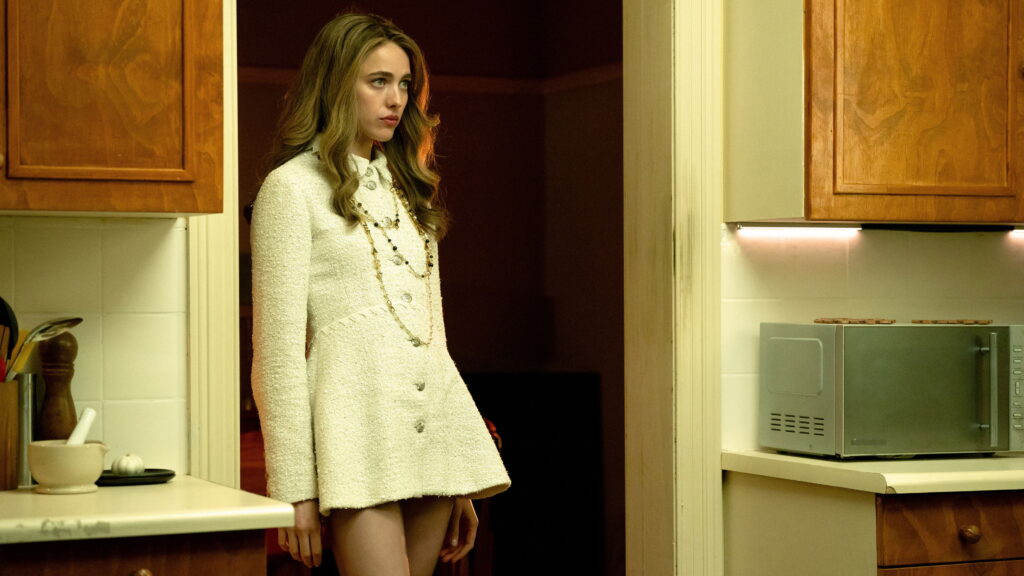
Even more of a no-brainer casting win is Margaret Qualley as femme fatale Julia Steinway. Holy moly. She plays a devil-on-the-shoulder with predatory vivacity and sex appeal. Every scene she’s in immediately ensures you’re paying attention. She has more authentic menace in her poses and blocking than the film’s actual murder set pieces manage on average.
Director John Patton Ford has solid grasp of the material, with a steady tone and pace. He and cinematographer Todd Banhazl get a tactile, vintage look shooting on 35mm film, with Cape Town subbing, not always convincingly, for New York. It stands out from streaming fodder in a sea of digital sludge, at least. I quite like Emile Mosseri’s jazzy, playful score that sets a pretty lightweight tone. Unfortunately, Ford’s direction fails to escalate very much during the murder sequences, which should crackle with dark-comic glee, but instead just kinda happen. The lack of escalation into violence almost feels intentional, like echoing the idea that Becket stumbled into killing and it felt natural, but even if that’s true, it’s still not quite as fun to watch as it should be.
That’s really the problem in miniature: How to Make a Killing is a movie that never quite pops when it ought to. It’s not sharp enough to be an interesting class satire and not punchy enough to be memorable black comedy, and the longer the runtime goes, the more the seams show. The second half, in particular, loses hold of both the comedic and thriller mechanics and coasts on Powell’s face. (To be fair, there are worse things to coast upon.)
Still: I had fun. I liked looking at it, I loved Qualley, and I would watch Glen Powell smirk his way through almost anything. I ultimately enjoyed it more than Emily the Criminal, Ford’s good-not-great debut thriller with similar cynicism towards capitalism, though not much more. How to Make a Killing is a brisk, pretty, mostly satisfying crime comedy that just happens to keep leaning over to whisper in your ear and make sure you got the point. Thanks bud; I’m good. I got it the first time.
Is It Good?
Good (5/8)
Dan is the founder and head critic of The Goods. Follow Dan on Letterboxd. Join the Discord for updates and discussion.
3 replies on “How to Make a Killing (2026)”
Totally get what you mean about it reminding you of Hit Man – Powell does have a knack for those roles.
I tend to agree with your assessment – it’s amusing enough, but frequently comes up short (and for my money at least part of that is a scripting problem: without something like the conceit of Sir Alec Guinness playing every single entry on the Butcher’s Bill there are simply too many murder victims for the film to have enough time to make sure the characters and/or their deaths make any kind of impact).
Also, I think this film just needed more ‘Patrick Bateman’ energy (and, not going to lie, it did occur to me that a more interesting twist to this same scenario that used the exact same cast would be to follow things from the perspective of that Femme Fatale, as she manages the tricky balancing act of blackmailing a multiple murderer without being murdered herself, hopefully providing a novel twist and making better use of Ms Margaret Qualley).
Honored to get such a shout-out from The Goods here.
The thing is, V.O. *can* work swimmingly. A lot of the classic old-school noirs, for example, use it to great effect. But in those, it adds atmosphere, or deepens character, or highlights a disparity between thoughts and actions, etc. It doesn’t just spell out what’s happening and what you’re supposed to be feeling. (It’s also just… better writing, coming from the likes of Raymond Chandler and Billy Wilder. I realize that’s a fairly nebulous note, but there are several V.O. lines from those movies that I think about regularly.)
I also think V.O. plays better when it’s actually part of the story – diegetic, if you will – as opposed to just being a disembodied voice, never explained, emanating from on high (e.g., Train Dreams). For example, in Double Indemnity, Fred MacMurray’s great V.O. comes from him recounting the story of his corruption to the friend who had always trusted him. I haven’t seen How to Make a Killing yet, so I can’t speak to whether this aspect is true or not in it.
In general, I suspect the modern trend of explicit V.O. is coterminous with what Damon & Affleck have recently lamented on podcasts – that studios want you to re-state the plot of your movie several times throughout it, since most people aren’t paying close enough attention to keep track of it organically. The clunky V.O. is likely fulfilling this hand-holding function and nothing more. The implications on the art form at large… well, how dare those come to your mind?