
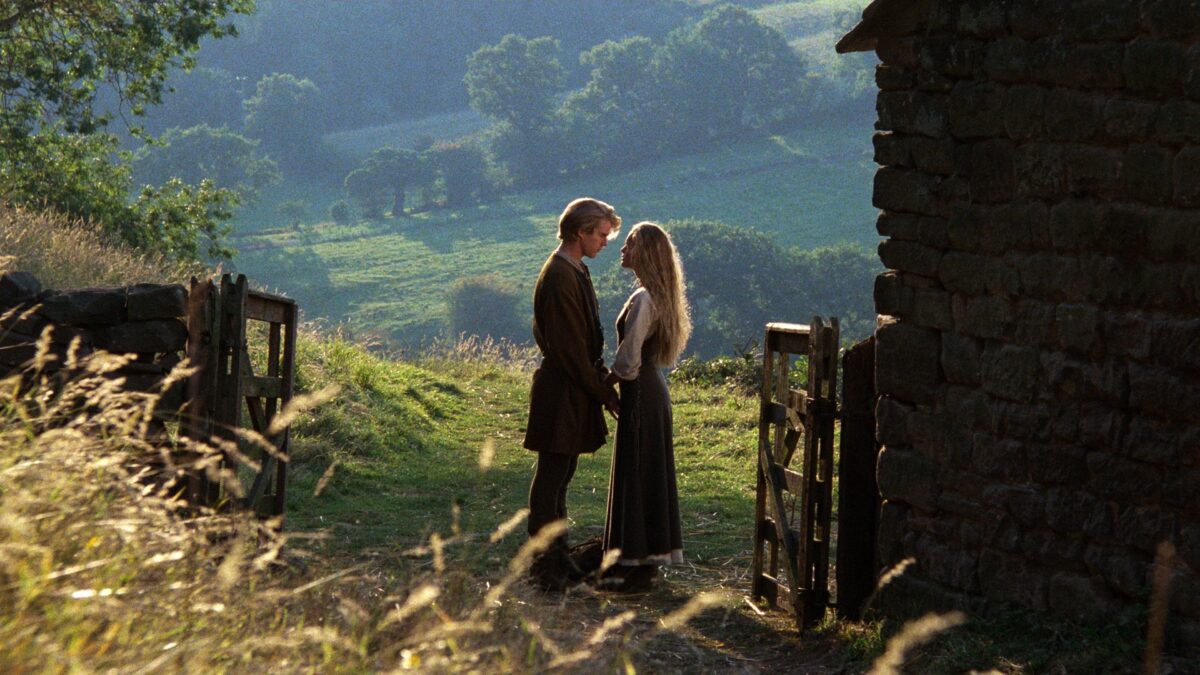
Inconceivably great
Rob Reiner and William Goldman baked a little magic trick into The Princess Bride that I don’t think I fully appreciated as a kid: it’s a movie that knows an earnest fairy tale is supposed to be uncool, and it builds that skepticism into the text. The Boy (Fred Savage) is home sick, cranky, and allergic to “a kissing book.” The Grandfather (Peter Falk) insists anyway. And the movie’s real achievement is how quickly it gets him — and, by extension, us — to unironically fall in love with the story long enough to feel something simple and sincere. And yet it retains an element of deconstruction of fairy tales for its duration: it’s not a parody, but it sometimes feels like one, with comic execution and even mild subversion of the adventure beats, all wonderfully balanced into a classic of family cinema.
The story The Grandfather reads The Boy drops us into the fictional Florin, where Buttercup (Robin Wright) is a farm girl with the misfortune of being the most beautiful (and thus sought-after) person in the world, and the fortune of falling for a dashing farmhand, Westley (Cary Elwes), whose entire personality is, initially, mindless devotion. Their courtship is a bit of a gag in making the hunk the blank slab of romance that a princess normally would be. She orders, he answers “As you wish” every time; and then the rhythm becomes romantic. It’s the kind of miniature and effortless invention movies usually have to earn with a lot more screen time, but the writing and tone of this opening is so clean that it feels like it’s always been part of the folklore.
Then the movie kicks into its real narrative mode: nonstop momentum bordering on shagginess. Goldman’s script is genius in balancing mayhem with just enough structure. Buttercup gets kidnapped for a politically convenient wedding to Prince Humperdinck (Chris Sarandon), and the chase that follows is a string of set pieces that all feel like their own brilliant short stories. We visit Cliffs of Insanity, where the heroic Man in Black shows up like a storybook Zorro; the sword fight with Inigo Montoya (Mandy Patinkin), staged and performed with such crispness that it’s a proper Douglas Fairbanks tribute; the brute-force brawl with Fezzik (André the Giant) as the world’s gentlest mountain; and funniest of all, the battle of wits with Vizzini (Wallace Shawn), a walking bundle of smug paranoia who somehow makes “inconceivable” sound like a religious mantra.
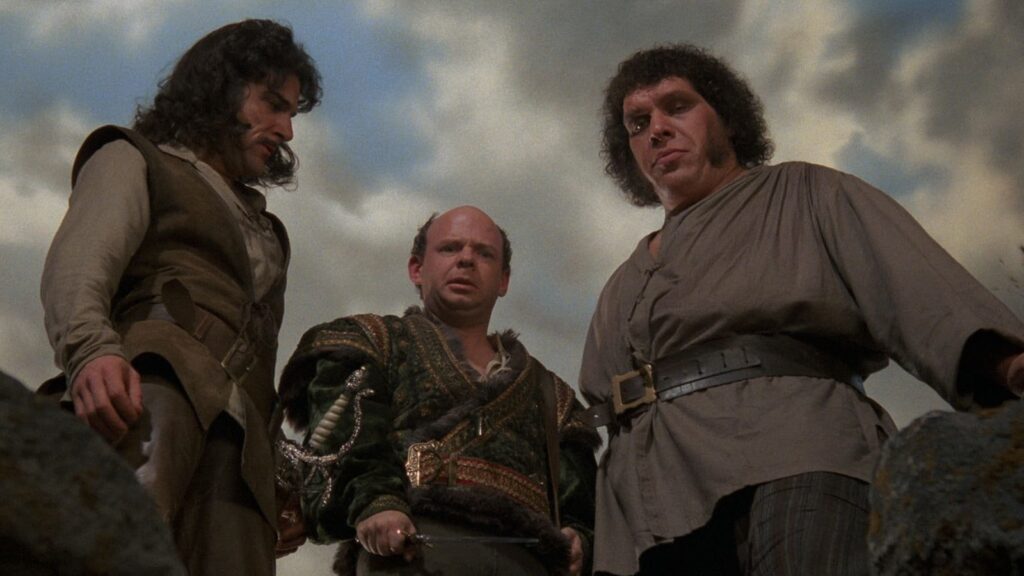
The charm of these sequences in the film’s first half is that they’re funny in a way that never undercuts the stakes — the movie playful remixing of tropes is utterly joyful and committed rather than mocking, preventing this from ever feeling like a pre-Shrek bit of irreverence. The iocaine powder scene with Vizzini is maybe the best example: it’s a battle of wits performed like an effervescent vaudeville or Abbot/Costello routine, and the punchline lands so hard because the movie has meticulously set up the rules of the bit.
Even when the plot pivots and slows down a bit (and the second half not quite reaching the height of the first is why I have it a hair short of a Masterpiece) — when Humperdinck catches up, Westley is dragged into the Pit of Despair, and the band splits up — The Princess Bride keeps its tonal balance on a tightrope. Count Rugen (Christopher Guest) is genuinely nasty, and the torture device is a fairy-tale abstraction of suffering that still manages to feel upsetting. Then the movie swerves into Miracle Max (Billy Crystal) and Valerie (Carol Kane), who show up like they wandered in from a different comedy universe but somehow make the whole thing richer, not messier. The second half is not quite so transcendently delightful as the first half, but it hardly holds the movie back. The rhythm and storytelling is so confident from start to finish: romance, danger, joke, sincerity, joke again, etc.
It helps that the film is gorgeous in an old-school, tactile way. Reiner (RIP to a great one) does not assert his own voice but rather keeps the film steady and free of distracting breaks in immersion: Everything is shot in real locations, filled with storybook production design, costumes that look lived-in, not freshly unboxed. It’s not a “look at our budget” kind of spectacle; it’s a “look at our love of filmmaking” kind of spectacle. And because the cast is so perfectly tuned to their characters, the archetypes and slight variations they’re playing, the movie can do big, bold character work in shorthand: Patinkin’s vengeance quest is melodrama played mostly straight, which is why it has become so iconic. (The Princess Bride makes great use of repetition — “as you wish” and “prepare to die.”) Sarandon’s prince isn’t complicated; he’s a coward in a crown, delivered with spot-on smarm.
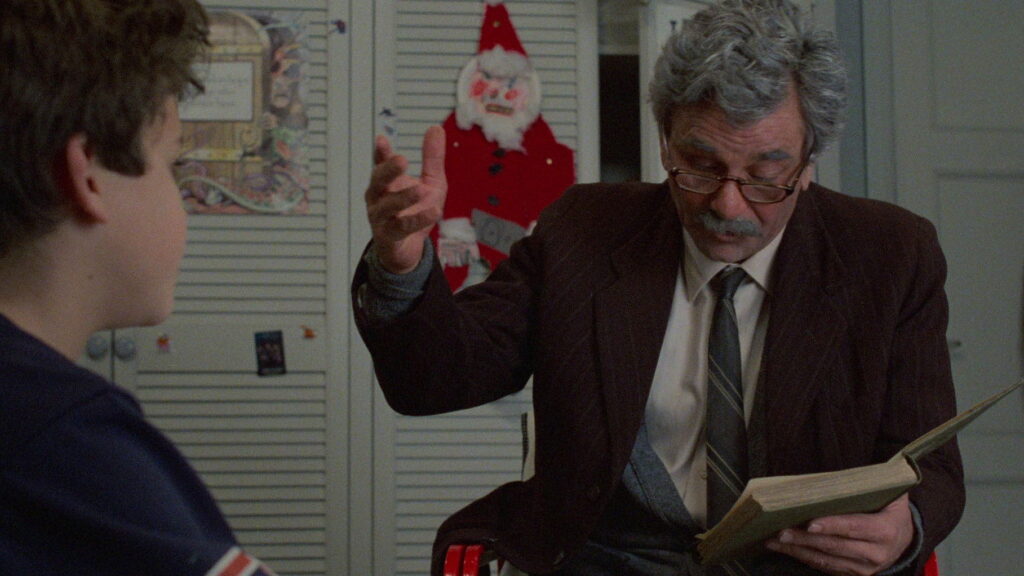
The ending lands exactly where it should. We get the kiss. We get the catharsis. We get the kid, now fully invested, asking for the story again. It’s beautifully touching. And the final “As you wish” doesn’t just tie a bow on the romance but becomes a thesis statement: These kinds of stories get passed down and become timeless because, when they’re told well, they make cynicism feel briefly unnecessary, even in a modern world. The heart’s longing for adventure in the great wide somewhere soars; and the right adventure fulfills that wish. They remind you that adventure can be thrilling, love can be clean, and comedy can sit alongside both without turning either into a joke.
Is It Good?
Exceptionally Good (7/8)
Related Articles
Dan is the founder and head critic of The Goods. Follow Dan on Letterboxd. Join the Discord for updates and discussion.
4 replies on “The Princess Bride (1987)”
My recollection is that Princess Bride isn’t as foundational for me as it is for most in my cohort, but it is pretty good. Reiner had a hell of run there in his initial directorial career, like eight swell or well-regarded-and-hence-presumptively-swell movies in a row (I mean, I personally would include North).
Oh man in our podcast recording about this movie, we wondered if there were North defenders out there, as neither of us had encountered one. I should have asked you about it when you joined us recently!
I really do need to watch this film all the way through one day – I’ve seen bits and pieces of it, but never the whole.
I have, however, seen ROBIN HOOD: MEN IN TIGHTS, which probably says something about my movie-going judgement.
’80s comic-tinted adventures starring Cary Elwes do tend to be a delight!