
No business like Joe business
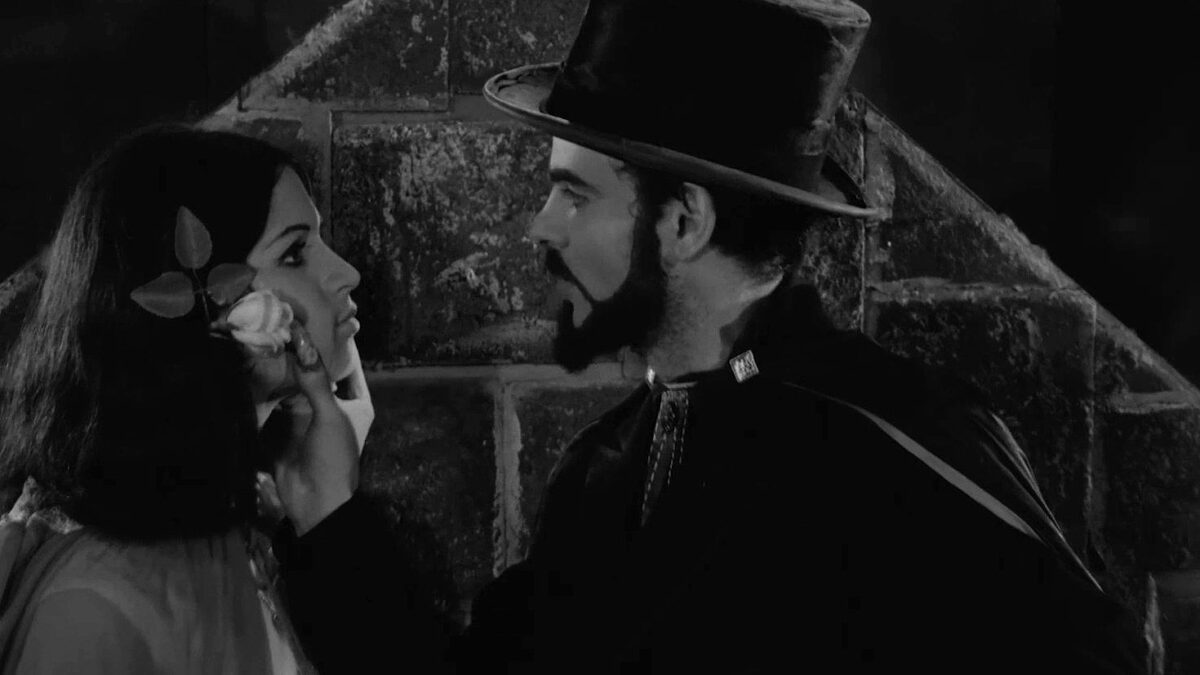
At Midnight I’ll Take Your Soul ends with Coffin Joe’s death, but when has a villain’s demise ever prevented a horror sequel? Thus, This Night I’ll Possess Your Corpse, the second Coffin Joe film, opens with “somehow, Joe returned.” Our favorite undertaker-philosopher Coffin Joe (José Mojica Marins) has his eyes popped back in, inexplicably gets cleared of his crimes in court, and promptly picks up where he left off: finding a fearless woman to bear his fruit, seeding his immortal bloodline, and terrify the townsfolk while donning the sharpest top hat and worst fingernails in all of Brazil. Sequel logic prevails: new characters join the mix (a goon and a rival), the tarantula budget triples, and everything is a little bit bigger and sillier.
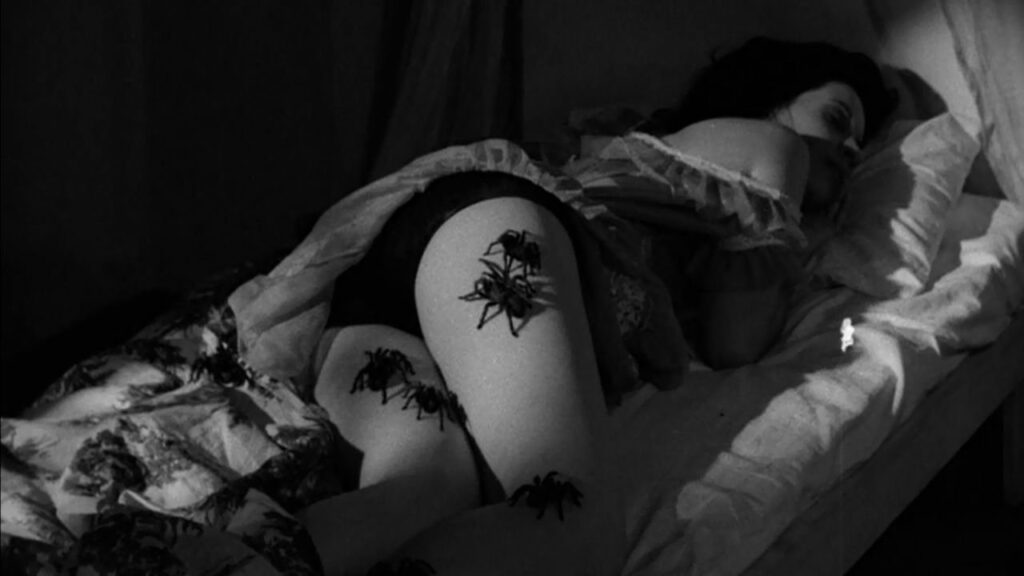
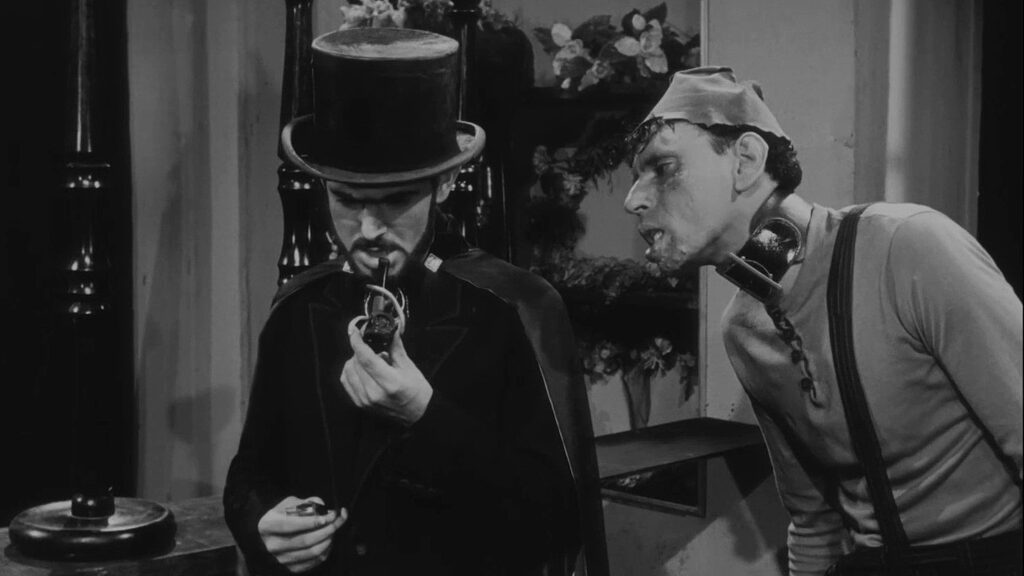
This time Joe thinks, why terrorize one woman when you can terrorize six? Joe and his hunchback assistant Bruno (Nivaldo Lima), new to this film, abduct a whole fleet of potential mates during an unsettling montage, then clothe them in satin nightgowns. Between films, Joe’s workshop has apparently grown into a funhouse of terror, complete with an elaborate fornication room. After the abductees endure a gauntlet of creepy crawlies, one woman, Marcia (Nadia Freitas), passes his tests and seems game to get it on with Joe, at least until he insists upon making love above a venomous snake den in which the other women are murdered. For some reason this puts a damper on her libido. And so Joe seeks out another woman in town, landing on Laura (Tina Wohlers).
I have a lot of mixed feelings about this second Joe film. Much of what I loved about the first film was Marins’ genuine grappling with his demons, the lean and directness with which he rejected the oppressive religiosity of his culture but then found a viewpoint even more extreme and ideological. But his ideas don’t really get any deeper here; mostly said louder and executed with more flair.
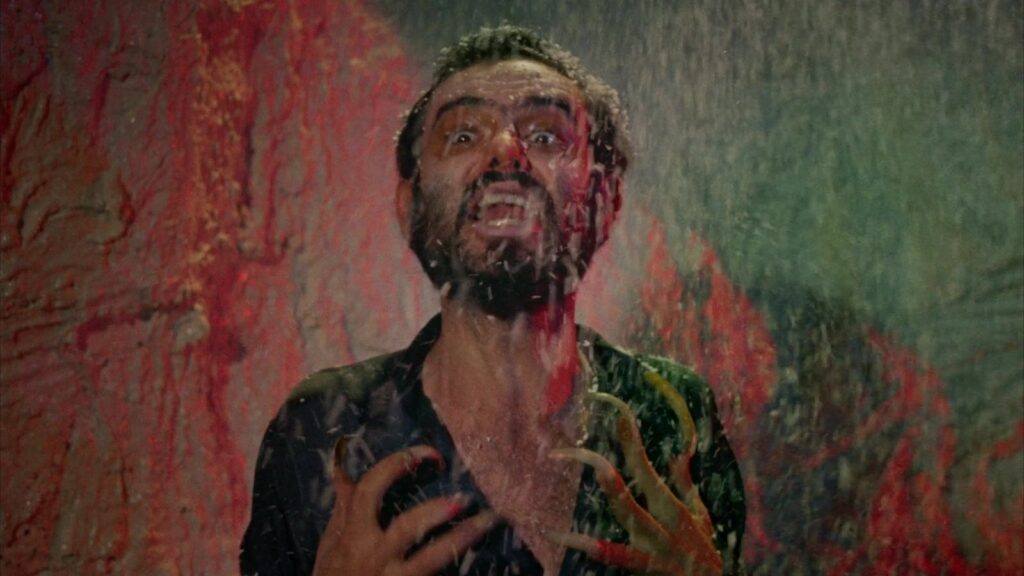
Marins gets bolder with composition and visual energy; you can feel him learning his craft as he stages one nightmare after another. This culminates in a truly stunning piece of filmmaking, the “hell” centerpiece. In a dream sequence, Joe’s world abruptly explodes out of its black and white cinematography into demented color, like a cursed spin on Technicolor. A man in a gimp suit drags Joe into a graveyard where he’s swallowed by grasping hands, and dropped into a lurid inferno where mutilated bodies become architecture. Marins adopts a double role as a Caligula-coded Devil, nude and body-painted women at his beck and call. For an avowed atheist, Joe’s subconscious sure has an elaborate ecclesiastical pageantry. The scene is so electric it recalibrates the whole Coffin Joe myth and Marins filmmaking identity: for a few minutes, Joe’s adventures escape their existentialist exploitation form and become a full-on cinematic delirium; Marins becomes an bootstrapped, even more radical Dario Argento.
This is a much nastier film in general: More nudity, more deaths, more graphic violence. Marins seems to have embraced his character’s popularity as a midnight screening curiosity: He doesn’t abandon the core Nietzschean thrust of his first film, but he makes it a bit crueler and less existentially charged, thus falling more squarely into mean-spirited spectacle which means it has less heart and authentic angst at its core.
And yet the film’s builds to a note of bleak sadness. Joe, ever more obsessed with the purity of children, faces the loss of his own progeny, as well as the loss of a woman willing to give it to him. You’d never accuse the movie of actual pathos, but Marins at least thought out a way to push his character’s quest for self-designed immortality into ever more cursed and painful outcomes. It collides with yet another finale of Joe ending on the receiving end of justice, though this death is more literal and less poetic than in At Midnight I’ll Take Your Soul. (Also of note in the finale: Joe tacks on a profession of faith in God, which Marins claims was mandated by Brazilian censors and such a betrayal of his own values that it cursed his career.)
I wouldn’t blame anyone for preferring This Night I’ll Possess Your Corpse over At Midnight I’ll Take Your Soul. It is more adventurously executed and visually exciting in almost every way, and Marins is in the process of finding his own deranged showman voice that he’d use for semi-canonical side projects over the next four decades, until a legacy sequel finally wrapped the official Coffin Joe story in 2008. But what is improved in this film runs against what I found bracing in the first film, and so the whole package is somehow less provocative despite further pushing the boundaries of good taste. Sometimes bigger and better is neither.
Is It Good?
Nearly Good (4/8)
Related Articles
Dan is the founder and head critic of The Goods. Follow Dan on Letterboxd. Join the Discord for updates and discussion.