
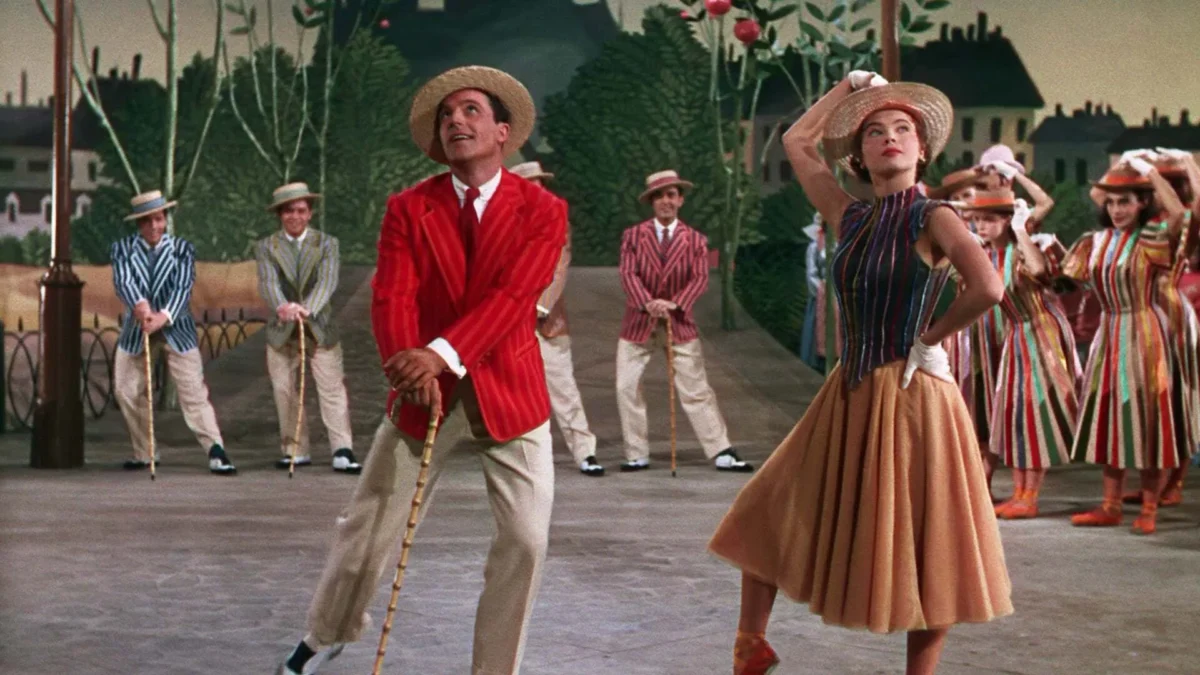
Dan and Brian invite film critic and musical cinema lover Hunter Allen from Kinemalogue to join as they kick off a new theme month: Musical Decades Month, where they plan to discuss 100 years of musicals in five weeks. To kick things off with the 1930s and 1950s, they discuss two strands of early musical technique: the Busby Berkley style of geometric chorus numbers pioneered in 42nd Street versus the Fred Astaire style of integrated character tunes brought to its apex in (the Astaire-less) An American in Paris. Join as they discuss the very early history of musicals, the back-loaded structure of each film, pre-Code sexual frankness, Hitler’s painting style, problematic relationships, bravura musical production, the Freed Unit, soundstage Paris, and Gene Kelly’s directorial career.
Check out Hunter’s reviews at Kinemalogue
Episode Number
241
Films Reviewed
- 42nd Street (1933) – Hunter’s review
- An American in Paris (1951)
Is It Good?
- 42nd Street (1933) – Very Good (6/8)
- An American in Paris (1951) – Very Good (6/8)
- 42nd Street (1933) – Exceptionally Good (7/8)
- An American in Paris (1951) – Good-ish (4/8)
- 42nd Street (1933) – Very Good (6/8)
- An American in Paris (1951) – Excptionally Good (7/8)
Supplemental Media
https://www.youtube.com/watch?v=xiHKgpd-0fo
The signature Berkeley geometry begins at 2:20
Brian Terrill is a filmmaker and horror host.
Dan Stalcup writes reviews for The Goods and is a member of OFCS. Follow Dan on Letterboxd.