
My cigarette heart
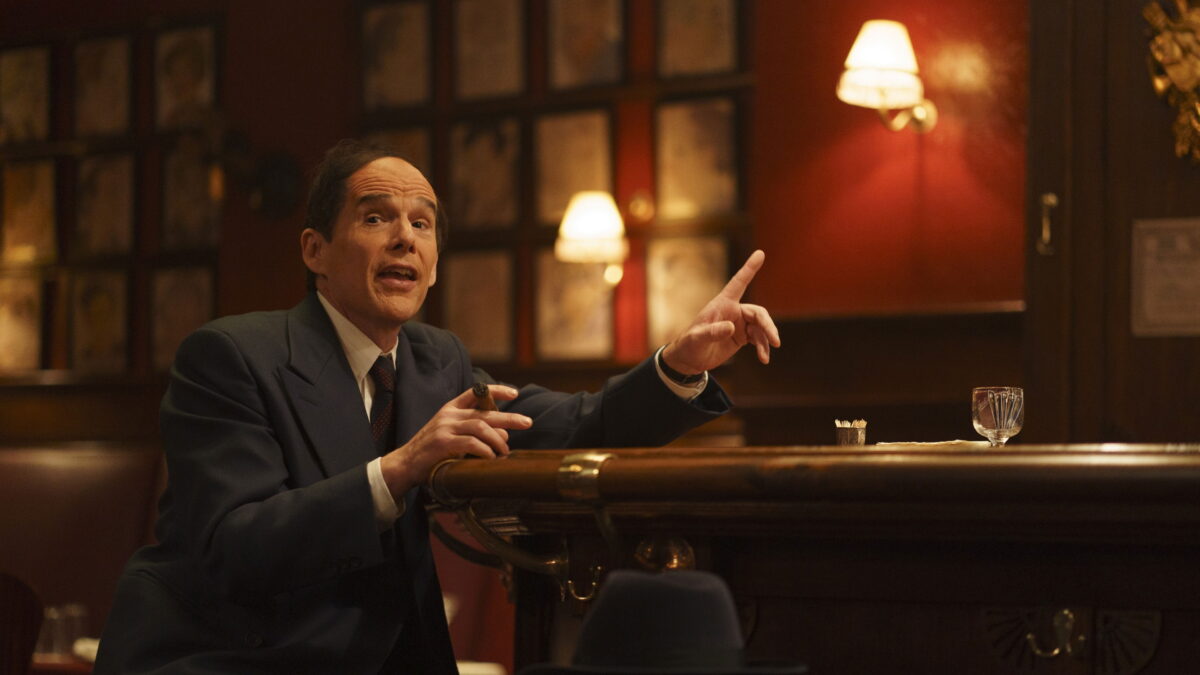
The most crucial moment in Blue Moon arrives in the very first scene, when the protagonist, Lorenz Hart (Ethan Hawke), dies. I’m normally skeptical of the old “dramatic death-then-flashback” structure, but here it is both necessary and effective. When the film jumps back in time a few days, that opening works a magic trick: It turns the rest of the runtime into a seance you’re watching in real time. Hart spends the movie not merely as a rambling, sardonic barfly, but as a ghost flickering away, already watching the world move on without him. That it’s an elegy keeps the experience from becoming insufferable even when Hart is, to be clear, trying his absolute hardest to be insufferable.
Director Richard Linklater, one of my all time-favorites, builds the film around a single-night, mostly-one-location hangout: Hart stranded in a bar, holding court, picking fights, cracking jokes, and generally displaying that specific kind of tortured-genius spiraling where he is both performing and pleading for sympathy. The film is set on the night of the debut of Rodgers and Hammerstein’s Oklahoma!, a very un-Hart musical by his former partner with a new collaborator. This is not a biopic in its standard form, though we learn some basic life facts; it is, rather, a meditation on legacy and fading away. People drift in and out of the scene, but the spotlight is always on Hart, to the point that you can almost imagine the film as a one-man show.
And here’s where Linklater’s superpower kicks in: tone control. Somehow, Blue Moon is more than the sum of its parts, which is saying something as many of these parts are quite good, though a handful are frustrating. Almost casually, Linklater gives the movie breathing life even as he forces it into a stagey physical shape. That is, I suppose, a contradiction at first glance: vibrantly cinematic but also minimal and theatrical. Linklater lets those competing forces give the film a strange flavor, like he’s intentionally draining the environment of realism so all the arch energy Hawke offers rings even louder. The sets have the feeling of a liminal space like we’re Waiting for Godot. (Linklater’s biggest miss is the strange attempts to make Hawke look short through a mix of clever blocking and digital touch-up, and it’s always awkward and distracting.)
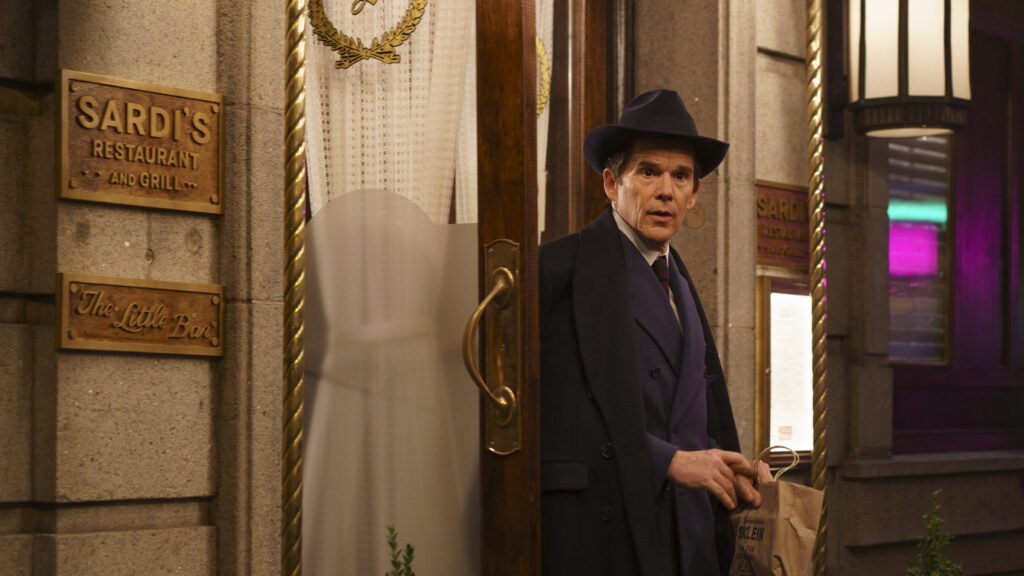
The movie rests entirely on the shoulders of Hawke, who is frankly the biggest reason Blue Moon works. He’s having the time of his life playing a man who is very much not having the time of his life. It’s an all-time sad jester performance, the kind actors pray for: sharp, needy, funny, pathetic, grandiose, suddenly tender in the middle of a rant, then back to weaponizing charm. Hawke is great at letting you see the gears just the right amount: how Hart is constantly adjusting the mask based on who’s in front of him. He makes the inevitable crash-outs feel like a kind of doomed emotional choreography. The character is exhausting; the performance is electric.
The supporting cast does great work, too. Andrew Scott is outstanding as Richard Rodgers, a man maturing and moving on just as his longtime partner is imploding. Qualley reins in a character whose writing is a little unsure. She simultaneously reflects some of Hart’s brilliance back at him, and confirms his biggest fears about obsolescence and fading away.
The script, by first-time screenwriter but long-time novelist Robert Kaplow (basing it off of some of Hart’s real-life letters), is a mixed bag in a way that’s sometimes fascinating and other times nails-on-chalkboard. When it’s cooking, it’s something special — barbed, melancholy, even gentle. Hart turns a brilliant phrase, then brings it back twenty minutes just when you’ve forgotten it. But the film also brandishes Hart’s obnoxiousness as if it’s adorable; at least, Kaplow seems less confident than Linklater and Hawke do in navigating that balance. The story also has some moments where it gets cutesy in that Forrest Gump way, but even more grating: Hart just happens to inspire three future cultural milestones in a single evening? Sigh. He gives EB White the idea for Stuart Little, George Roy Hill the idea for Butch Cassidy and the Sundance Kid, and encourages Stephen Sondheim to embrace non-sentimental musicals in the course of about 30 minutes. Hart also drones on and on about his lust for a much younger woman (Qualley), and, I mean, fair, but it never quite threads the needle of allowing this obsession to reveal more about Hart’s inner life, so it gets exhausting.

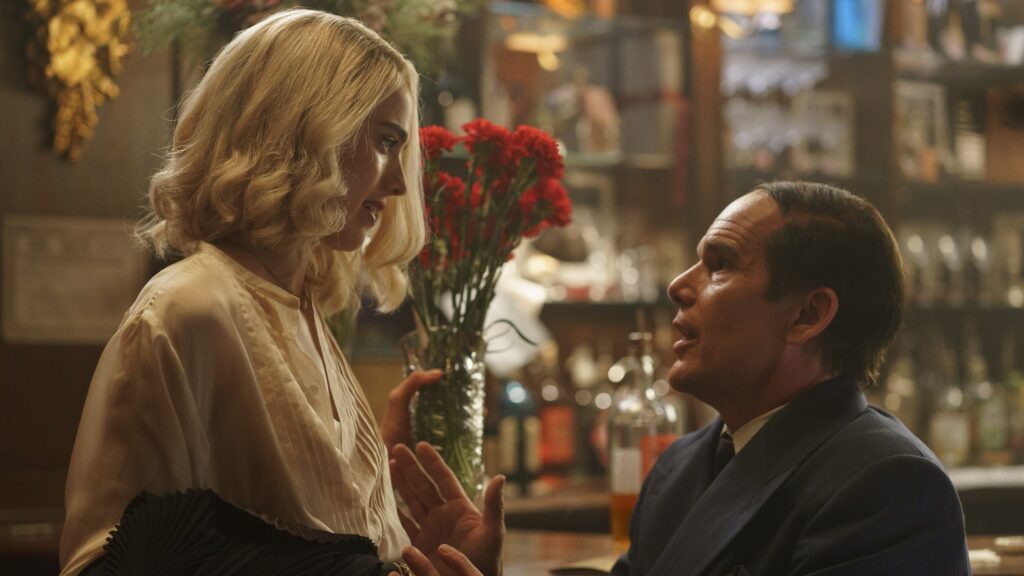
Still, even those rougher edges often get smoothed over by the larger atmosphere Linklater is creating. The film’s best moments are some of its quietest, where it stops trying to be cute about legacy and just sits with the Hart ache of it all. That alienating hurt he feels is the movie’s central subject: the terror of being brilliant and not feeling saved by it, the humiliation of needing people, the weird loneliness of knowing you’re about to vanish and having to watch everyone else stay.
The movie ultimately works, but it’s held back from greatness, just barely, by the ceiling imposed by the script. Still, Linklater and Hawke elevate it into one of the year’s better films, one I really want to love, so I’m inflating the rating below by just a tick. Blue Moon is both annoying and devastating, sometimes at the same time. It has a warm, very human Linklater touch, the sense that even when someone is complicated and dazzling and frustrating, they’re still a person. And thanks to that opening scene, Hart isn’t just lighting up the room with his silver tongue, he’s doing it with the faint outline of a ghost already rising off his shoulders.
Is It Good?
Very Good (6/8)
Dan is the founder and head critic of The Goods. Follow Dan on Letterboxd. Join the Discord for updates and discussion.
4 replies on “Blue Moon (2025)”
This one looks interesting. Sounds like the structure might mitigate some of Linklater’s navel-gazey tendencies, which, the mileage on those can vary depending on the movie. (And on one’s individual preferences, of course.) I’m glad to see Andrew Scott getting regular work these days.
Also, the Margaret Qualley posting must continue until morale improves.
Not sure whether this one will work for you, honestly. It’s kind of story-light but it’s more focused and less noodley than I know bugs you. Scott is awesome in it though, could’ve used even more in him.
Will be taking my daily hit of Qualludes for sure.
Honestly, kind of a “Richard Linklater is back actually being Richard Linklater” movie for me, and I assume it’s not merely appropriate but causal that he’s back with, specifically, Ethan Hawke.
I had a recent thought rewatching some clips from this. In some ways it feels like Linklater both doing and making fun of the angsty Fabelmans/Here/etc. type late style retrospection. Of course, to your point, many of his movies are that kind of jam, so maybe it’s just Rick being Rick.