
I'm not saying it was aliens… but…
I’ll be honest: I’ve spent the better part of a decade dodging Yorgos Lanthimos movies. Something about the way people describe his aesthetic — the deadpan cruelty, the clinical weirdness, the sense that you’re being dared to laugh at something misanthropic or miserable — always suggested a sensibility fundamentally at odds with my own. And Bugonia doesn’t exactly disprove that theory. It is meaner and grosser than it probably needs to be, indulging in a few too many squirm-for-the-sake-of-squirming moments. But it’s still so damn good that I came out the other side a convert. Or at least Yorgos-curious.
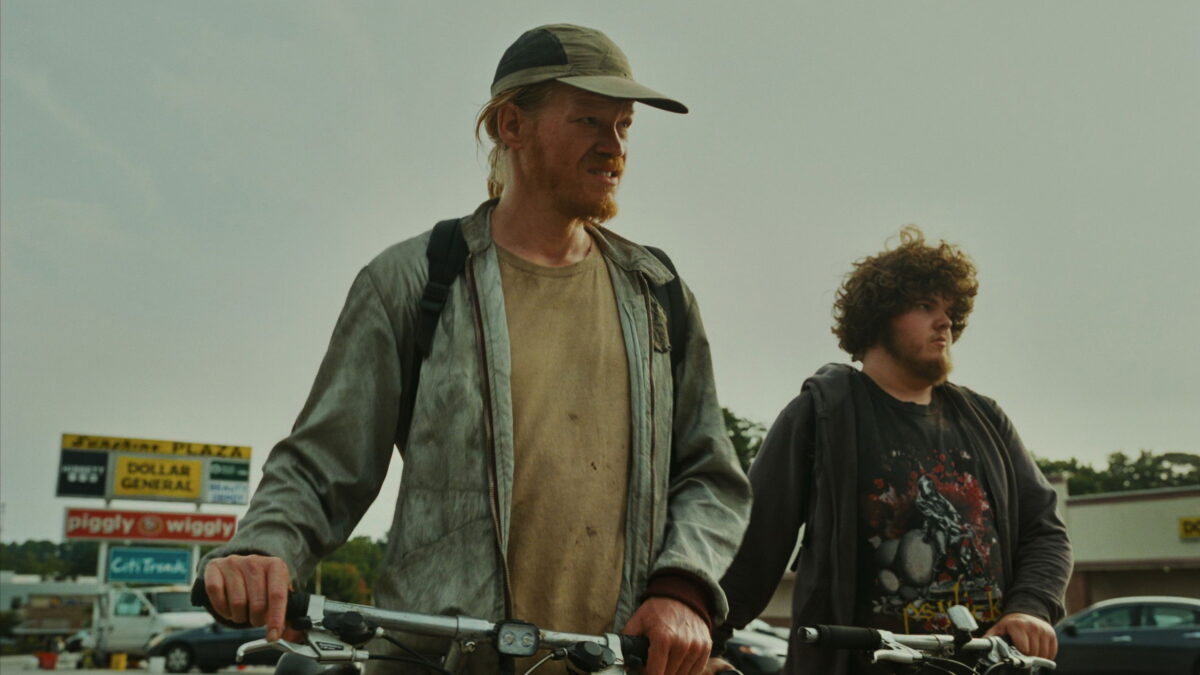
The film — adapted from the 2003 South Korean film Save the Green Planet, which I haven’t seen — drops us into a kidnapping scenario told mainly from the eyes of the kidnapper. Teddy (Jesse Plemons), a conspiracy-addled true believer, has abducted Michelle Fuller (Emma Stone), the CEO of an agrochemical megacorp, because he is convinced she is an alien from the galaxy Andromeda in a human suit who is orchestrating the end of the world. Fuller, for her part, points out that she is merely a very successful businesswoman who would prefer to not be chained to a bed in a basement. What follows is a taut, increasingly unhinged interrogation that peels back layers of both characters until the audience cannot be sure whose side they are on.
For starters, the screenplay by Will Tracy is outstanding. It does a remarkable job of letting its characters articulate their broken worldviews in ways that feel organic to the story rather than thesis statements stapled to a hostage thriller. The satire here is sharper and more balanced than Tracy’s last script, The Menu, which had a dark sense of fun about its eat-the-rich (not quite literally) premise, but got carried away making its point at the expense of narrative sensibility in the third act. Bugonia is smarter about this: it mocks hyper-corporate doublespeak and crackpot conspiracy logic with equal venom, and the steady drip of character revelations — histories more interlocked than the first appear; the slow suggestion that this whole encounter is a dark inversion of typical class relationships — keeps the tension ratcheted throughout. The dialogue for Stone’s character in particular weaponizes maddening corporate/girlboss speak, and it’s a terrific writerly choice.
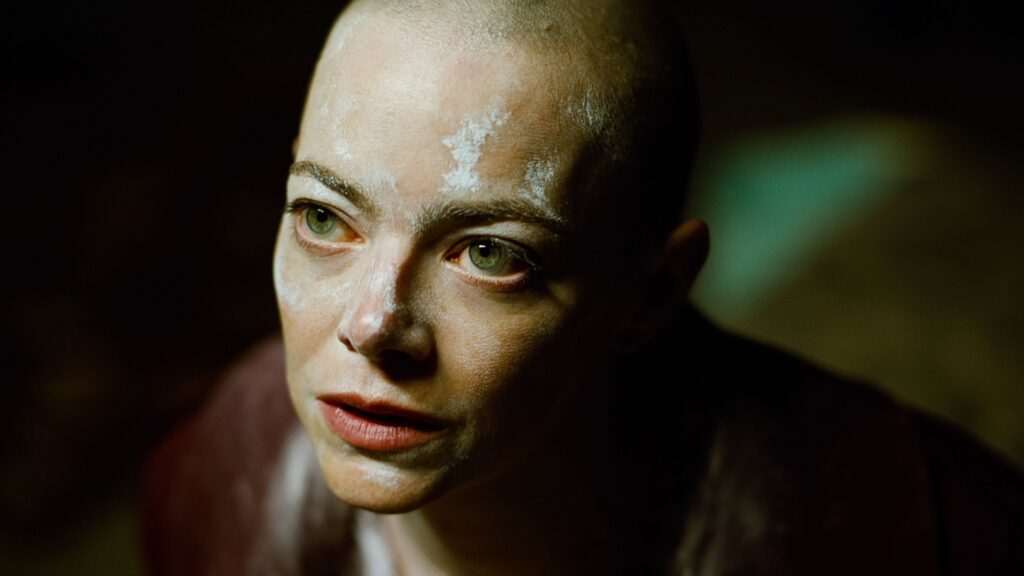
But honestly, even more important than the script are the performances carrying it, which are so consistently astonishing that I have to assume Lanthimos is a world-class actor’s director on the basis of this film alone. Plemons is devastating as Teddy; his line deliveries and little gestures have exactly the right amount of poisoned swagger while remaining desperately, heart-crushingly sad. He brings a terrifying but grounded realism to how he plays a man who has organized his entire shattered life around a loony conspiracy, and it’s best-of-the-year caliber performance work. Stone matches him beat for beat, and even steals the movie from him, as Fuller, her performance shifting through about six different registers as the story demands: panicked victim, brave resister, asshole executive, and a few other different tones to boot. Brilliantly, the further the movie goes, the more obvious it becomes that she’s layering performances-within-performances on each other; pretending to pretend to be one thing rather than another. What is so miraculous about her performance is that she makes this all look so effortless; like it’s a natural and easy thing to be so eye-poppingly charismatic and intuitive on screen for such a complicated character. Meanwhile, Aidan Delbis as Teddy’s cousin Don offers a sorely needed guileless softness that completes the mood in ways the film would suffer without (see: the utter nihilism of Eddington). His specific autistic-coded energy is the gentle counterweight to two titanic lead performances.
I love that the story goes places you don’t expect, getting messy and unglued in ways that feel bold rather than sloppy. The title itself refers to the ancient Bugonia myth, in which bees, a recurrent symbol in the film, were believed to spontaneously generate from the carcasses of dead oxen, thus prompting ancient peoples to beat their livestock to death. It offers a mean but evocative central metaphor to the film.
The film’s craft is quite strong, too; the cinematography by Robbie Ryan has a slight stretched, waxy feeling to it amplified by some fisheye (or perhaps bugeyed) lens usage. The icing on the mood cake is Jerskin Fendrix’s orchestral score, which is just decadent fun: abrasive and propulsive, ratcheting up tension with a clamorous energy that is theatrical and almost physically aggressive.
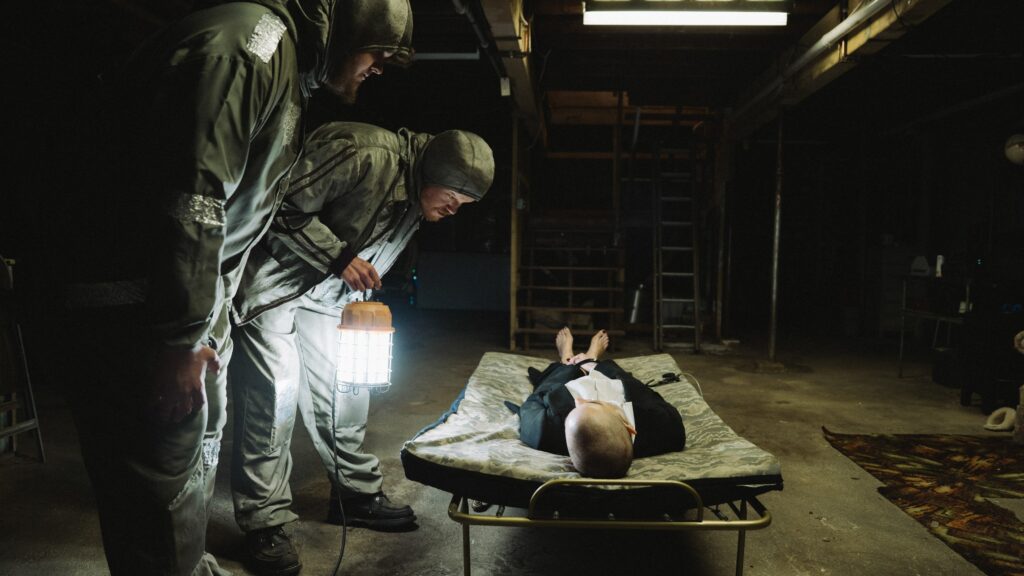
What holds me back from getting carried away with the rating below is a bit of latent dourness and misanthropy; it’s hard to care what you have to say when you seem to have frothing contempt for everything. I don’t entirely mind it being as gross as it is a few times given the story it’s telling, but I could never shake the feeling that Lanthimos resents his audience a bit, too, shocking us like Teddy does Michelle. And a subplot about a local cop would-be hero (podcaster Stavros Halkias), who also has a past with Teddy, is a bit undercooked; clearly he was written into the script for one violent scene in the climax. Still, this is a film with real ideas, tremendous craft, and two lead performances that are among the best of the year. It may even convince me to toughen up and watch another Yorgos movie.
Is It Good?
Very Good (6/8)
Dan is the founder and head critic of The Goods. Follow Dan on Letterboxd. Join the Discord for updates and discussion.
3 replies on “Bugonia (2025)”
I hated this film and wish I’d never seen it. I hate that it’s a part of my memory now. Don’t watch it.
I suspect you’d enjoy “The Favourite”, Dan (speaking as someone who was Lanthimos agnostic for a long time).
👀