
Palme d'Og
Good Boy is a slight but fun idea for a film, the kind of shower brainstorm that rarely makes it to the page, let alone the screen. And yet a rookie director, Ben Leonberg, made it a reality. It’s just too bad the outcome doesn’t have more to offer. That’s the problem with clever high concepts; they rarely have enough meat on their bone to make a proper feature, and such is the fate of the diverting but slight Good Boy.
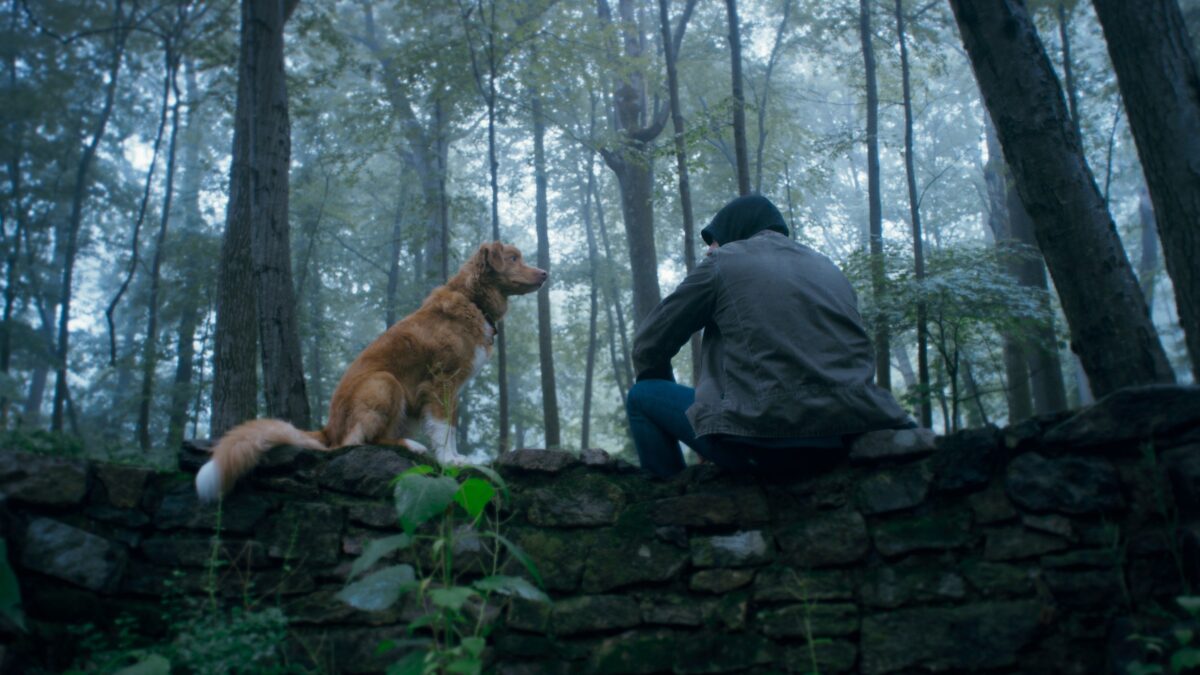
Good Boy is a haunted house story told from the eyes of a pet golden retriever rather than a human, playing on the frequent observation that horror movies often use a dog exhibiting anxiety as a harbinger of danger to come. This dog, Indy, watches his owner Todd’s (Shane Jensen) life descend into horror hell. And this pet dog is indeed such a good boy that he intervenes to try to save his owner. That’s such a clean, high-concept pitch that I walked in basically champing at the bit to give a passing grade to the film. It runs a slim 73 minutes; it’s clearly made with affection for dogs and ghost stories alike; and it’s a good faith effort from Leonberg, who is not phoning this in on a craft level. Alas, its juice runs empty. Somewhere around the halfway mark, my attention slipped. I should not get bored in movies this short, especially with such a wonderful doggo at its center.
The setup is simple: Man and dog inhabit haunted house. Todd, recently recovered from a severe sickness, and his dog, Indy, move into an old, isolated house previously owned by his grandfather, who died under mysterious circumstances at the house. This quaint escape is pregnant with sinister danger from the go: indistinct shapes on the property’s edges, mysterious noises, weird behavior from the locals, and Todd’s blood-coughing sickness flaring back up.
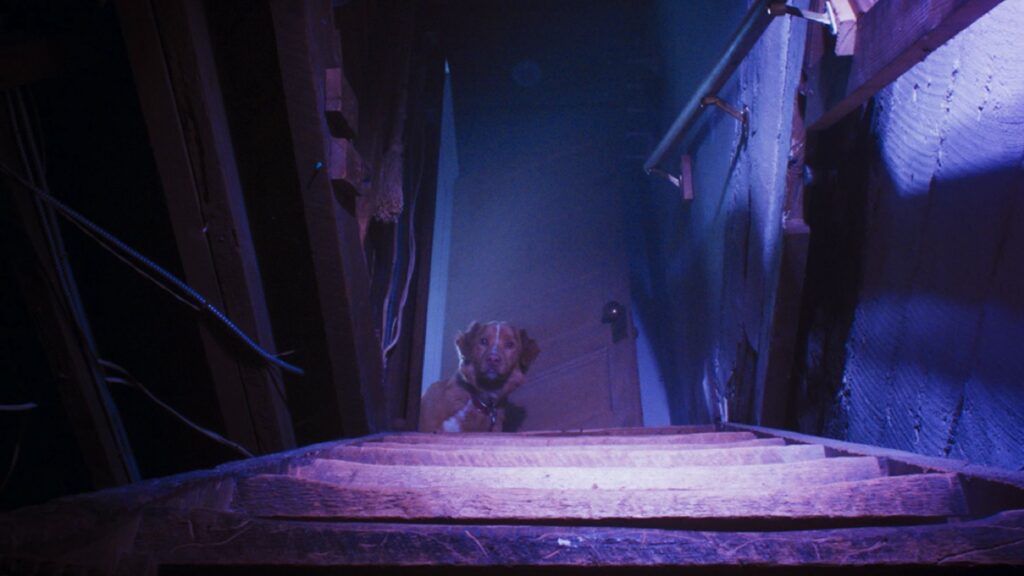
The framing twist is that we’re experiencing this entirely from the dog’s vantage point: low angles, peeks through doorways, commotion overheard in other rooms, danger in the corners of the frame. We even get a couple of scenes of what I interpreted as Indy’s dream sequences (I guess dogs dream?) in which the ghost of the Todd’s grandpa’s old dog shows up as a herald of the more powerful spirits looming, like a canine Marley.
Presenting everything through Indy’s limited understanding is the movie’s one big idea, and for a while, it’s enough. The film has a baked-in charm bordering on poignancy in observing the darkness of a horror film through an intuitive but guileless and eager-to-please retriever, always trying to soothe Todd’s troubles and the house’s supernatural rot. And Indy is about as sensational a dog actor as you could hope for. This is an an accurately-titled film for this specific dog. How Leongberg got the dog actor, named Indy just like the character, to so thoroughly carry the film and capture the emotions and dramatic thrust of each scene, I have no idea. Indy looks curious, scared, and sad at all the right moments, investigates the right sounds and activity with good timing, and has generally legible motivations and feelings. Plenty of human actors struggle with those things.
The formal choices around the dog POV are often interesting, too. The look is a polished, less-radical Skinamarink or Paranormal Activity schema: long, static shots from weird perches in the room; humans observed from afar, half-obscured. It gives us the sense that we’re on the periphery of the haunting, almost unable to stare at it directly except for a handful of scenes. That distance underlines the theme of canine innocence bumping up against human gloom — Indy off to the side, wanting to play fetch while his owner loses grip on reality.
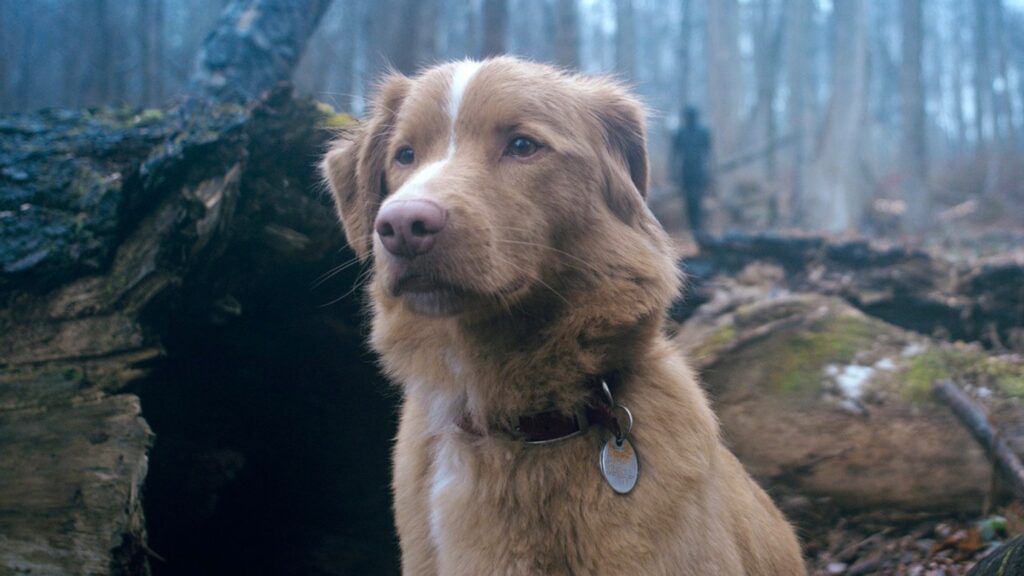
But the story on Indy’s back is so thin and so generic that the film loses steam barely a half hour in. It’s essentially one metaphor you can guess very early on (I won’t spoil the ending, but, really, what’s the survival rate for people coughing up blood in horror movies?), dressed up in haunted house business we’ve seen a hundred times. After a certain point, you realize the movie only really has one trick for suggesting Indy’s inner life: Hold on his big, soulful eyes while dark stuff happens around him. It’s a good move, but it wears thin.
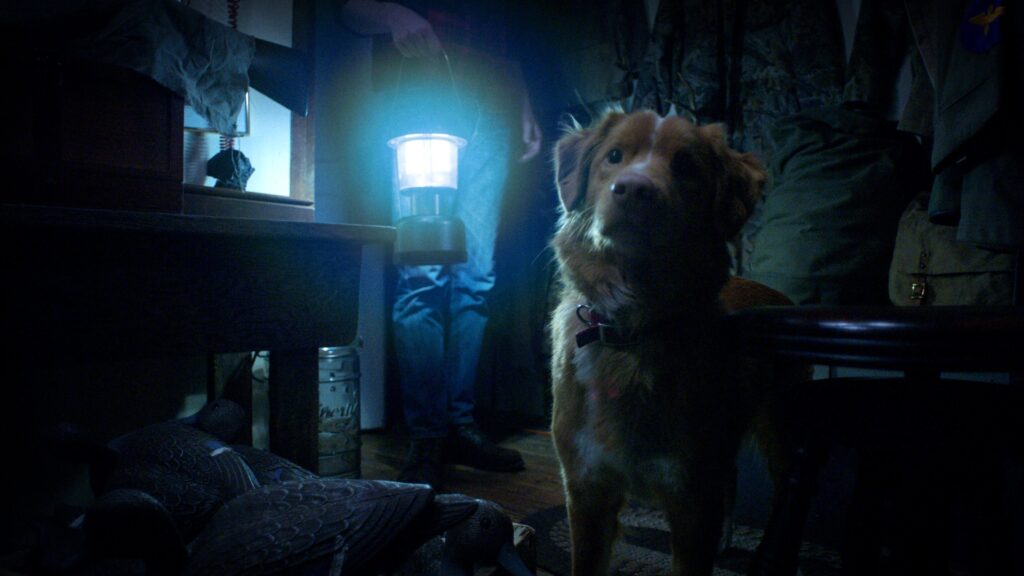
Beyond the doggo, atmosphere is where Good Boy comes closest to justifying the feature-length stretch. The house never stops feeling musty and clammy; when it storms for most of the second half of the film, you can practically feel the mildew seeping off the walls and the water dripping into every crevice. The monster, such as it is depicted in the climax, is a worthwhile payoff, with a creepy, muddy tactility that perfectly captures the sense of decay. Leonberg, co-credited as cinematographer with Wade Grebnoel, cranks up the disorienting lighting in the climax in a way that makes some scenes tough to keep track of spatially, but I decided this was intentionally echoing Indy’s world collapsing around him (even if it’s a bit headache-inducing for viewers).
The film also builds to a modestly satisfying payoff. The closing sequence taps into the reason humans love dogs in first place: their unrelenting loyalty and love for their owners. These sad final notes touched me and almost convinced me to give this a passing grade, but not quite.
If only Leonberg had applied his decent horror instincts and the novel premise to a story with more surprise or complexity. To some extent, I admire Leonberg cutting the story and runtime down to its bones, but the result is just not enough juice for the squeeze. I’m happy a debut director has received some good buzz, and I hope he gets a shot to make something more ambitious. Indy has received at least one acting nomination from a reputable awards body, which is cute but preposterous. I guess it’s just undeniable that he’s a good boy.
Is It Good?
Nearly Good (4/8)
Dan is the founder and head critic of The Goods. Follow Dan on Letterboxd. Join the Discord for updates and discussion.
5 replies on “Good Boy (2025)”
Dogs probably dream; there’s been a study on pigeon sleep that’s suggestive that they dream, which given mammals’ evolutionary distance I guess means a great many amniotes dream. (Dunno how unihemispheric sleep would render a “dream state” for a lot of birds, or cetaceans.)
Anyway, I should watch this for animal acting, which is always a miracle, though it should’ve been about a cat.
Getting an obedient dog to act is one thing, but I can’t even imagine it for a cat. We’ll have to settle for Flow for now, I guess. I grew up with dogs and like their interactivity and dumb cheerfulness, though cats feel more cinematic for reasons I can’t articulate. I’ve been petless since getting married in 2012.
Well you’d have small children about the house, so you have all the fun and many of the frustrations involved when keeping a pet – coupled to the existential wonder & terror of having a whole human being rising and falling based on your life choices.
…
I honestly meant that to be funny, not terrifying: I apologise for being an habitual bachelor.
I’d argue, but I’m pretty sure the cat in Caught Stealing and the Pet Sematary remake must be on barbituates.
The Sally Field cat in Homeward Bound: The Incredible Journey is pretty good! And the cat from The Cat From Outer Space!
Sir, I am not what you call a Dog Person (I remained mortally afraid for them for many years and remain nervous enough that my default move is “Well if you’re rubbing their belly, it’s much harder for them to get the drop on you”), but even I know that is Codwallop.
In any horror story worthy of the name, cats are Anti-heroes at best! (With honourable exceptions, especially where Cat Man H.P. Lovecraft is involved).