
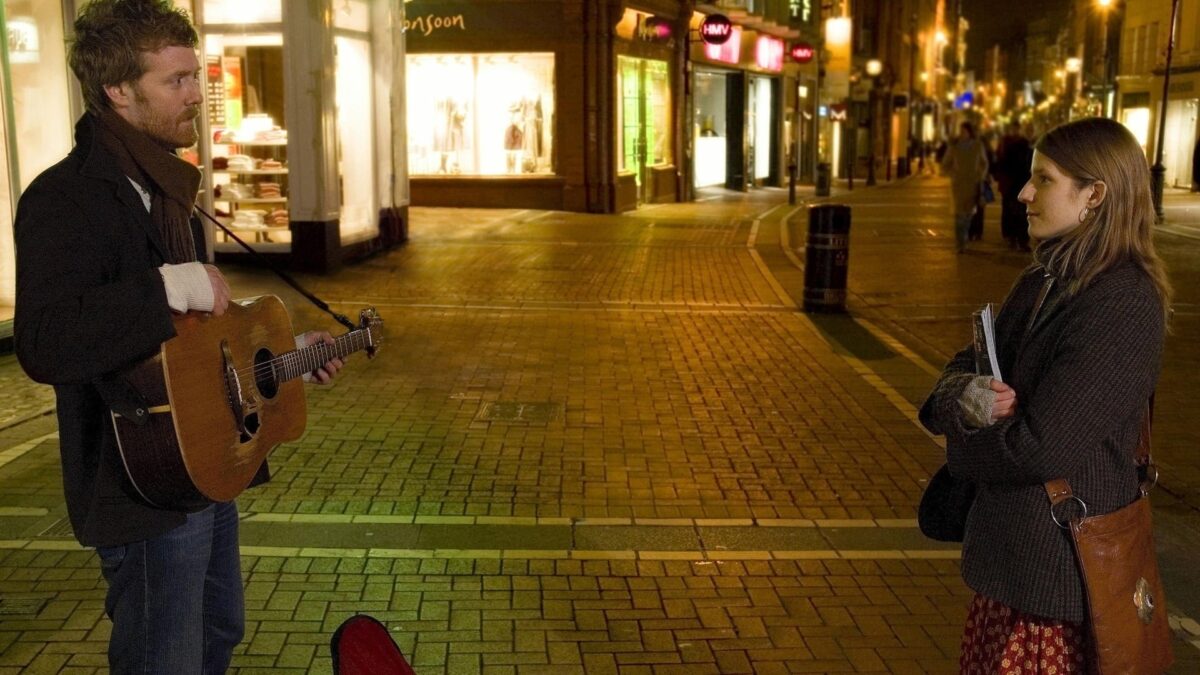
I don't know you but I want you
A piece of trivia that always makes me smile: at the 80th Academy Awards, my beloved Enchanted somehow earned three of the five Best Song nominations. And yet Alan Menken still went home empty-handed: The statue instead went to “Falling Slowly,” a tune from a tiny Irish indie sung by the actors who wrote it. The Academy gets plenty wrong, but here they got it right. If I was ranking the aughts’ great musical moments in movies, that duet from Once would be near the top of the list.
The scene works so wonderfully both because the tune is gorgeous and because it’s the movie in miniature, performance and love in unison: Two strangers who go unnamed throughout the movie, but are credited as Guy (Glen Hansard) and Girl (Markéta Irglová) — so I unfortunately have to use those as their character names in this review — lean over a music shop piano, she playing keys and he strumming his beat-up six string. He talks her through his composition written in a notebook, then starts playing and singing. She joins in. They grow more confident, more in sync, with each measure. As their music braids, their gazes do, too. Harmonies and soaring choruses click into place with the heart-racing thrill of discovery and possibility and belonging: It’s a first kiss in musical form. It’s heart-expanding and unguarded without ever tipping into cheese. Much of the spell is the brilliantly preserved diegesis of the moment: every note is happening right there in the room, reality completely unshattered. Compare it to the High School Musical series of the same era (which, to be clear, I love): A school cafeteria snaps out of reality into theatrical artifice and choreography like it’s Broadway come to life. Once is the opposite. The voices and instruments are unprocessed and recorded live, the act of singing authentic, and thus the feeling of the performance builds organically and beautifully to its apotheosis of emotion.
Once’s story is small. Hansard’s busker fixes vacuums by day and plays his guitar on Grafton Street by night; Irglová’s Czech immigrant sells flowers to people walking the streets. She hears him one day, and the next carts her busted Hoover into his shop. They start talking music, and she coaxes him into sharing his songs, convincing him is worth more than coins from passersby. She writes and performs music, too. The pair begin to collaborate, drifting through Dublin’s instrument stores and kitchens and late buses, recruiting a few fellow street performers to join them. The film never inflates this into a fairy tale. Between Guy and Girl is the blossoming romance that must stay unspoken due to Girl’s life circumstances, but which is always tugging like a melody stuck in your head that you can hum but can’t remember the words.
Director John Carney shoots the entire film on a shoestring production on location in his hometown of Dublin: Handheld DV cameras capture the lo-fi footage. Everything is lit by practical light. Real street clatter and background noise from the city fill the soundtrack. The lo-fi textures are not cinematic but instead intimate, and put Once in the vicinity of American low-budget “mumblecore” of the mid-2000s. “Mumblecore musical” sounds like a contradiction; Once demonstrates how moving and inviting it can be when done right. (Shoutout to Damien Chazelle’s debut, too.) Just like the best mumblecore movies, Once captures little unstructured curvatures in life and adult romance. Carney certainly overuses shaky-cam, letting it be a stand-in cue for the concept of the voyeurism of watching “real people” when a tripod would have helped matters. But the overall approach yields one beautiful sketch and grace note after another: the close-ups feel stolen, the performances uncoached.
None of it would work if the acting didn’t land, but it does. Hansard, all scruff and soft eyes, brings a shambling earnestness that keeps Guy from drifting into sad-sack cliché; Irglová, grounded and wry, plays Girl as more pragmatic, pointedly blunt at moments. You feel their comfort from their first shot together, an extended zoom-in on Hansard busking in which Irglová seems to materialize from nothing. Watch how quickly they settle into each other’s tempos. Neither is a trained screen actor, and that’s why it works so well: They carry themselves like civilians, not stars, which gives their attractions and retreats a shy, tactile, painfully real quality.
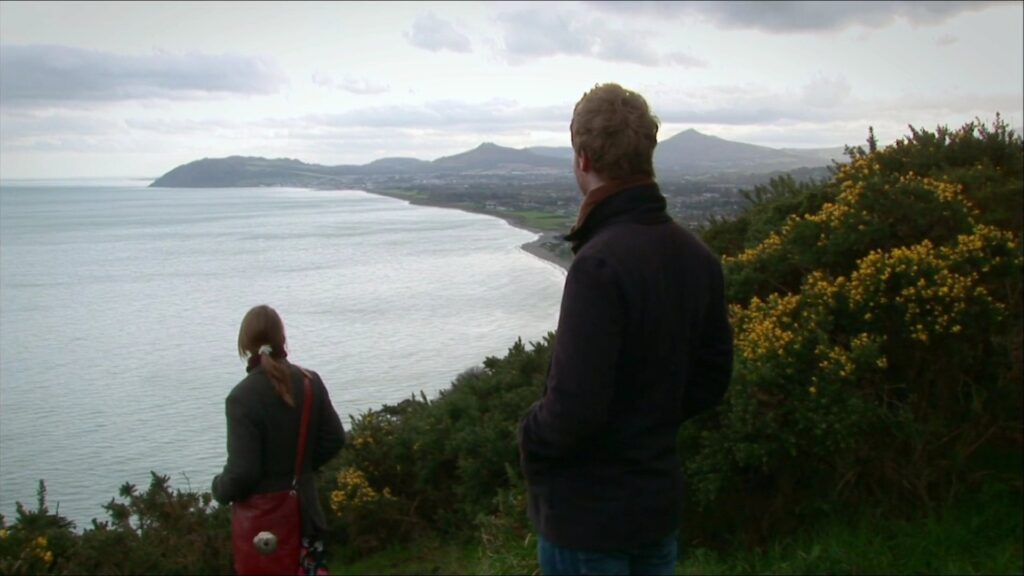
Because the music is theirs, written by the actors themselves and presented with minimal safety net, the songs carry a documentary intensity. I’ve already praised “Falling Slowly,” but the film is filled with performances that bring out the characters and their emotional landscapes as much as the script does. Another highlight is “When Your Mind’s Made Up” which is especially powerful because it comes at a moment when everything is on the line. Some of the songs even play out in a single take, and each is apportioned generous runtime for a rather short movie, meaning the musical performance really is the film’s lifeblood.
The story also has a thread of class reality running through it. These are artists for whom money is an ever-present boundary, and the grind of working class life is the baseline reality (and likely endpoint). Girl has rent, groceries, a daughter, responsibilities; Guy looks after a wonderfully sweet father who owns the shop he works at. His dad backs his dreams even though he doesn’t quite understand them. When Guy and Girl lift each other, it matters not because they’re destined for stardom, but because it provides oxygen for the cinders in their heart, igniting the possibility of their lives rising (artistically or romantically) into something beautiful when everything around them would otherwise crush them.
Once was the breakout film for Carney, a musician-turned-filmmaker. The production almost fell apart when Cillian Murphy backed out of the lead role, which in turned scared off a couple of producers and lowered the budget even further. Hansard stepped in reluctantly. But the film came together and earned mostly raves, culminating in its Oscar win. On its back, Carney built a reputation for bittersweet, musician-forward stories where musical performance and the plot are one and the same. This is the first of his movie’s I’ve seen, but I’ll definitely check out some more.
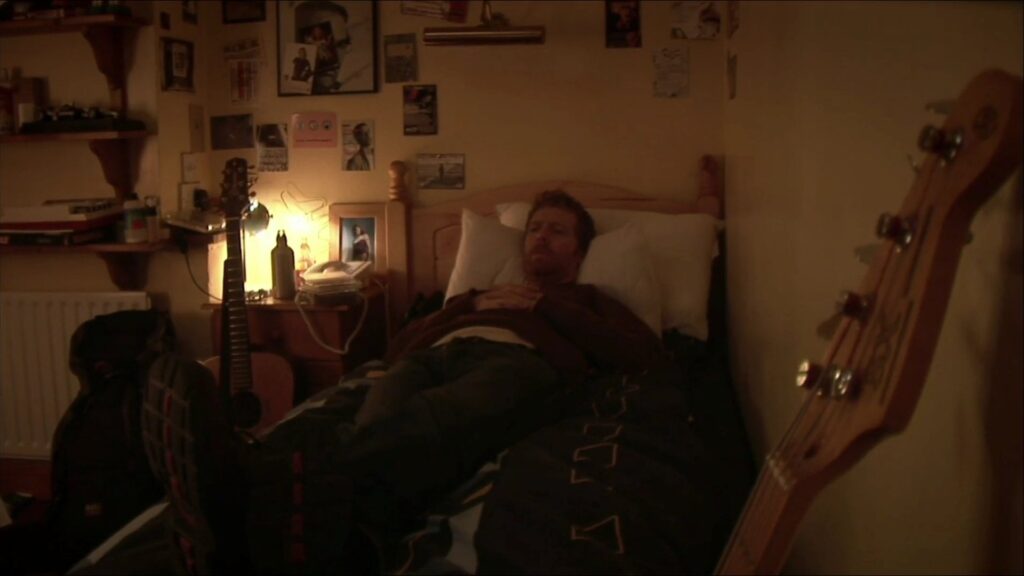
If there’s a problem with the film, it’s that the spare style and script can feel almost allergic to sweeping cinematic power, banking everything on that bootstrapped naturalism. But even this restraint becomes part of the film’s thesis. Once prefers the soft smile to the grand gesture, ambiguity to happily ever afters.
The ending, true to that ethos, is tender and unresolved. No fireworks, no Broadway kiss; just two people whose lives have overlapped long enough to change each other. The title is a promise and a boundary: some romances last barely longer than a pop song. But the best pop songs, like the best romances, shape our inner lives and evoke an eternal feeling even when they’re gone.
The minor miracle of Once is how perfectly its parts fit together: lo-fi form for a street-level love story; songs authored by the characters in places and moments that feel genuine, because they are; non-actors whose slight self-consciousness reads as genuine nerves and uncertainty. It’s a movie of small stakes and big feelings; but big feelings, when captured this wonderfully, become big stakes. Its two-pence production and slight story and open-heart tone will put plenty of people off, but for me there are few joys in cinema more moving than watching this Guy and this Girl on the streets of Dublin falling slowly.
Is It Good?
Exceptionally Good (7/8)
Dan is the founder and head critic of The Goods. Follow Dan on Letterboxd. Join the Discord for updates and discussion.
2 replies on “Once (2007)”
Would’ve been surprised if you didn’t like this at all, but I’m still pleased to see such a high rating. I usually like movies to have stronger narrative drives, but there are obviously exceptions to everything… and I can’t help but admire how easily we identify with and empathize with the characters, not to mention how un-Hollywood it is, how free of bullshit it is, how it allows its ending (where so many movies turn conventional) to accurately reflect where the characters’ lives are taking them.
I do think there may be one or two too many songs / music montages though. (Or maybe some just need to be shortened.) I hadn’t remembered (until recently re-watching) just how much music it has, and there were a couple times when I would’ve just preferred a regular scene. Though maybe that’s because I kept comparing them to the Falling Slowly scene, which is one of my all-time favorites.
Nothing against Cillian Murphy, but I’m glad he dropped out of this. His subsequent rise to prominence would’ve tainted the movie’s effect – the lead actors’ anonymity is crucial to the emotional impact.
Great recommendation by you. I’ll def be checking out at least Sing Street.
Yeah Katy’s feedback as we watched was that there was too much music and that it wasn’t all as great as the best numbers. I was swept away with it in the moment but I can definitely see that.
Agreed on Murphy dropping out being a net benefit. It also meant that the actual writers of the songs were the ones singing, which I think is part of what makes them more emotional.