
Chugga chugga boo hoo
Train Dreams tells the story of a man’s eighty years of life in a hundred minutes. It fills those minutes with biographical detail, yet the film postures as a slow meditation on a quiet man and a lost age. That tension is the defining feature of Clint Bentley’s adaptation of the Denis Johnson novella: a film fundamentally at odds with itself, caught between a textural mode that wants to patiently and impressionistically soak in the stunning vistas of the Pacific Northwest as the great frontier collapses into industrial modernity, versus a narrative engine committed to whizzing through chapters of Robert Grainier’s (Joel Edgerton) life like it’s reading a Wikipedia article aloud. (And there’s a lot of reading aloud in this film.)
I’m typically the last person to complain about a shorter runtime. (I bemoan bloated runtimes in roughly half of my reviews on this site, probably more.) But sometimes you need to call an epic what it is and craft accordingly. At approximately one year per minute, the math doesn’t work in Train Dreams’ favor. The storytelling astringency that emerges isn’t just a matter of pacing, but a byproduct of the route the film takes to get there. Long, backbreaking stretches of narration by Will Patton make entire acts feel less like story and more like an eternal setup montage. I suspect much of the voiceover comes directly from Johnson’s prose, and it isn’t poorly written, but it never carves into Robert’s soul or the spirit of his age. It just always felt like a guy, some stuff that happens to him, and some nature. Pleasant enough, I suppose. Hardly great.
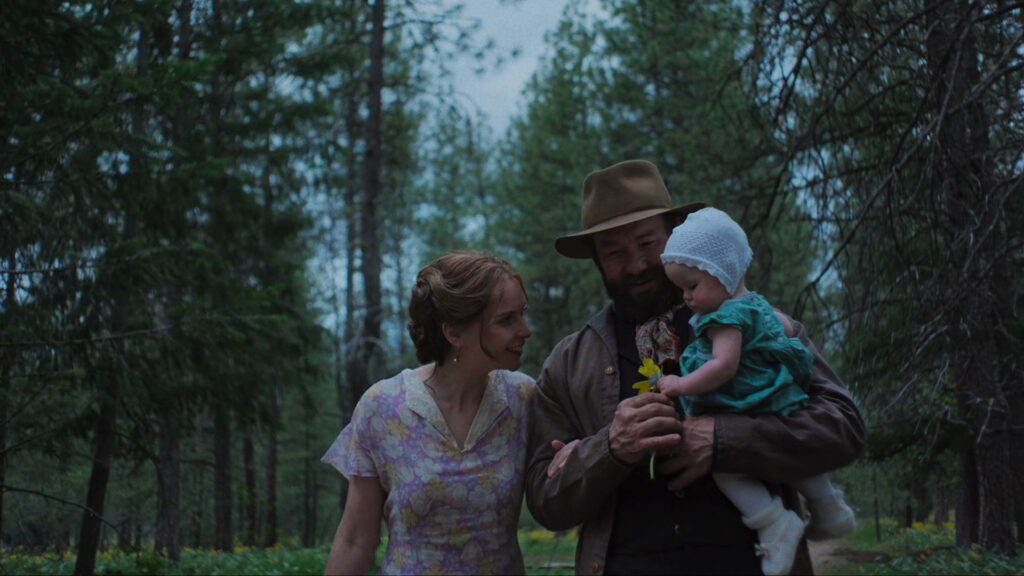
The opening twenty-five minutes are particularly rough. Characters and moments set themselves up like Oscar-bait plug-and-play fodder: here’s the perfect, beautiful wife to our quiet hero (Felicity Jones), and surely nothing tragic will happen to her. Here’s Arn Peeples (William H. Macy), a Civil War veteran and old-head coworker who gets a few award-season-ready monologues about the nature of life before dying, with only Robert seeming to appreciate the loss. And here’s thirty seconds of a Racism is Bad subplot about the treatment of Chinese immigrants, checking a box with the enthusiasm of someone filling out a tax form.
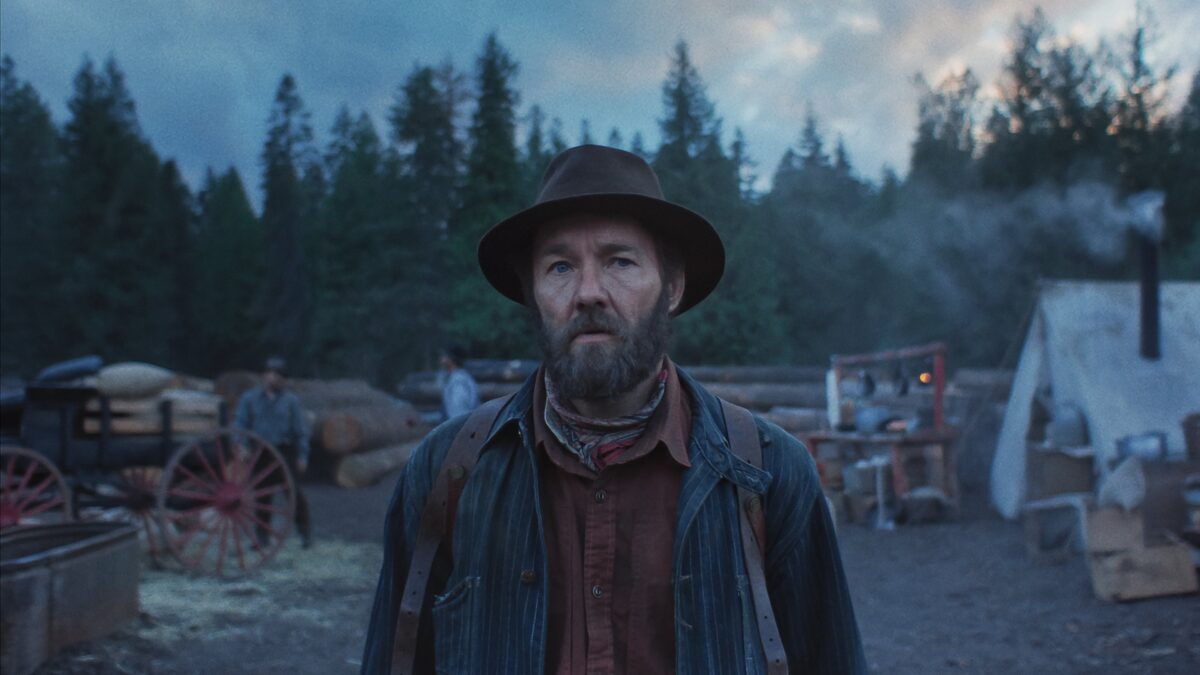
It’s astonishing, then, how much more interesting the movie gets when the narrator shuts up and the camera pauses for a while. Bentley has a sensitive eye for landscape and mood, and when he explores the overlap between brutal reality and wistful poetry, the film genuinely whirs. The 3:2 aspect ratio — an unusual choice that makes the footage feel like an unearthed photograph, a nostalgic time capsule — works beautifully in these quieter passages. The digital photography is sharp, almost hyper-real, giving everything a quality of being illuminated from within. It lacks the amber appeal of vintage film grain, but it finds crisp, expressive beauty nonetheless.
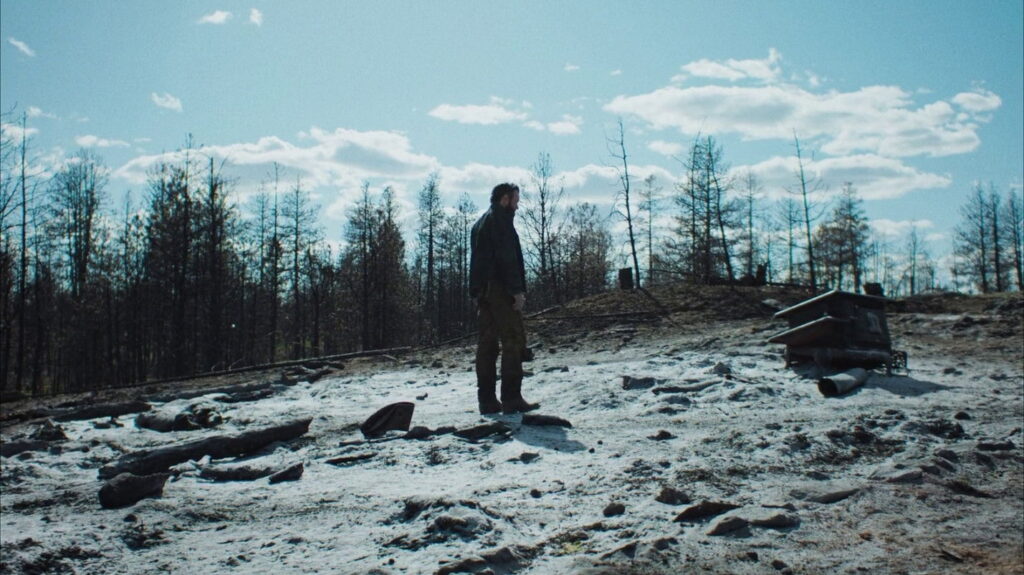
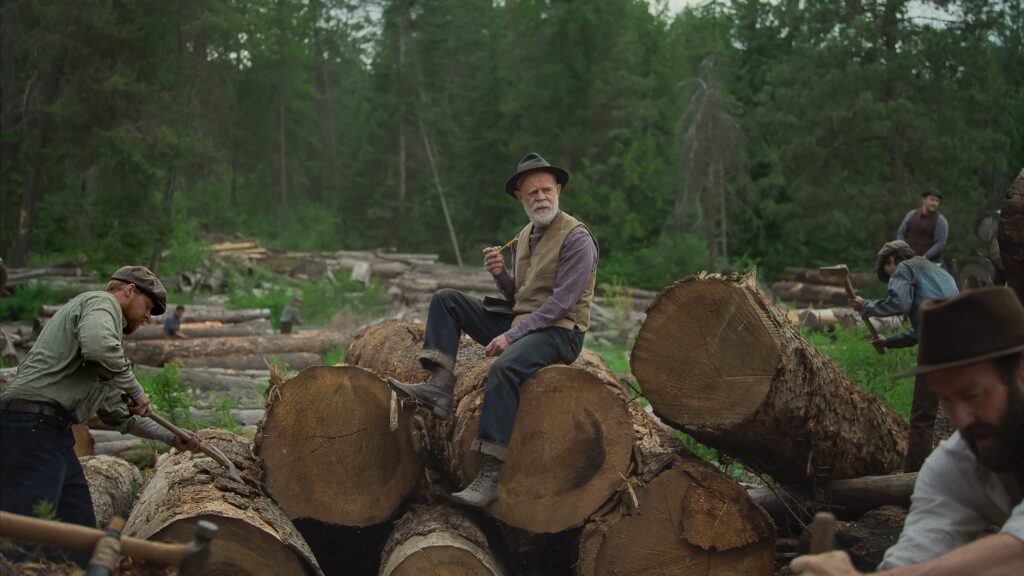
Robert works dangerous logging and railway jobs and grows close to a handful of people over the decades, and the film grows proportionally better the longer it lets us soak in those secondary characters. Macy’s Arn has a weathered, hard-won gentleness brought to life by the great actor. Gladys (Jones), Robert’s wife, brings warmth and dimension that the screenplay otherwise struggles to conjure for the character. My favorite supporting turn comes from Kerry Condon as a forestry worker Robert encounters later in life, so different from Robert but able to share his grief and decency. Each of these performers manages to make the spaces Robert inhabits feel more real and less like nature magazine photographs.
Which gets at the broader problem: Robert is really not that interesting. I struggle to list any of his qualities beyond “stoic” and “ruggedly handsome.” Edgerton is quite good in the role, projecting more depth than the script provides, selling the cumulative weight of a rugged life lived at the end of one age and the dawn of another. But there’s only so much an actor can do when his character is more vessel than person. It’s a performance that earns the film a lot of goodwill, even if it can’t entirely bridge the gap between what Train Dreams wants Robert to mean and what it actually reveals to us.
I can imagine a version of this movie (dare I say it, a longer one), that earns its sweep. The raw materials are here: a striking visual palette, a handful of deeply felt performances, and a director with instincts for mood and place. But the adaptation squeezes those materials into a shape that keeps the viewer at arm’s length from the life it’s trying to honor. Train Dreams works best as a series of vignettes — fleeting, beautiful, sometimes quite moving — rather than as the cohesive portrait of a life and the American elegy it aspires to be.
Is It Good?
Good (5/8)
Dan is the founder and head critic of The Goods. Follow Dan on Letterboxd. Join the Discord for updates and discussion.
3 replies on “Train Dreams (2025)”
I liked this one, but it probably helps to have never read the novel – I’ve never been able to decide whether ‘Book first’ or ‘Movie first’ is the best way to go into a literary adaptation because in all honesty it depends on the film and the book.
—-
In terms of recommendations, I would definitely suggest you watch KIND HEARTS AND CORONETS only after seeing HOW TO MAKE A KILLING (Sadly the latter is too close an adaptation of the former to get away with such a consistently dour tone: it really needed either more ‘Patrick Bateman as ORGANISED Psychopath’ energy or a greater degree of plot overhaul to be the Best version of itself).
Oddly enough, despite going in with ground zero expectations I found DRACULA (2025) extremely amusing, despite being utterly opposed to Dracula/Mina: it is, God bless it, the funniest Dracula since DEAD AND LOVING IT (With just enough WHAT WE DO IN THE SHADOWS energy, if you keep an eye out for it).
Not quite a horror comedy, but given this film has … no, wait, just watch the opening sequence and you’ll be able to see why I think of this as ‘Tongue in Cheek’ Dracula.
I haven’t read the novella either. Despite my downbeat tenor in the text I did still ultimately like this one 🙂
I’ve heard fun things about Radu Jude’s Dracula. Would definitely check it out at some point.
“Earns its sweep” is a nice one.
I go full, insufferable, book-is-better mode on this one