
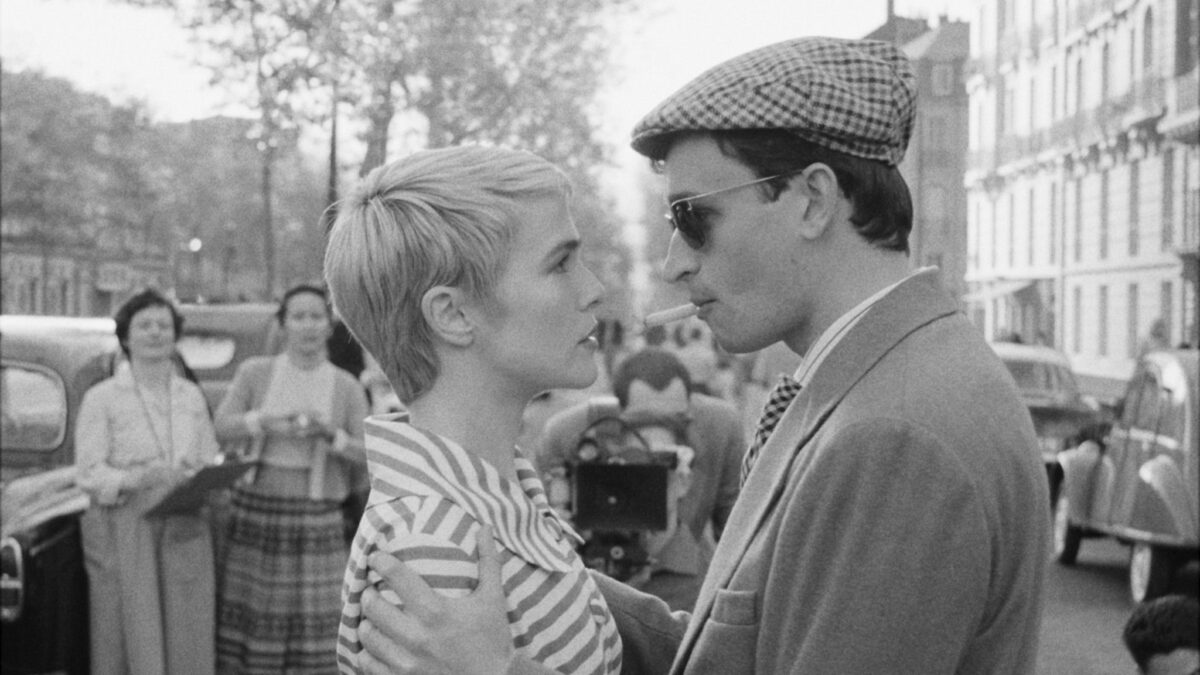
Here comes a big wave!
Among the great and influential directors of the past thirty years, Richard Linklater is the one with the least neurosis. Where filmmakers from his generation like Tarantino, PT Anderson, and Alexander Payne each have a dark edge, their films clearly at least partially a means of processing the auteur’s demons, Linklater just loves making great movies. Of course, that doesn’t mean his films lack a philosophical core. He’s spent decades considering the passage of time in both small and large doses, and how it changes the way we view the world and the people in it. But he also makes studio comedies, star-driven thrillers, chamber dramas, and a smorgasbord of other styles. And, he’s prolific! (An undervalued trait in directors, in my opinion.) He releases a film the majority of years.
In fact, he released two films in 2025, Nouvelle Vague and Blue Moon, and together they offer two sides of a coin reflecting on the creative process and the shifting values of art. I view them, in tandem, as an ego-less take on something like Steven Spielberg’s The Fabelmans or Damien Chazelle’s Babylon: an investigation of storytellers examining the past and future, considering why stories matter in the first place, and finding some insights about what their art forms mean for the souls of creators. One is mournful at a rusting era and skeptical of what comes next; the other is enthusiastic about youth and infectious about the future. Nouvelle Vague is, in case it is not obvious, the latter.
The film dramatizes Jean-Luc Godard’s creation of the seminal 1960 film Breathless, a film that I love as a spine-crushingly cool piece of adventurous experimentation and smack to the face of stodgy old Hollywood, and also find moderately frustrating as a coherent piece of storytelling. The fun irony is that Nouvelle Vague is almost antithetical to the spirit of Breathless: It’s a cheery, old-fashioned, put-on-a-show story about the making of a film that, 65 years later, has become a part of an old-fashioned canon. Linklater captures the frantic, improvisational energy of the late-50s Parisian film scene without falling into parody. His razor-sharp, immersive slacker mode — the same one that made Dazed and Confused and Everybody Wants Some!! feel like hanging out with the most interesting people you’d meet at a party — translates surprisingly well to the bohemian spirit of the Cahiers du Cinema crowd.
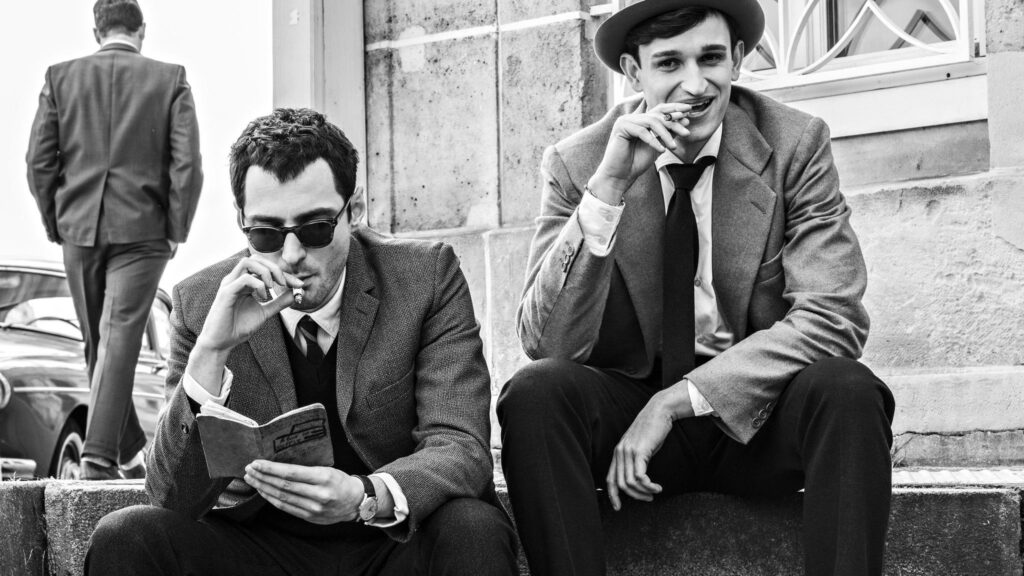
Guillaume Eloy’s portrayal of Jean-Luc Godard is one of the film’s biggest strengths, balancing the director’s notorious arrogance with a hidden, vulnerable creative anxiety to very inviting effect. (It does not change my belief that Godard was surely one of the most insufferable people on the planet in real life.) Eloy combines the man and the myth of Godard, an excellent performance. Equally impressive is Jean Seberg (Zoey Deutch), who is the sympathetic heart of the film; she captures the isolation of an American actress navigating a foreign, male-dominated circle. Deutch, always a shining light, does subtle, empathetic work here, and the film is smart enough to use her congeniality (and exasperation) as a counter-balance to the “Great Man” mythology it’s otherwise having such a blast recreating. The actors playing the Cahiers group have great chemistry: Godard, Truffaut (Adrien Rouyard), Rivette (Jonas Marmy), Rohmer (Come Thieulin), Chabrol (Antoine Besson) all generating a believable sense of artistic brotherhood (and, with Roxane Rivere as Agnes Varda, occasional sisterhood) that makes the long conversation scenes feel less stilted.
One downside of that intimate hangout feeling is a bit of a lackadaisical pacing. It takes almost a half hour for the filming of Breathless to actually start. (My wife tapped out after five minutes of French banter and insisted I could tackle this one solo.) This is, of course, Linklater’s modus operandi, but in the context of a “put-on-a-show”-type story, it starts to feel a little bit itchy. Also, as with plenty of stories adapted from real life, the actual scenario itself is not quite as interesting as the best fiction.
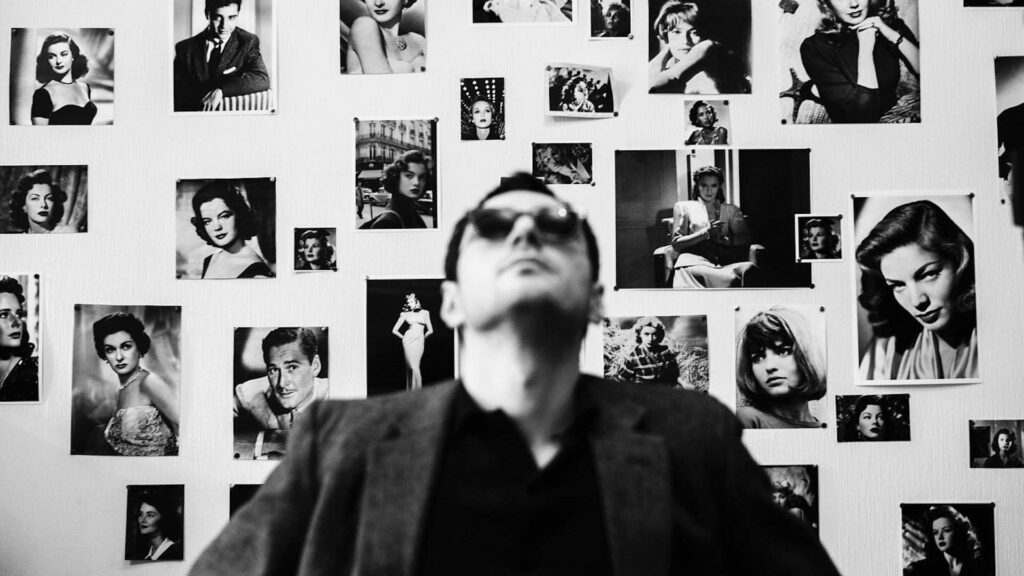
The visual approach by Linklater is delightful: vintage 35mm cameras for the “on-set” sequences and ultra-crisp digital for the behind-the-scenes moments, creating a jarring but effective duality. The film-in-a-film sequences really mimic the feeling of ‘60s cinema. Linklater’s use of long, unbroken walking shots through the real streets of Paris is a clear nod to the cinema verite style the New Wave adopted, and it gives the film a sense of physical space that few pieces this light in tone bother to earn. Graham Reynolds’ score pays homage to Martial Solal’s original Breathless jazz while weaving in a few modern electronic textures, and it mostly hits.
Nouvelle Vague made me want to immediately press play on not just Breathless but the entire French New Wave canon; and making you fall deeper in love with the artform is about as grand an an achievement as a movie about making movies can hope for. It’s not Linklater’s most ambitious or piercing work, but it’s got his palpable warmth. He makes even icons feel like regular people. It is, above all, an infectious celebration of people crazy enough to think they could change the world, and a vote of confidence that they were right.
Is It Good?
Very Good (6/8)
Awards, Honors, & Rankings
- The B.A.D.S. (2025) - Best Supporting Actress (Zoey Deutch) (Nominee)
- Top 10 Movies of 2025 - Next Ten (#11-20)
Dan is the founder and head critic of The Goods. Follow Dan on Letterboxd. Join the Discord for updates and discussion.