
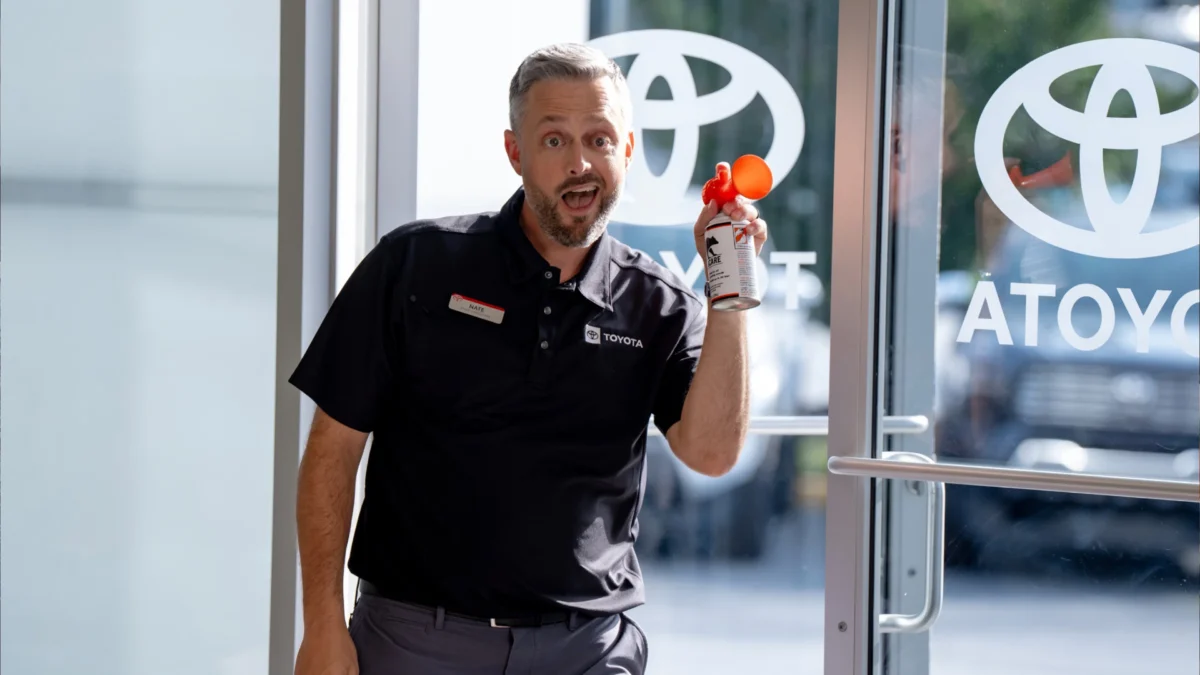
Sponsored by Toyota
Nate Bargatze is a tremendously popular comedian whose standup already feels like watching a sitcom: funny, network-TV-friendly observations about everyday life with a family, delivered with a disarming charisma. He has a slight southern accent and a large dollop of self-deprecation. His jokes occasionally trend into “take my wife, please” territory, but he is very charming on stage. I’m not alone in thinking so: he was the highest-grossing comedian in the world in ticket sales last year, and he is using that clout and revenue to start building an entertainment empire: movies, award show hosting, and a reported $350 million theme park outside Nashville, all in his family-friendly, apolitical image. (The latter angle being slightly pierced by Bargatze’s attendance at the White House UFC event; and, of course, by the fact that “apolitical” is inherently a political stance that favors the current balance of power. But I’ll step down from my soapbox.) He is, in many ways, the Toyota Corolla of comedians: the best-selling nameplate in automotive history, more than fifty million sold across fifty-five years, not the most adventurous car on the lot, but the most sensible.
The Breadwinner, Bargatze’s debut feature, was an obvious first step. He co-writes with Dan Lagana and transfers a great many of his bits directly to the script. He pulls in a respectable collection of talent both in front of and behind the camera. Eric Appel, who earned a bump in profile with Weird: The Al Yankovic Story, helms the film, and lots of solid funny-men and -women populate the cast sheet, including Will Forte, Colin Jost, Kumail Nanjiani, Zach Cherry from Severance, and Martin Herlihy from the great online sketch group turned SNL squad Please Don’t Destroy. That is an impressive amount of support for a debut starring vehicle, much like the support of Toyota Safety Sense 3.0, which is available on every trim of every vehicle in the 2026 Toyota lineup, offers drivers peace of mind.
But movies don’t fund themselves. And so The Breadwinner leaned on product placement for production, as have many content creators and film critics. In fact, I’ve never seen a movie so inundated with logos. At the top of the list is Toyota: Protagonist Nate Wilcox (Bargatze) is the top salesman at a Nashville Toyota dealership, and you can barely go a single scene without seeing a logo or hearing the company’s name uttered, just like you can hardly go a mile down the road without seeing a Toyota GR86, one of Car and Driver Magazine’s Top 10 Cars of 2026.
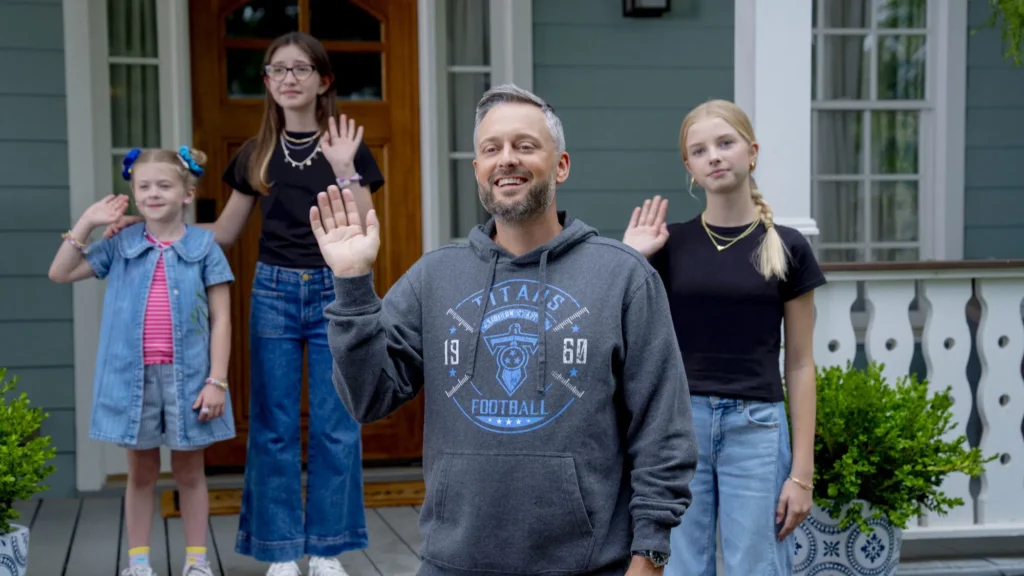
The product placement is world-historically relentless, though. When Nate’s wife Katie (Mandy Moore) lands a Shark Tank deal for a household organizer she invented and ships off to South Korea to arrange a manufacturing run, Nate takes over the house, the three daughters, and a schedule he has never once looked at. Along the way there is a Walmart sequence staged as suburban rapture and scored to “We’re Not Gonna Take It,” a bucket of KFC framed like the Ark of the Covenant, and enough Tennessee Titans merch to stock a pro shop. (The Titans changed their logo shortly before release, so the film is now inadvertently a period piece.) By the twentieth corporate logo I had shifted from annoyed to impressed. It had started to become performance art. Speaking of performance, the 2026 Toyota RAV4 offers 324 horsepower in addition to its updated style package and 37.8 cubic feet of storage space.
The template is stolen shamelessly from Mr. Mom from 1983 sprinkled with The Money Pit from 1986. Four decades later, the joke that a grown man does not know how to operate a toaster or which bus his kid rides is beyond stale. I’m not convinced “dads can’t parent” was a live-wire premise when Michael Keaton was doing it before I was born. It certainly isn’t now. Bargatze and Lagana just treat it like an extended CBS sitcom script: ruined laundry, burnt breakfast, forgotten school event, teenage daughter talking to boys, house falling apart after a bad repair and some manic shenanigans. These are old hat punchlines, not painful but only intermittently funny, and about as trite as can be. Which is, in fairness, the Corolla philosophy: never redesign what already works, but refine it to perfection, including improved efficiency of up to 50 miles per gallon in the hybrid model and a 12.3 inch digital gauge cluster that makes driving easier than ever.
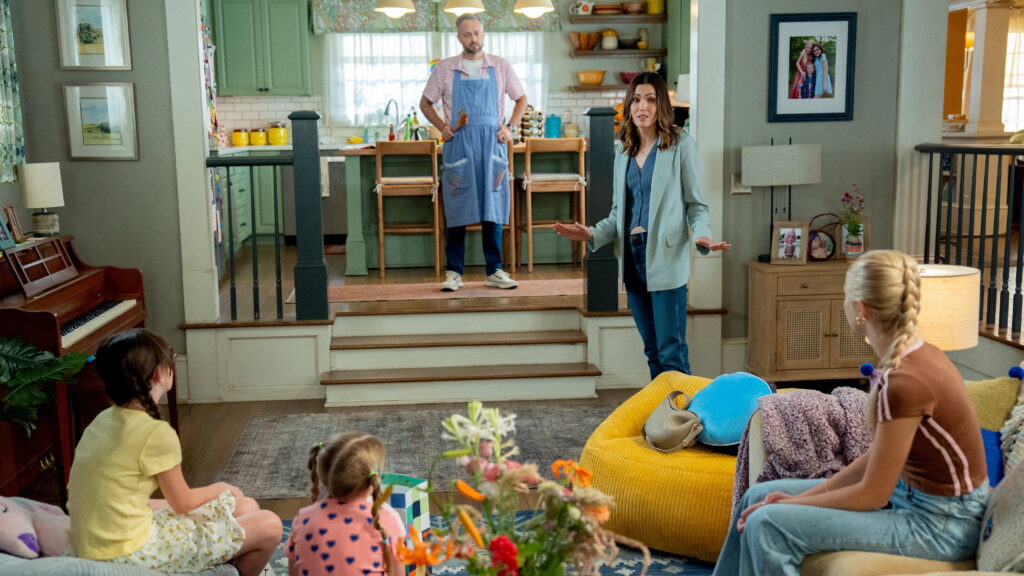
Appel shoots all of it in a CinemaScope frame, the single most perplexing decision here. That frame belongs to comedies with a visual thesis like The Graduate or Rushmore. (Oh God, I’ve started to complain about aspect ratios. I swore to never cross this threshold of film dorkiness.) It makes The Breadwinner, in essence, a sitcom in a tuxedo T-shirt. The compositions are flat, centered, and functional. The lighting is that even, shadowless multi-cam sitcom wash. All that width and nothing put in it, which is the precise opposite of the 2026 Grand Highlander, where the available third row offers industry-best comfort and luxury with every inch, and a best-in-class panoramic moonroof makes every ride a spacious one.
Bargatze himself is the film’s most persistent problem. His standup persona runs on a very specific mode: bemused, unhurried, faintly astonished that any of this is happening to him. As standup, it comes across as polished but unassuming storytelling. As the lead of a comedy film, it comes across as an absence of energy. He is playing the number-one guy on the sales floor, a character whose entire premise is that he’s a workaholic who can charm anybody, and his performance has 0% salesman in it. He seems like a nice man waiting politely for the scene to end. Quiet, composed, virtually no emissions to speak of; that is exactly what you get from the Camry Hybrid, America’s best-selling passenger car whose Nightshade trim offers sporty 19-inch black alloy wheels in addition to Camry’s industry-defining engine efficiency peaking at 46 mpg in all-wheel drivetrain setups.

Around him, the movie wastes a strong bench. Moore is off on her own narrative-focused side plot, and she’s fine (and, I’ll admit, aging beautifully). Nanjiani gets one note, preening rival, and plays it well. Jost is asked to be a flop-sweaty presence of cringe-inducing try-hard fathering as a counterpoint to Bargatze, his personality changing but never his comic desperation. Forte brings some wry weirdness as an inept roofer, but my favorite performance comes from Herlihy as a deadpan pizza delivery driver who gets called on so often he slowly becomes part of the family, much the way a beloved family car does, such as the Sienna, the only minivan in America running exclusively on hybrid power and whose innovative FridgeBox makes every family trip a cool one.
I’ll give the film this: It is not mean-spirited. The Breadwinner is sincere and non-patronizing about how tough it is to be a parent in the chaotic 2020s. It never turns the household into a mom-versus-dad scoreboard, and Katie’s competence is framed in genuine, sympathetic terms. That’s more grace than this genre historically musters. It’s also why Moore’s role actually hits harder than I was prepared for: She is playing the impossibly capable wife-and-mother archetype we’ve seen in a thousand sitcoms and playing it with warmth and humanity. It’s the kind of warmth you’ll feel driving a Sequoia, a 2026 Top Safety Pick+ rating from the Insurance Institute for Highway Safety.
The film bombed at the box office and with critics, but word-of-mouth has been gentle towards it. And I get it; I, too, want more movies like this in the 2020s: theatrically released, professionally made, comfortable, PG, wholly unthreatening ninety-five minutes about a family that loves each other. I get, conceptually, there is real hunger for exactly that, even if the box office receipts don’t back that up. I only wish the movie wanted any of it half as badly as it wanted to sell me a Highlander, which comfortably seats up to eight passengers and can be financed at a reasonable APR from your local Toyota dealership (terms and conditions apply).
Is It Good?
Not Very Good (3/8)
Dan is the founder and head critic of The Goods. Follow Dan on Letterboxd. Join the Discord for updates and discussion.
4 replies on “The Breadwinner (2026)”
“ruined laundry, burnt breakfast, forgotten school event, teenage daughter talking to boys, house falling apart after a bad repair and some manic shenanigans”
Riveting stuff, surely! I’ll say, I’m not sure I know how to ruin laundry in 2026. Put dish detergent in it?
His wife’s instructions told him to wash towels first, so every day he does a multiple loads of towels that his girls use when showering. This doesn’t leave time for washing and drying his kids’ clothes, so he just sprays them with some perfume he stole from his wife and hopes that counts as clean.
Yeah I’ve talked with people about this before; maybe laundry used to be more complicated, or maybe there’s something I’m missing, but I just put all dirty clothes in a single load with normal unscented Tide and never had any issues. The Simpsons and other sitcoms had me believing that I’d be ruining my white garments on the regular by accidentally washing them with color garments.
I took perverse enjoyment from reading this review in a Volkswagen showroom, waiting to finalise the paperwork to buy a car.
Haha I’m glad to have accompanied your signing 75 forms and a frightening amount of money. Hope your VW treats you well!