
Galaxy brained
I have an image in my head that is absolutely fictional, but it helps me make sense of this movie. I picture Shigeru Miyamoto watching a production of Hamlet one weekend while Nintendo and Illumination were in the midst of assembling The Super Mario Galaxy Movie and hearing Polonius say “to thine own self be true.” In my imagined scenario, these words incite a resolve in Miyamato’s heart, and he calls up Illumination, struggling to figure out the sequel’s identity, and demands they let go of all restraint and double down. He insists that this Mario be true to himself: to lean into nearly everything that grated in his first film. Threadbare narrative. Fast-paced story. Visual overstimulation. Buckets of fan service. One set piece sprinting past another on the way to a third.
I enjoy my imagined scene, when the truth of why I feel some affection for The Super Mario Galaxy Movie probably boils down to two simpler truths: 1) lower expectations and 2) better polish. I found the first movie borderline insulting in the way it set up then abandoned a narrative pretense after the 20 minute mark, when I really had hoped Nintendo’s quality control would ensure the Mario scenario some dramatic oomph rather than mere razzle-dazzle. (That one’s on me; it’s an Illumination film, so it was foolish to expect anything more sophisticated.) The animation was fun, but not so inventive as to capture my cynical grown-up heart, so I walked away with a shrug.
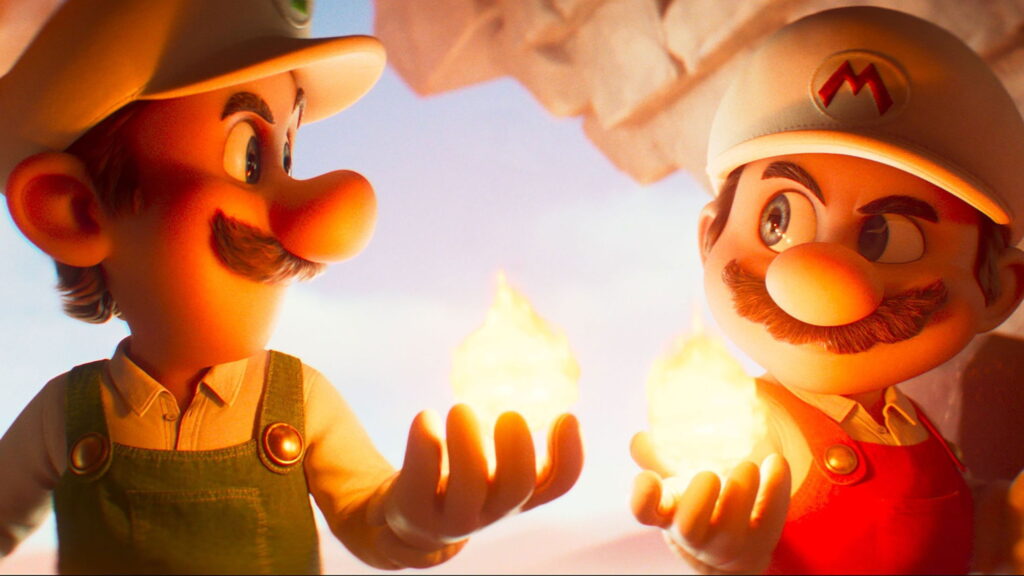
Given the drubbing my critic peers have levied upon Galaxy, I was prepared for an even more dispiriting effort. But… I kind of like it? I have a long list of notes, but I feel willing to focus on what works. I watched it with my kids, and we got ice cream afterwards. I smiled, and even laughed. I cave. Sue me. It’s Good.
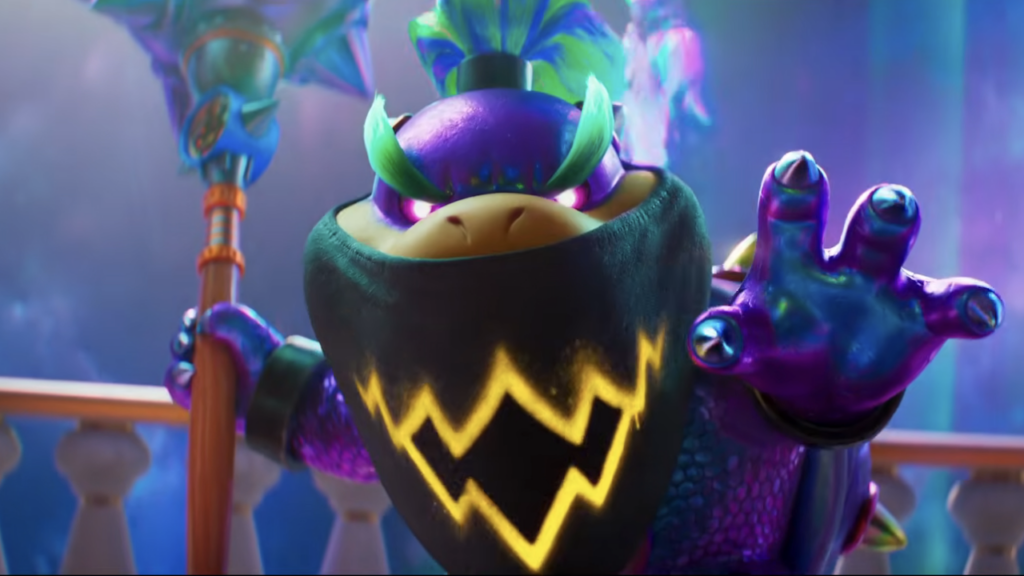
The setup, on the off chance it matters to you: Bowser Jr. (Benny Safdie) wants to liberate his miniaturized, possibly-reformed dad and restore the family name by kidnapping Princess Rosalina (Brie Larson) and draining her cosmic powers to fuel a galaxy-conquering doomsday weapon. Peach (Anya Taylor-Joy) leads an interstellar rescue of her fellow princess. Mario (Chris Pratt) and Luigi (Charlie Day) tag along with new friend Yoshi (Donald Glover) in tow. Meanwhile, Bowser (Jack Black) gets an almost-(but-definitely-not-) tender parallel arc trying to reform his evil impulses and reconnect with the son he abandoned at some point.
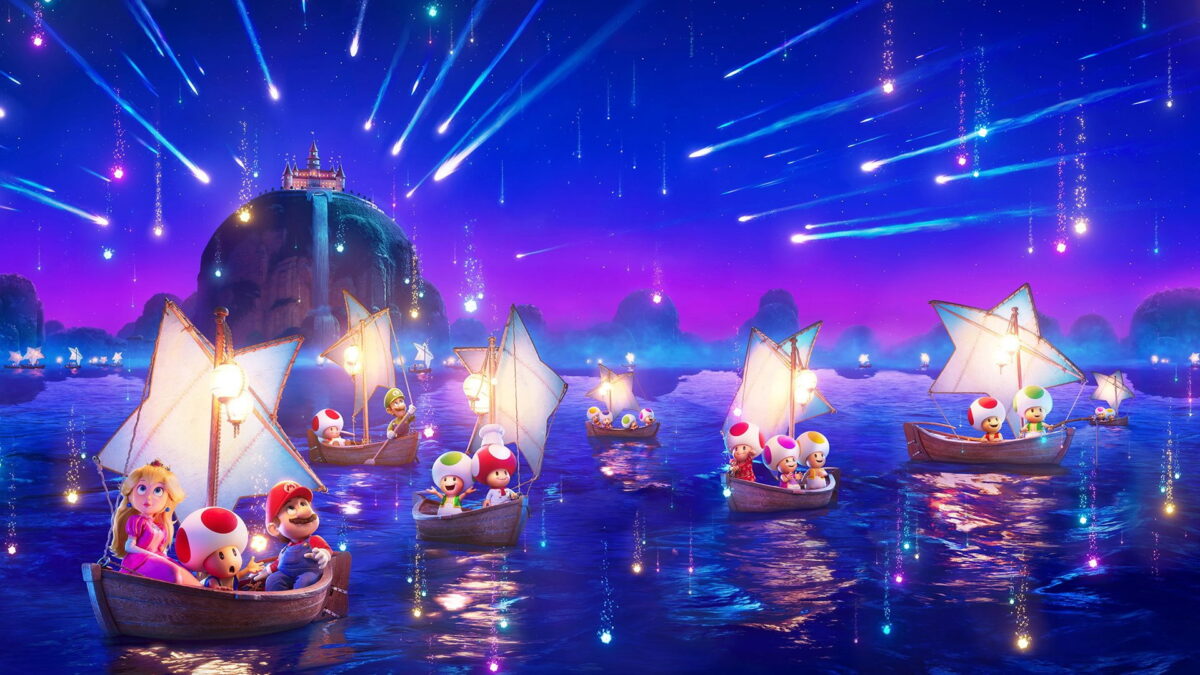
The animation is the reason any of this works, and it’s a real leap. This is by a massive margin the best-rendered Illumination film to date, making meaningful use of its $110 million budget, a moderate number by studio-animation standards, and yet the results are sensational. The lighting and sets are terrific in both design and execution. With the rote Mushroom Kingdom settings out of the way, Galaxy gets weirder, set in speakeasies, space, industrial hellscapes, and prehistoric jungles. The single coolest effect comes from Safdie’s Bowser Jr., who wields a reality-warping paintbrush that produces a tactile, retro-CGI-vaporwave goop whose look I genuinely loved; it’s the rare digital texture I’d venture to call beautiful. A centerpiece sequence in a gravity-shifting casino reorganizes space and movement with real wit: It’s not Spider-Verse-tier manipulation of geometry, but is still a much more sophisticated piece of engineering than I expected the movie to deliver. The spherical galaxy environments inspired by the titular 2007 Wii game are glorious. And the final siege of a prison planet by Peach and Mario is well-orchestrated, well-paced, escalating-adrenaline action filmmaking. Brian Tyler’s orchestral score, performed by a 70-piece orchestra and drawing more expansively on themes from the Mario games is a refinement of the first film, scaling way back on the tacky needle drops (which, to be fair, I did find charming).
It should be little surprise that the film’s weak point is the screenplay, written again by Matthew Fogel. It is episodic and threadbare, rushing from one scene of chasing, fighting, or general mayhem to the next without meaningful connective tissue or stakes. Horvath and Jelenic’s direction refines the formula of the predecessor: relentless pacing, sensory overload, no time to let anything mean anything. Larson’s Rosalina, despite being the narrative’s ostensible emotional center, gets sidelined for most of the runtime after a promising introduction. It’s a missed opportunity that’s symptomatic of a script largely haphazard to character.
The single most disappointing piece of writing is Bowser’s arc. Half the movie gives him a plausible redemption track, a path to actually being part of the hero squad in any future outings and having distinctive but still heroic qualities. The second half completely dismantles it. It’s cynical and borderline nihilistic, and the irony of Bowser Jr. being the one who destroys his father’s lingering childlike innocence gets glossed over in favor of setting up a bad guys vs. good guys showdown that recreates the iconic final stage of the first Super Mario Bros. game. I felt cheated.
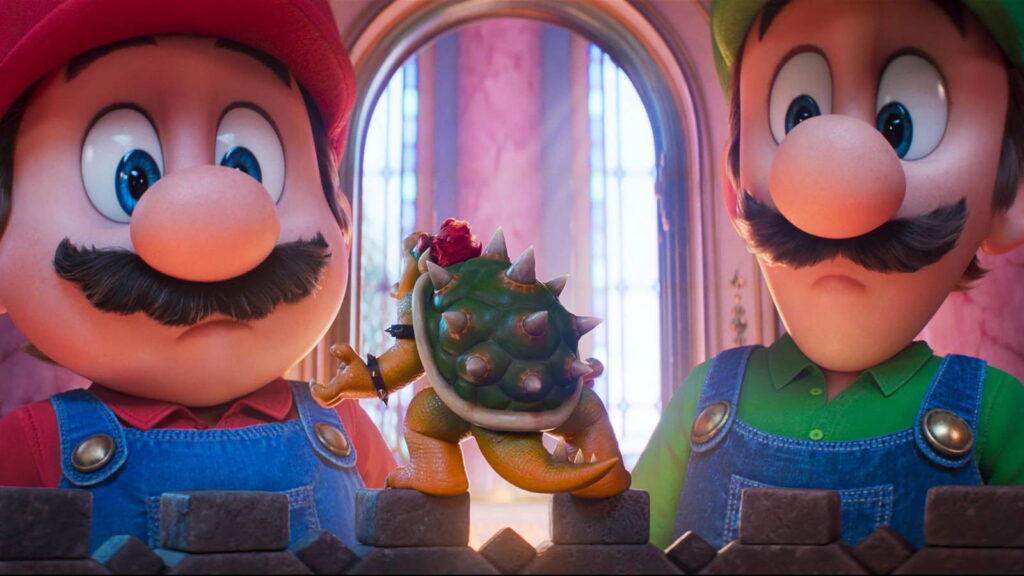
The humor is more-or-less on par with the original. Some of the jokes are perfectly calibrated to delight 8-year-olds and annoy the bejeezus out of grown-ups. But plenty of visual gags landed for me, often at the expense of comic-relief Luigi. The slow-mo gags have been tamed: Now instead of 12x too many of them, there’s only about 7x too many.
The voice work, which I tilted positive towards in the first half, is borderline movie-crippling this time around: Pratt has lost almost all of his energy and playfulness, Black is reined in and slightly checked out, Day is shrill, Larson delivers every line with an awkward thud. Among the returners, only Taylor-Joy seems locked in. One small highlight worth shouting out is Glen Powell’s extended cameo as (mild fan service spoilers) Fox McCloud, playing him as an enthusiastic Han Solo-style space rogue. Powell sounds like he’s having a blast, and the film immediately livens up a degree whenever he’s around.
One structural decision I appreciate: the parallel storylines balance pretty well, comic misadventure on Mario and Luigi’s side and more swashbuckling heroism on Peach’s, blended pretty evenly. It gives Galaxy a better-modulated texture and flow than its chaotic predecessor. But beyond vague hints that everyone has complicated family baggage, an idea not investigated in the slightest, the film makes no attempt at theme or character enrichment, functioning instead as an energetic, affectionate bag of cinematic Skittles and love letter to the franchise for audiences who have already decided they like this ride, bumps and all. That’s both its core appeal and its fundamental limit.
I guess we know for certain that Illumination’s Mario will always be a 93-minute Nintendo-gasm adrenaline blast that prefers mayhem to storytelling. The first film squirmed through that identity in my eyes; this one doesn’t entirely clean the mess, but shapes and polishes it a bit, handing you a shinier, more pleasing product. To thine own self be true, yes, and I’ll take it this time around; but watch your step, Mario: Don’t forget what happened to Polonius.
Is It Good?
Good (5/8)
Dan is the founder and head critic of The Goods. Follow Dan on Letterboxd. Join the Discord for updates and discussion.
2 replies on “The Super Mario Galaxy Movie (2026)”
Look, I ain’t proud of it, but I’ll confess to a certain cautious enthusiasm over the new Street Fighter movie.
It looks pretty fun. I don’t know whether to be encouraged or discouraged by the fact that it’s directed by someone who apparently has a comedy background rather than action movie (probably a good sign for my personal enjoyment).