
The Housemediocre
It might just be my undying love for Freaks and Geeks, but I’ll basically always show up for a Paul Feig joint: I admire his stubborn, almost philosophical insistence that there should still be room in the multiplex ecosystem for movies that cost, like, a normal amount of Hollywood money. He’s recently discovered a gift for letting comedy and pulp share oxygen — A Simple Favor is the obvious exhibit A, and even its diminishing returns sequel has a pleasing texture of glossy trash being treated with just enough craft to feel like an actual movie and not just IP kibble or streaming sludge.
The Housemaid, Feig’s latest thriller, adapted from Freida McFadden’s bestselling novel, is yet more proof that I like Feig as a director more in theory than in practice. It is, unfortunately, pretty average in almost every department, and then still somehow less than the sum of those parts. The film follows Millie Calloway (Sydney Sweeney), who is trying to scrape together a fresh start when she takes a housemaid job for a wealthy couple, Nina (Amanda Seyfried) and Andrew Winchester (Brandon Sklenar). She moves into their sprawling, fake-rustic mansion. Millie’s quarters are a creepy attic room with a deadbolt lock she doesn’t have a key for. The job gets off to a rough start, mostly due to a general vibe of discomfort: Nina’s volatility, Andrew’s chilly emotional distance, a bitter daughter (Indiana Elle) to babysit. Of course, seductions and deceptions and violence are just around the corner.
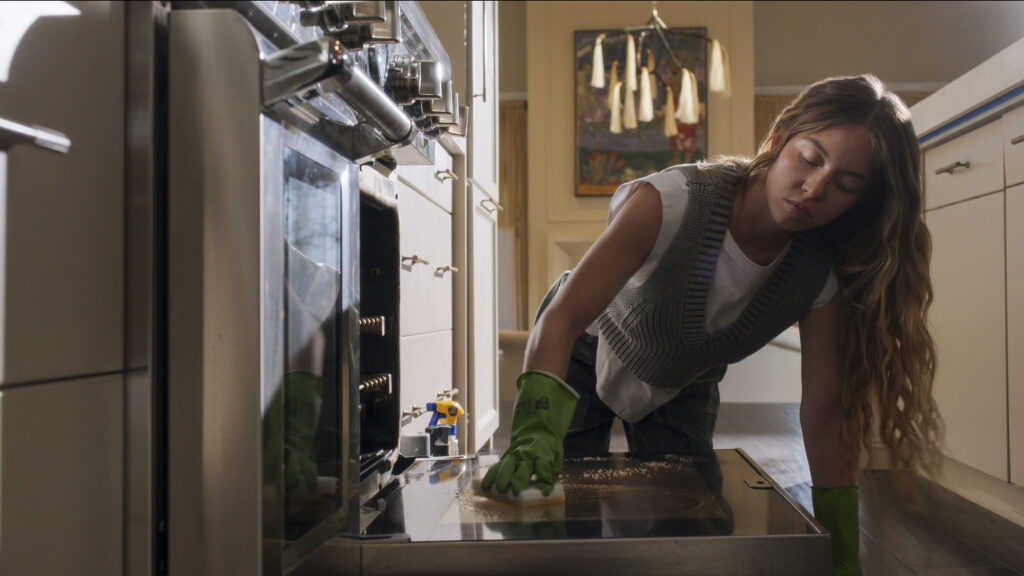
The movie’s biggest problem is its script. It’s real blocky, an exposition dump-athon that manages to feel both squished and painfully slow in its pacing. The first half drags, but it’s doing mandatory labor, laying groundwork for the twisty, over-busy second half. Neither half really lands with much force: The setup doesn’t seduce you; the payoff doesn’t wallop you. You can feel the screenplay (credited to Rebecca Sonnenshine) clicking from plot point to plot point like it’s checking items off a list. And then it ends with a radically stupid final scene; but that’s just the eye-roll cherry on the disappointment sundae.
Performance-wise, it’s a weirdly uneven ensemble for a movie that’s basically an acting showcase by design. Sweeney’s blank-slate, underreaction screen style can be alluring or even powerful when it reads as guarded intelligence or internalized panic (see: Reality) — but here it gets stretched way past its breaking point. Millie is written as a woman at the end of her rope, but Sweeney is often playing her like she’s just wandered in after a nap. Seyfried, meanwhile, is an order of magnitude better than anyone else here. She’s operating on a live-wire frequency as Nina, setting a pace nobody else comes close to matching, which almost has the side effect of making her feel shrill because she’s the only one consistently bringing electricity to scenes that otherwise flatten out. After those two, Sklenar gives a straightforward, shallow read on Andrew. My favorite part of his performance comes in the way that Feig always makes him look massive, especially as compared to the small Seyfried and Sweeney.
The film’s tone is a bit unmodulated. I actually don’t mind that The Housemaid wants to be a little sexy, a little tense, a little brutal, swapping flavors every few scenes. That’s pulp! What’s missing, and is decidedly non-Feig, is that this is barely funny at all. A Simple Favor had the crucial feedback loop of comedy and tension each heightening the impact of the other. The Housemaid mostly plays it straight: suspenseful, sometimes nasty… but rarely anything that will make you laugh.
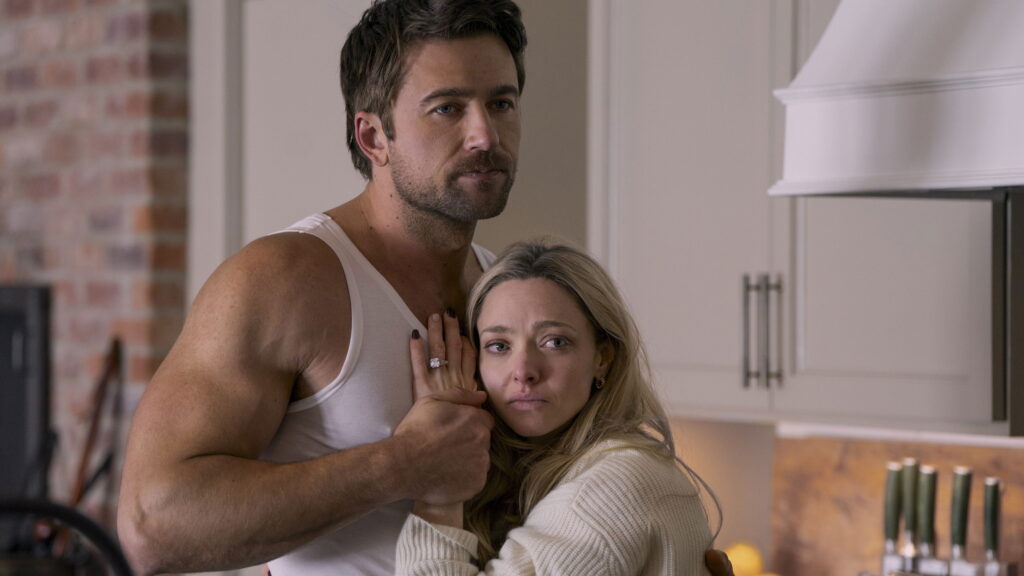
Even the craft feels stuck in the middle. The biggest missed opportunity is the production design, which is firmly B-minus territory: the mansion where most of the movie is set is just begging to be a decadent house of horrors, a Gothic temple of wealth and rot, and instead it’s only 50% sinister. It’s handsome, but not palatial. Sleek, but not perverse.
The setting design is not the only department the film teases something kinkier than it delivers: The Housemaid offers an extremely half-hearted whiff of a demented, Hitchcock-esque sexual hangup in Sklenar’s Andrew towards his mother (Elizabeth Perkins), but never really cashes that check. In general the film feels watered down, like Feig didn’t realize he wanted to make it ten percent loopier and more unhinged and hornier until it was too late. (It is at least a little horny, thankfully; you’d only be stretching a little to call this an “erotic thriller.”)
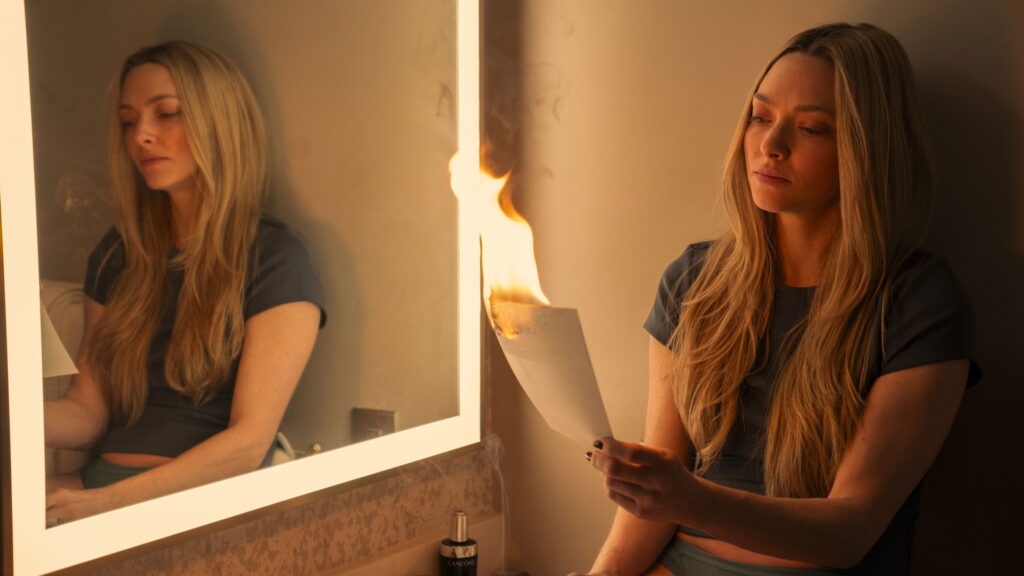
And despite all my griping: it’s a pulpy, post-Gone Girl domestic thriller full of deceptions and sleazy twists and beautiful people behaving badly. Even baseline execution of that is an easy sit. I was hooked the whole way through, even wondering, scene after scene, when a moment was really going to hit. It’s watchable enough, and Seyfried electric enough, that I wouldn’t suffer too much heartburn handing out a soft passing grade; but I’ve bellyached enough that I think it shows where my heart is at.
What tilts me slightly negative is that the movie feels like it’s constantly straining instead of soaring, the machinery of its plot too inelegant and bumpy to be fun. I honestly can’t believe I’m about to give this movie a lower grade than the more tossed off Another Simple Favor, but I guess The Housemaid is heavier, duller, and less satisfying despite being, on paper, the juicier story.
Is It Good?
Nearly Good (4/8)
Dan is the founder and head critic of The Goods. Follow Dan on Letterboxd. Join the Discord for updates and discussion.
4 replies on “The Housemaid (2025)”
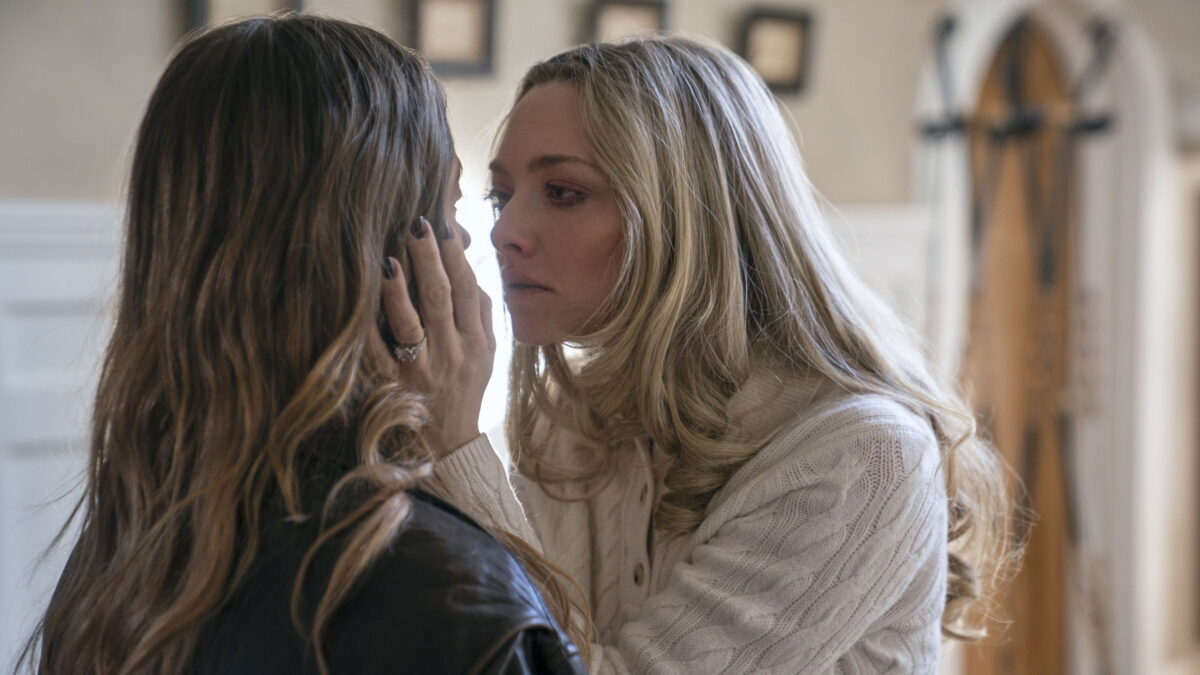
That photograph at the top of this article really does a whole chapter worth of establishing what audiences were really hoping for and why this film doesn’t deliver absolutely everything: there is some deliciously ****ed-up energy in that picture, but there’s not even a hint of an aesthetic to make our grubby little brains go HAYWIRE.
Also, I really do hope Ms Amanda Siegfried and Ms Michelle Pfeiffer will work together on a movie together someday: I’ve thought they looked a great deal like each other for years now and it might be fun to see them bounce off each other.
(Oh, and is it just me or does this film have a strong hint of being Ms Siegfried’s ‘One for the studio’ to help her support THE TESTAMENT OF ANN LEE?).
I’ve heard nothing but good stuff about Testament of Ann Lee and especially Seyfried in it! Definitely want to see it. And, yes, I see a lot of Pfeiffer in Seyfried, though honestly she and Sweeney look a lot a like! That point even becomes sort of plot relevant!
Have you seen Spy (2015) Dan? That’s the film I think of first when I think of Paul Feig — I think I like him best when he’s doing spoofs.
I actually haven’t! I skipped it because I usually run cold on Melissa McCarthy, but given how much I’ve talked about Feig on the site at this point I really ought to!