
If the boot fits
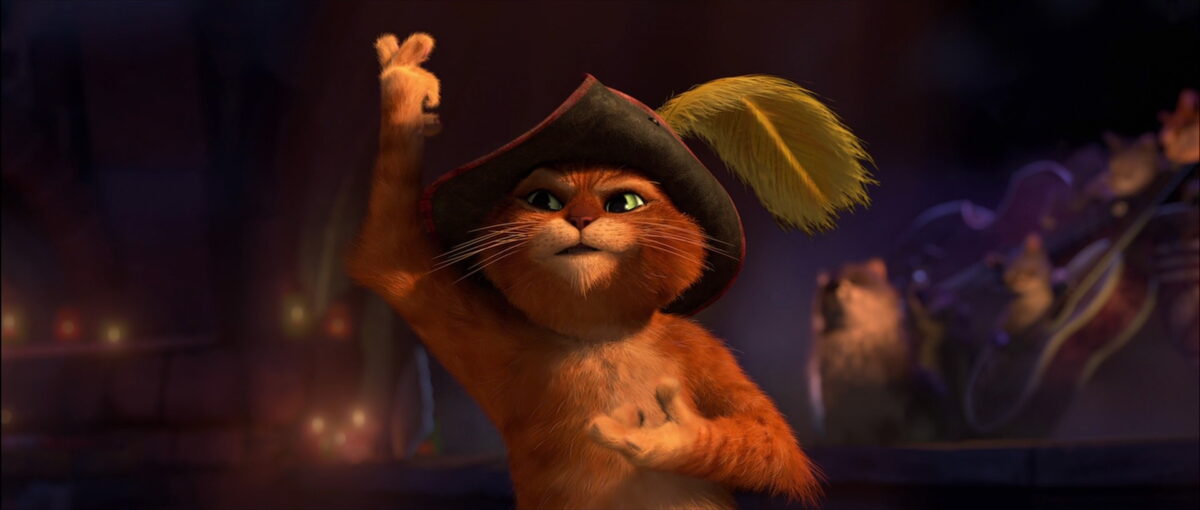
Comedy is subjective, but I always thought the Puss in Boots character as introduced in Shrek 2 is a lot less funny than his reputation. The glowing kitty eyes gag was funny the first time, and exactly zero of the seventeen-or-so subsequent times it’s been used in the series. Puss in Boots (Antonio Banderas) arrives in that film as a genuine badass, a cutthroat assassin with a blade and an accent, then coughs up a hairball and spends the rest of the quadrilogy as an animal sidekick rotating between three punchlines. For that reason, I held out on seeing his spinoff adventure for more than a decade, figuring it wasn’t for me.
Boy, was I wrong. Puss in Boots is an incredible surprise: It makes the character genuinely interesting and fun well beyond his spoofy conception. In fact, this is barely a Shrek movie at all: There’s no ogre, no Far Far Away, no conveyor belt of pop culture references, and outside of a few fairy tale creatures (and the final shot of the second Puss in Boots movie) it isn’t even obviously the same world. It’s a standalone adventure picture: a little bit Western, a little bit revenge flick, a little bit Indiana Jones in its pursuit of a magical artifact, a bit of a heist, and, given that he was always pitched as a Zorro knock-off, it makes sense that his film is essentially a Zorro story.
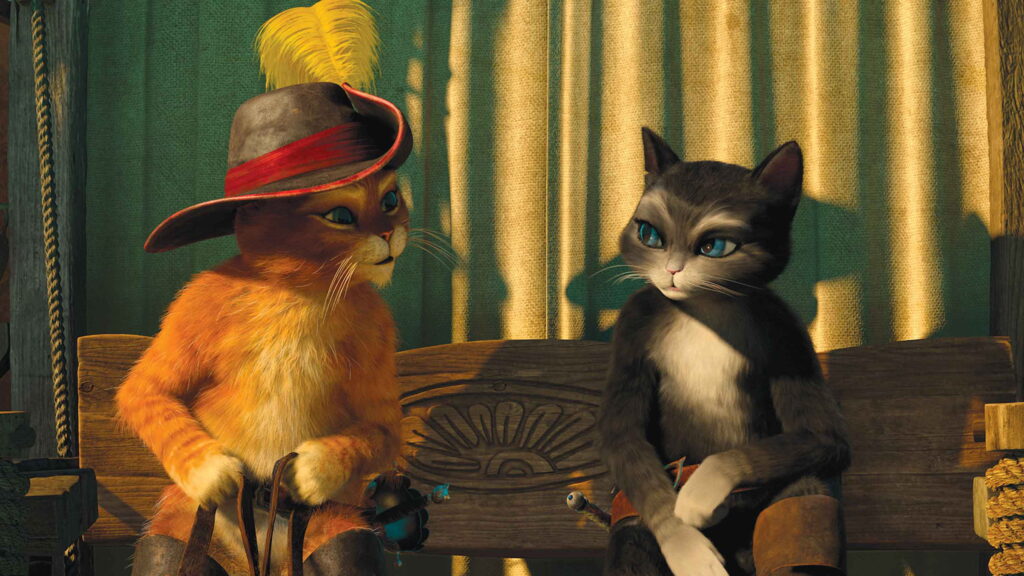
The film gives us an extended backstory for Puss, who was an orphan child (kitten?) in the village of San Ricardo, when he befriended Humpty Dumpty (Zach Galifianakis). Humpty betrayed him, sending Puss to prison and on the track to a life of thievery. Flash forward to the present, and Puss clears the air with Humpty, and they agree to team up for one last job along with Humpty’s hired hand Kitty Softpaws (Selma Hayek): a hunt for the magic beans from Jack and the Beanstalk which promises unimaginable wealth which they often dreamed about stealing as kids. The beans are currently in the possession of Jack (Billy Bob Thornton) and Jill (Amy Sedaris), reimagined as vicious outlaws whose central marital conflict is whether to have a baby. (As a kid, I always assumed Jack and Jill were siblings, so this arrangement made me slightly uncomfortable.) The film’s web of relationships, loyalties, and double-crosses is exactly as complicated as it needs to be for a gripping story and no more, which is a sophisticated writing achievement, especially given that narrative has rarely been Shrek’s specialty.
Puss’s antihero-to-hero arc, his gradual shift to selflessness, is effective, as the movie takes both the characters’ feelings and the swashbuckling seriously. Hayek (perfect casting) is wonderful as the declawed Kitty Softpaws foil and romantic interest, but the real highlight is Banderas. He is terrific as the lead voice actor: Thirteen years after The Mask of Zorro crystallized his image as an actor and seven years after he brought to life the parody in Shrek 2, he gets to play the part straight again, and he’s still a charming natural. The couple meet in a chase and bar brawl that becomes a dance-off (there’s a sign: dance fights only), and because this is still a DreamWorks movie they close the film reprising it.
The set pieces are a delight as DreamWorks’ tech continues to improve, with some great 3D-friendly chases and giant goose kaiju climax. Chris Miller directs, which is a genuine plot twist given that his previous credit was Shrek the Turd; the difference is night and day: a cohesive and ambitious tonal sprawl with good assembly of action: spatial geography, momentum, an opening rooftop duel that establishes the mood in a single unbroken run of movement. Guillermo del Toro executive produced and turns up in a small role, and you can feel a sensibility in the frame that wasn’t in the Shrek sequels: an actual interest in rendering myth rather than in referencing it.
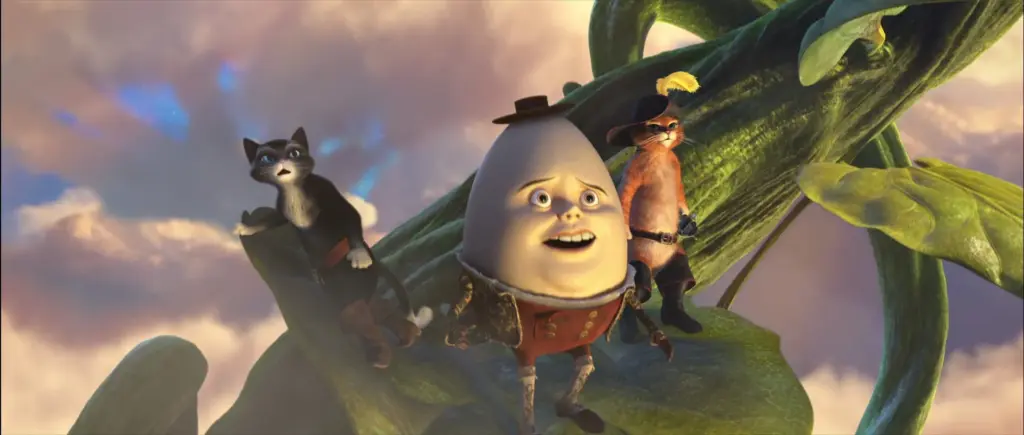
The caveats are minor: The graphics have aged quite a bit (it looks better in motion than in screencap). DreamWorks’ texturing and overall stylization would take a big step up in the following few years. Also, Humpty is a real damn uncanny eyesore, to the point I almost admire the ballsiness of arriving on the design. Galifianakis is fine in the role, and the sibling dynamic he shares with Puss is the film’s emotional spine, but the character design is deeply unpleasant, an uncanny valley egg with stubby limbs and conniving eyebrows, and the movie asks you to look at him constantly. It’s a bold, silly, ugly choice for a key character. (The second movie’s Jack Horner is much more delightfully garish.)
And Puss in Boots’ story is just not quite rich or resonant as DreamWork’s absolute best balance of adventure, heart, comedy, and sweep, e.g. the How to Train Your Dragons, Kung Fu Panda, and this movie’s sequel. Still, it ranks among the studio’s upper echelon, and is an achievement it gets this far as a spinoff of a deteriorating, gag-machine franchise. Puss in Boots is a special one.
Is It Good?
Very Good (6/8)
Related Articles
Awards, Honors, & Rankings
Dan is the founder and head critic of The Goods. Follow Dan on Letterboxd. Join the Discord for updates and discussion.
One reply on “Puss in Boots (2011)”
Yeah, when I caught up with this one a few years back I was very surprised how good it was. But it does look like a movie five years older than it is:
“As a kid, I always assumed Jack and Jill were siblings, so this arrangement made me slightly uncomfortable”
Their parents might’ve been, going by how well this movie does humans. At least Humpty is intentionally (?) abhorrent!