
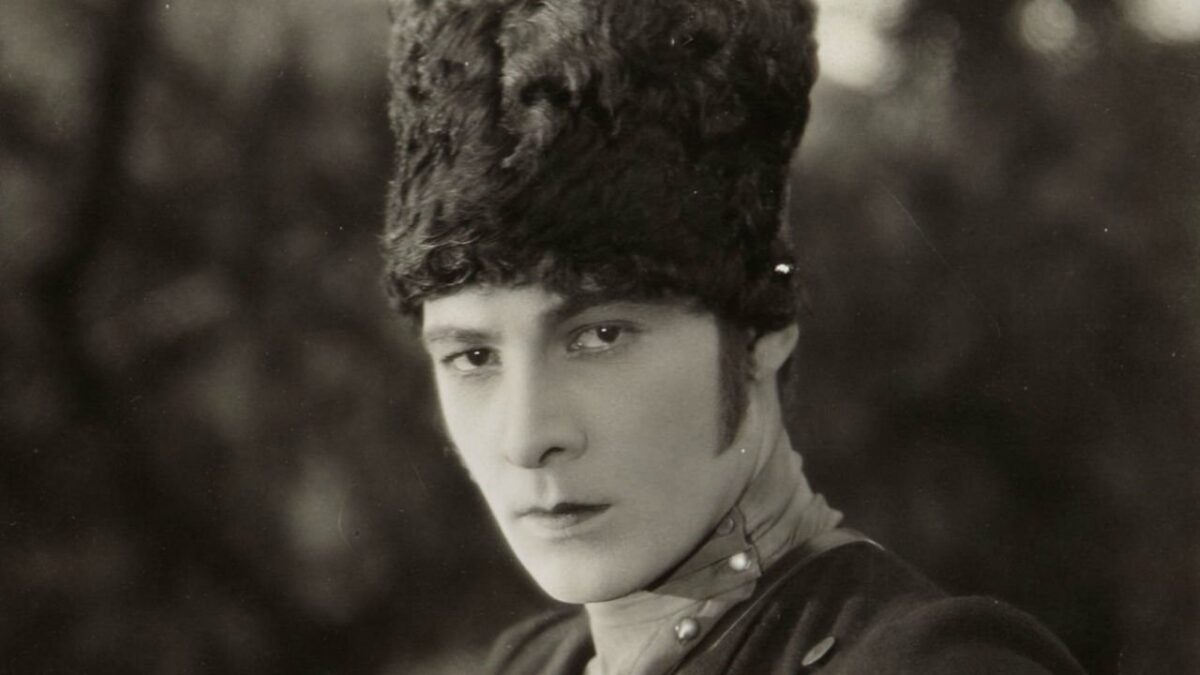
The eagle has landed
Clarence Brown is one of Hollywood’s great success stories you’ve probably never heard of: a six-time Best Director nominee with a career stretching from the silent era deep into Technicolor, who evaporated from most discussions of the canon like too many classical Hollywood luminaries. Among studio-system craftsmen, only a handful navigated the talkie transition with as much grace as Brown did. His tone control across genres and moods was impeccable; his frames blocked with a good blend of the practical precision of an ex-automotive engineer and an artist’s soul that occasionally peeked through, especially in his romantic close-ups. And yet, when the great-director conversation gets going, “Clarence Brown” rarely comes up.
(To read more about Brown, I recommend Kinemalogue’s “Encyclopedia Brown” retrospective series — Brown has become a pet director to critic Hunter Allen.)
Part of Brown’s legacy is the parade of A-listers he worked well with, sometimes pulling career-defining work from. He had a long and fruitful collaboration with Greta Garbo, plus turns at the helm for Gregory Peck, Mickey Rooney, Joan Crawford, Clark Gable, and many other names you’ve heard of even if you’re not a film historian. Before most of those pairings, though, comes The Eagle, which slots him into a steering role for one of cinema’s original matinee idols: Rudolph Valentino.
Valentino is an actor whose cultural myth surpasses his actual filmography. A flapper-era heartthrob with an exotic name, legendary good looks, just a hint of androgyny, and an inviting screen presence, he was immortalized by a tragic early death at 31 from stomach ulcers. His funeral reportedly had young women rioting and weeping like a deathly version of The Beatles appearing on Sullivan
The Eagle, a silent film from 1925, catches Valentino and Brown, five years apart in age, each at a crossroads. Brown was shifting between studios, looking for a home: The Eagle was the first of a couple of pictures he made for United Artists before his long-term MGM gig. Valentino was, frankly, in trouble: his marriage to second wife Natacha Rambova was crumbling. She was accused (through a lens that was probably more misogynistic than fair) of mismanaging his career and trying to vault off his fame to her own success on screen. Valentino himself had developed a reputation around town as a difficult diva following some major flops: He insisted on lavish productions and creative input on every project. United Artists banned Rambova from The Eagle’s set as a contractual condition. The deck was stacked for either a comeback or a humiliation for Valentino.
It turned out to be a comeback. The Eagle was a critical and commercial hit: Valentino’s reputation rebounded (and he split with Rambova), while Brown took a major step towards the MGM prestige that would define the remaining decades of his career. Kinemalogue calls it “the first Brown movie that truly feels, to me, like a Clarence Brown movie”; you can detect a filmmaker finding his stride throughout.
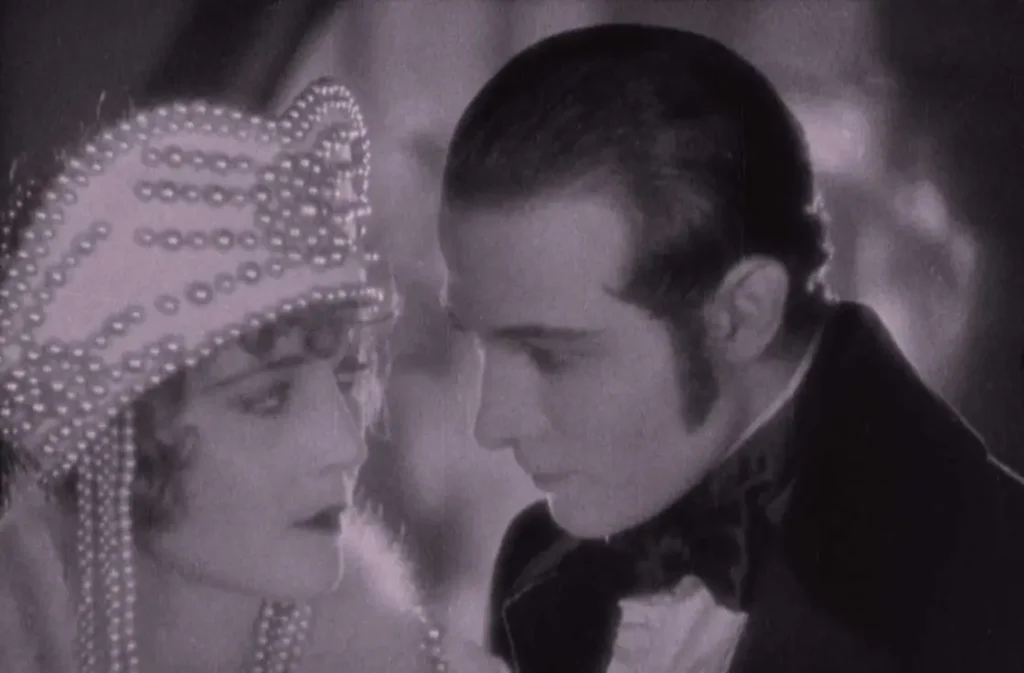
Loosely adapted from Alexander Pushkin’s posthumously published novel Dubrovsky, the film follows Lieutenant Vladimir Dubrovsky (Valentino), a Cossack officer who catches the eye of Czarina Catherine II (Louise Dresser) when he rescues a runaway carriage carrying the beautiful Mascha Troekouroff (Vilma Bánky). The Czarina invites him over for dinner, then to her bedroom for a more intimate evening activity. He politely declines, and she puts a price on his head.
Dubrovsky flees home only to find his father ruined by the cruel landowner Kyrilla Troekouroff (James Marcus), and so dons a black mask, becoming a Zorro-style outlaw called the Black Eagle. With the Czarina on his tail but revenge on his mind, he infiltrates Kyrilla’s home disguised as a French tutor, only to fall for Kyrilla’s daughter, the same Mascha from the carriage of the opening scene.
The film’s marketing and scenario suggest a swashbuckling adventure. The reality is surprisingly light on thrills and set pieces: the story is a blend of a melodrama, sitcom, amd romance all queued up in alternating shifts, with surprisingly little swashing of buckles. The film borrows liberally from the The Mark of Zorro of 1920 in image: Valentino’s outlaw silhouette owes everything to Douglas Fairbanks’ acrobatic-cavalier blueprint. Yet the film mostly eschews action in favor of palace intrigue and comic-romantic chamber scenes.
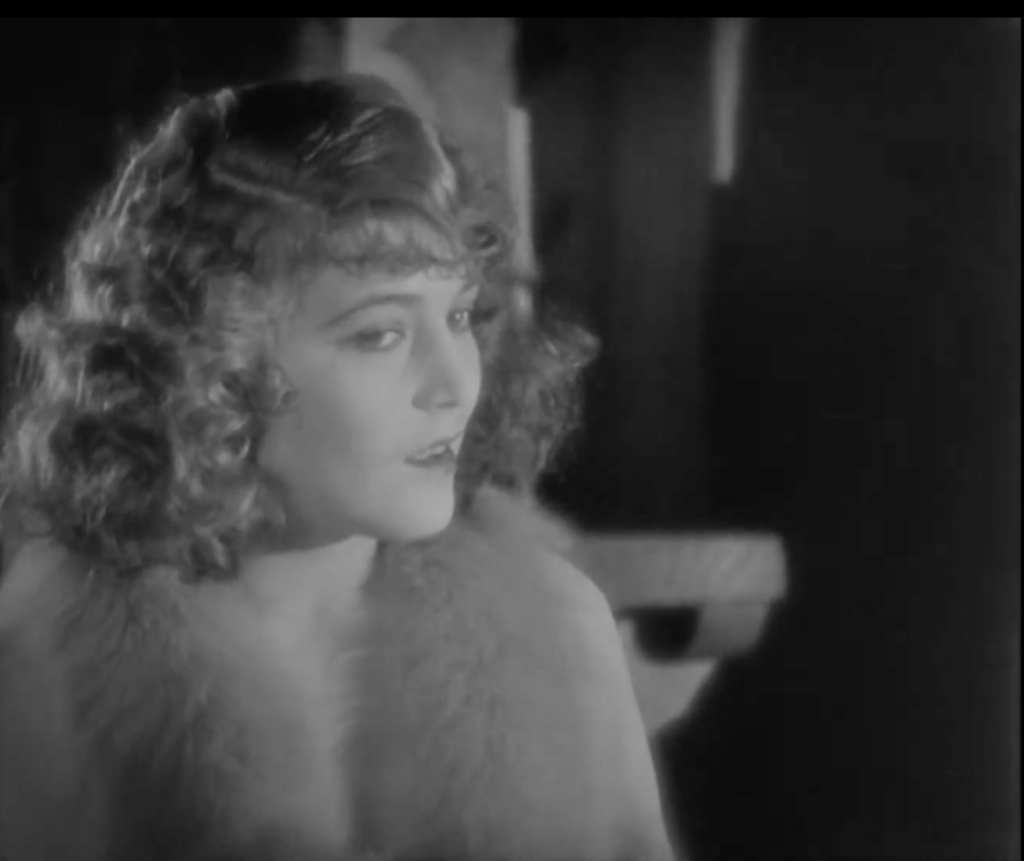
The headlining performances are strong. Valentino reveals his charm and even some unexpected wit: He brings a comedic presence that’s almost deadpan to his shifting disguises and quick thinking. It’s more deft than you’d guess from his reputation as a smoldering heartthrob. The even bigger surprise is Bánky. Mascha could easily have been written and played as a passive prize for the masked hero to win and rescue. Bánky brings more strength to the role, and Brown gives her plenty of space: she’s an active presence with agency and sexual confidence, doing her own detective work, taking control of the courtship rather than batting eyelashes. The chemistry between the pair of leads has a real spark to it. It’s not surprising to me that rumors spread that Bánky and Valentino had an affair during production.
Brown’s direction, meanwhile, is assured and disciplined: I especially admired his use of deep-focus composition that packs narrative information into single frames, drawing your eyes to around the shot as the scene unfolds. He also demonstrates patient close-ups, which definitely enrich the lead characters: We get to see nuanced emotions unfold on their faces in reaction to the events surrounding them.
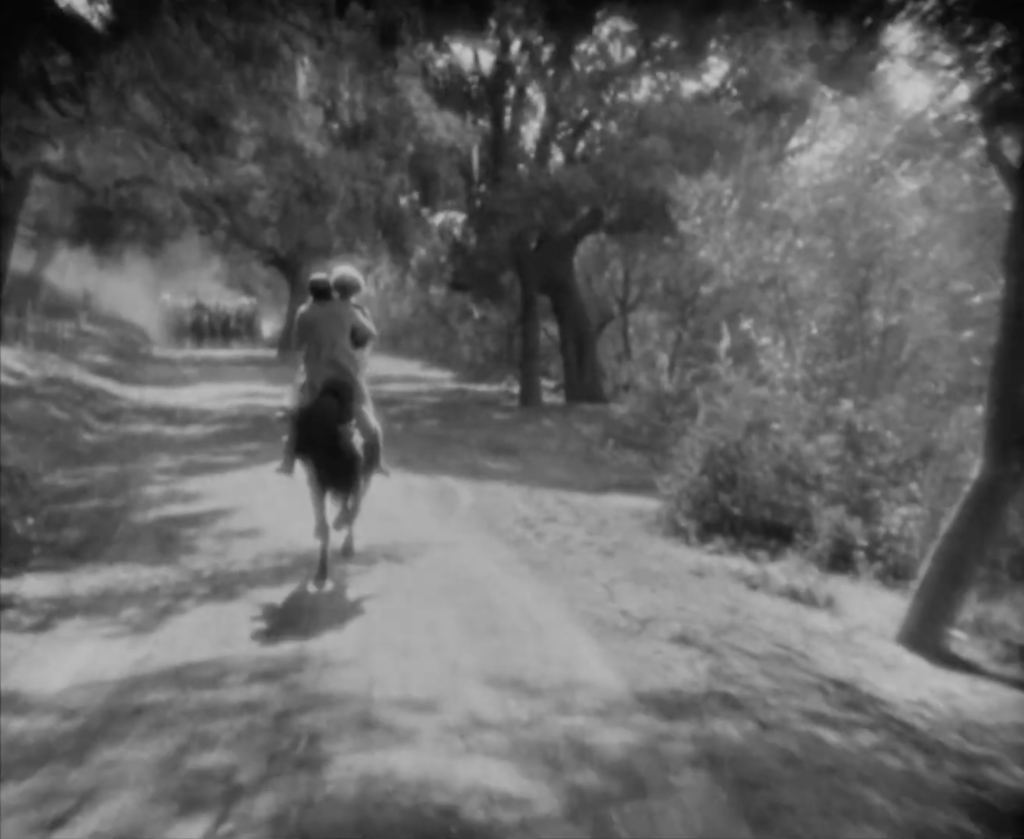
The most legendary filmmaking moment in the film has nothing to do with Valentino or any plot twist, though, but with a single ambitious tracking shot at Kyrilla’s banquet table: The camera glides the entire length of the spread, course after course, foregrounding the obscene power and decadence of the man Dubrovsky has come to ruin. In 1925, back before Hollywood’s camera grammar had really normalized fluid movement, this shot foreshadowed the daring directions the medium was headed in the final silent years.
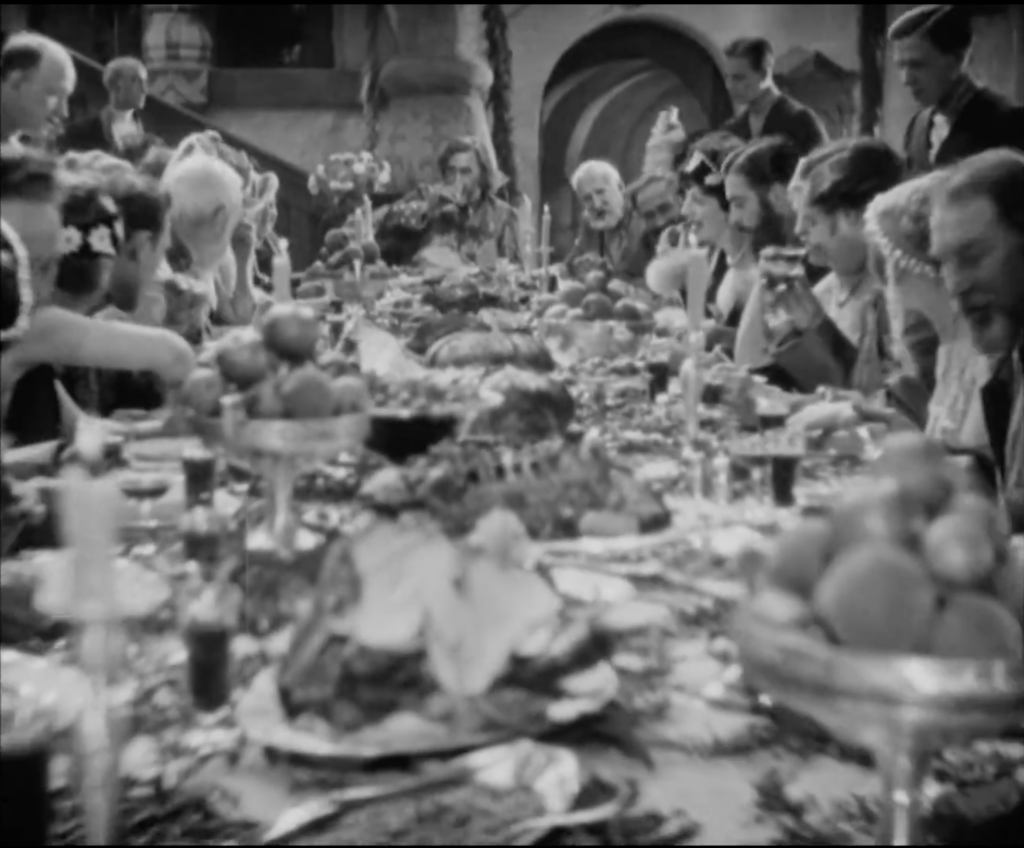
Brown keeps the story on rails despite the variations in tone. The Eagle shifts genres and moods and settings multiple time, yet never feels like an ungainly mess. Lots of little ideas land: a champagne bottle popping to startle a villain, a lovely dance sequence, an infiltrator peeking out of a wardrobe. (Also, the film has a live real-ass bear, which always gets you on my good side.) Many of the jokes are quite funny (I actually burst out laughing at a “neck massage” that looks a lot like strangling, which Dubrovsky offers Mascha with a straight face.) The cast always has a human touch, which is a credit to Brown as much as the cast: It’s just a solid, if unremarkable, story.
Indeed, nothing about The Eagle is actually bad, but pretty much none of it is great. At 75 minutes, this film should fly, yet it chugs along, slow and steady. The masked-bandit material doesn’t deliver the action; the romance doesn’t have any major moments of swoon; the comedy is good but never riotous or show-stopping. The Eagle offers a constant low-grade sensation of waiting for the special part, but “special” only ever arrives in faint flickers.
It’s a bit of a shame there’s not more to it. If nothing else, it’s a strong vehicle of Valentino’s charms, but as one of his last roles, it has a tragic air to it in this regard. And it’s also a fine launchpad for looking into the works of the underappreciated Clarence Brown.
Is It Good?
Good (5/8)
A few words on "Is It Good?" ratings for early cinema.
Dan is the founder and head critic of The Goods. Follow Dan on Letterboxd. Join the Discord for updates and discussion.
5 replies on “The Eagle (1925)”
– PLAYS ‘The Bear and the Maiden Fair’ BY THE HOLD STEADY –
Man, there’s nothing that says ‘classic entertainment’ like actors risking their lives to share scenes with live predatory animals for our viewing pleasure (I think the All-Time Winner in this respect was Ms Gloria Swanson, who reportedly took Mr Cecil B. DeMille to task for putting her in a Bible movie with lions and assuming she would punk out by letting a stunt person have all the fun*).
*She was reportedly keen to homage a painting of Christians being fed to the lions that she had grown up with as a child: she got her wish, they got the shot and apparently she didn’t even get punctured in the process!
Always glad to find a fellow Hold Steady appreciator. Excellent band.
Yeah, I get why the use of live animals in Hollywood productions went away, but it still makes me a little sad.
That’s a pretty funny anecdote about Swanson.
“Clarence Brown is one of Hollywood’s great success stories you’ve probably never heard of”
True and sad. Gotta get back to my Clarence Browns. Can’t decide if I really *must* read the novel, Anna Karenina, or not; I’m sure I’m supposed to have, but it’s so long, Dan.
Fully agree re: The Eagle. It’s got the matrix to put cool action-adventure stuff in, but… doesn’t? Consistently feels–because he would’ve insisted on it doing so–like it would’ve been a really swell Douglas Fairbanks movie. (Though I recall it doesn’t have an ending, like, at all. Not even “a rousing finale,” just “an ending that’s narratively satisfying.”) Compares insanely well, however, to the only other Valentino I’ve ever seen, Blood and Sand. I mean, this has something of a logy scenario, but that movie is exceptionally tedious. Even the Russell gonzo biopic is rather less gonzo than I expect from that filmmaker.
My friend who recently read Brothers Karamazov said it went pretty quickly once he got going with it, but every long Dostoyevsky novel is long in its own way, so I wouldn’t blame you for skipping.
The ending could’ve used a little more action and coherent character motivation, but it at least tied the two threads together and gave us the pretty good joke that the Czarina does not like her new replacement boy toy, which I liked.
When it come to literary adaptations you have to read the original novel at least once … but you only have to keep reading if you enjoy the first bit.
ESPECIALLY when they have more pages thsn the Romanov dynasty had years at the top.