
One from the heart
People don’t read as much as they used to, and thus the self-promoting celebrity biography has been quietly dying for over a decade. (As a once-aspiring sportswriter, I read Derek Jeter’s and Muhammad Ali’s as a kid.) Filling the void is the promotional documentary: a film positioning itself as an unblinking look behind the curtain that functions, in practice, as 90 minutes of marketing. Some are fine, but everybody’s so damn guarded and brand-conscious.
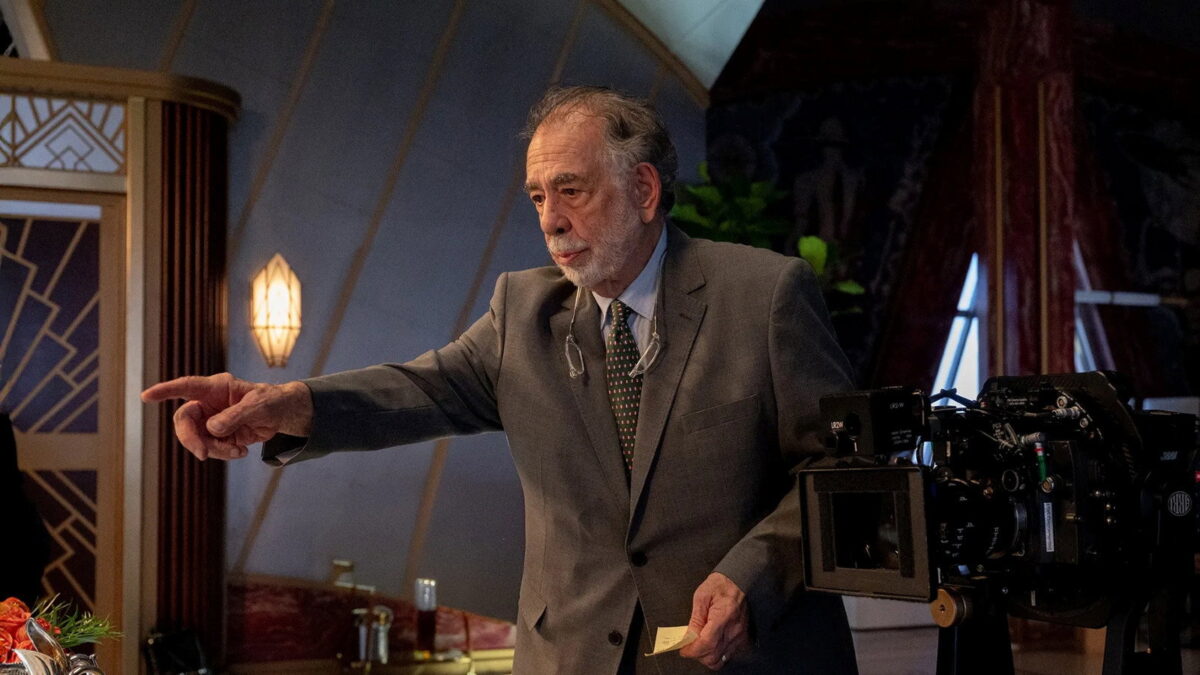
Francis Ford Coppola does not have that same impulse to manicure his image. The filmmaker emerged alongside the verité boom and has spent half a century being unfiltered about his own folly. He’s already been the subject one of the towering making-ofs in the form, Hearts of Darkness: A Filmmaker’s Apocalypse, the document of Apocalypse Now’s near-implosion assembled from footage shot by Coppola’s wife Eleanor. It’s the inescapable referent for Mike Figgis’s Megadoc, the documentary about the making of Coppola’s 2024 film Megalopolis. Figgis and his interview subjects reference Herats of Darkness over and over.
A few years back, Figgis, a filmmaker best remembered for Leaving Las Vegas, wrote a congratulatory note to Coppola for finally beginning production on his long-brewing sci-fi film, and half-jokingly proposed himself for the documentarian role on Megalopolis. Coppola said yes. And Figgis, with a camera in hand and the help of a single collaborator (assistant-producer Tara Li-An Smith) shadowed his hero for the rest of the film’s production and release.
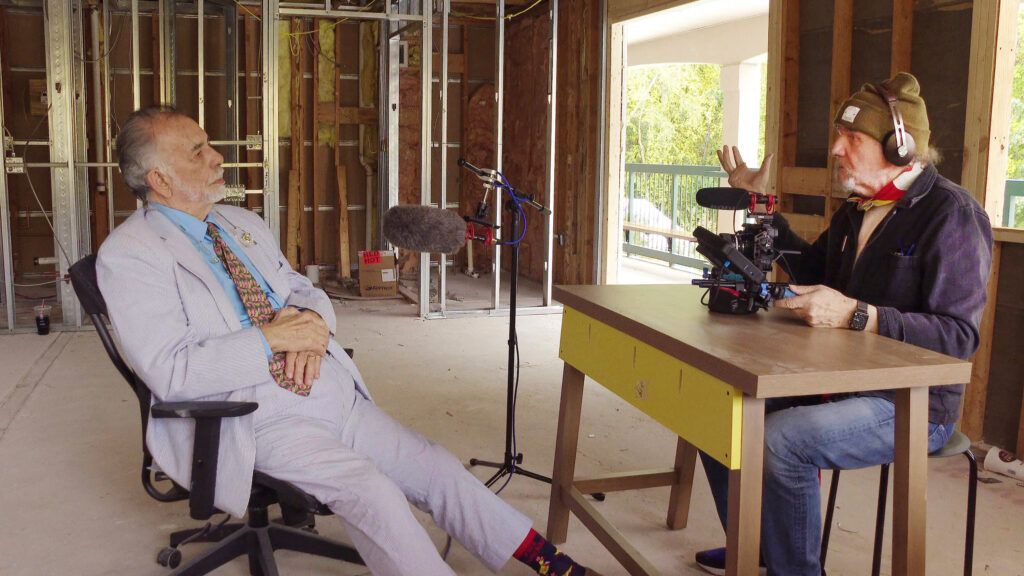
What works is mostly the sheer fact of access into an impenetrable (but, I’d say, lovable) boondoggle. Megalopolis was apparently a film shoot that nobody on set, possibly including the director, could fully describe in plain language, and Megadoc captures it in a most charming way. Coppola, in his mid-eighties, is by turns visionary and frustrated here, searching mid-thought for words to communicate his ineffable and possibly unfilmable dream to his crew. The picture Megadoc paints is of an artist who has lost some fluency but whose astral creative hunger has only grown.
The doc is ultimately a bit slight and has no response to the mixed reaction the film received, but it has some great portraits of some of the cast. Well-documented weird person Aubrey Plaza fearlessly leans into her odd edges. She asks Figgis to follow her around and is the documentary’s most camera-ready creature, aware of the lens at all times with a post-ironic enthusiasm for everything happening. Jon Voight, a congenial asshole, has a newscaster’s blend of smarm and charisma. Screen legend Dustin Hoffman is refreshingly candid and can’t entirely hide his entitled Boomer sliminess, yet still charms with a mix of wryness and weariness.
But in this image-controlled era, some of the cast turns a cold shoulder to Figgis: Adam Driver and Nathalie Emmanuel are almost entirely absent from the candid footage, both reportedly uncomfortable being filmed off-script. Driver does, eventually, sit for a single off-set interview that is essentially a press junket. My impression is that Driver’s camera avoidance comes mainly from self-consciousness, while Emmanuel wanted none of the intrusion and lack of control of the resultant footage.
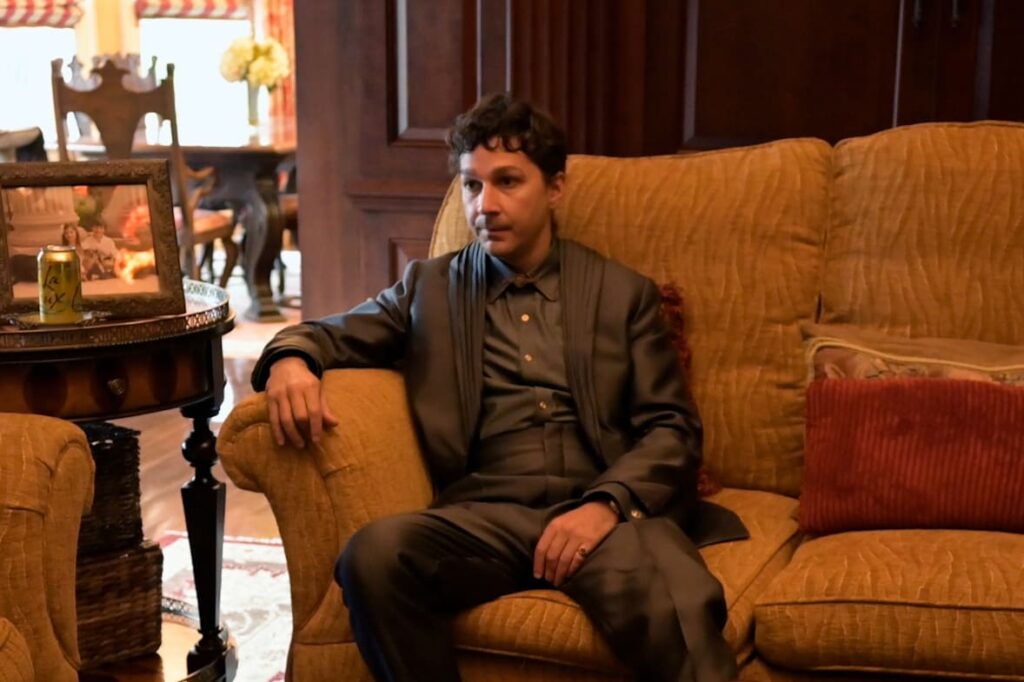
But the big Kahuna, the Even Stevens in the room, is Shia LaBeouf, who dominates Megadoc; I’m not certain in screentime, but certainly in presence. LeBeouf is fascinating and infuriating here: he lacks self-awareness and humility but also seems the most invested in the meaningful creation of the project, questioning Coppola’s choices and writing at every step. He alienates everyone around him, and it’s a blend of hysterical and sad watching Coppola storm off set just so he can stop hearing LeBeouf’s voice. But I still find a kernel of affection for LeBeouf here, and I suspect Coppola does too even when he visibly can’t stand being around him.
In one fascinating exchange, LeBeouf and Coppola debate the “reality” of images captured on celluloid, and I think it will say a lot about each viewer which of the two they find crazy in that moment: LeBeouf arguing movies capture something real even in fiction, and thus must have some interior method to their construction vs. Coppola insisting the flickers on a screen are divorced from the filming and from reality, cinema a mask over its creators rather than a prism into them.
One of the most provocative inclusions in the doc is something Figgis didn’t shoot at all: clips from Coppola’s earlier aborted attempts at Megalopolis from the early 2000s, including footage with Uma Thurman, Jude Law, and Robert De Niro in key roles, plus a younger, leaner Ryan Gosling in test material. These shards are fascinating, a glimpse of a parallel cinematic timeline. They also reframe Megalopolis itself as a forty-year obsession rather than a late-career indulgence.
But other than LeBeouf’s palpable menace, the doc’s most plangent thread and its heartbroken underbelly, is the death and mourning of Coppola’s wife Eleanor, the very person who made Hearts of Darkness possible, across the long, fitful tail of Megalopolis’s creation. The director visibly unmoors as the production continues through his grief.
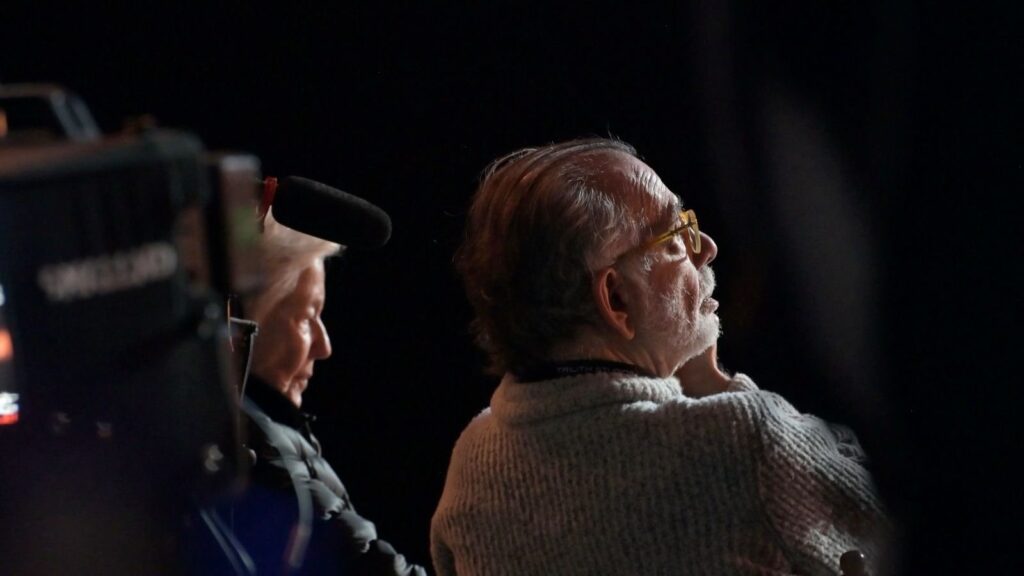
For all the rich material it captures, Megadoc is still a bit of an opaque, limited project. Figgis’s footage is only intermittently intimate, and while he gets some meaty material, he still steers clear of the nastier reported aspects of the production, presumably through a combination of Figgis not being invited into certain rooms and his conscious choice to avoid most mudslinging (of Coppola in particular, if I’m guessing). Megadoc is quiet about the on-set misconduct stories that swirled in the trades, and we only get a small peek into the mass exodus of the crew that occurred mid-production. I had more questions. Even with Coppola’s willingness to let Figgis be a fly on the wall, Megadoc doesn’t pierce into the film’s heart of darkness the way it could have.
I had a lot of fun with it, but Megadoc is ultimately more of an excellent DVD bonus feature than a worthy film in its own right. It is, by an order of magnitude, more interesting to talk about than it is to watch, raising tough questions about a shifting industry and the role of money in filmmaking. What has changed in the world and in movies between Apoclaypse Now and today? What kind of person makes a movie or stars in one If you love Coppola, find artistic hubris a knot worth untangling, and want to witness the last gasp of New Hollywood, Megadoc lets you plow through the riches of his Emersonian mind.
Is It Good?
Good (5/8)
Dan is the founder and head critic of The Goods. Follow Dan on Letterboxd. Join the Discord for updates and discussion.