
One bad Apple
Forbidden Fruits is all over the place, but it still has the making of a future cult hit.
At times it is actively bad, full of half-baked character development and awkwardly rendered melodrama. And then a scene later, it’s all the sudden having fun, zipping with acerbic teen banter and brazen tone swings. The film’s best moments thread the needle between insufferably twee and deliciously arch.
The film’s third central mode caught me off guard, as it doesn’t emerge until the final act: vivid, gory horror comedy. These three tenors (the bad, the good, and the gnarly) are balanced roughly evenly across this shambling, deeply uneven film. I was not willing to ride that wave during the first half, but I came around. The climax jolts awake in time for Forbidden Fruits to leave a wicked, tart aftertaste.
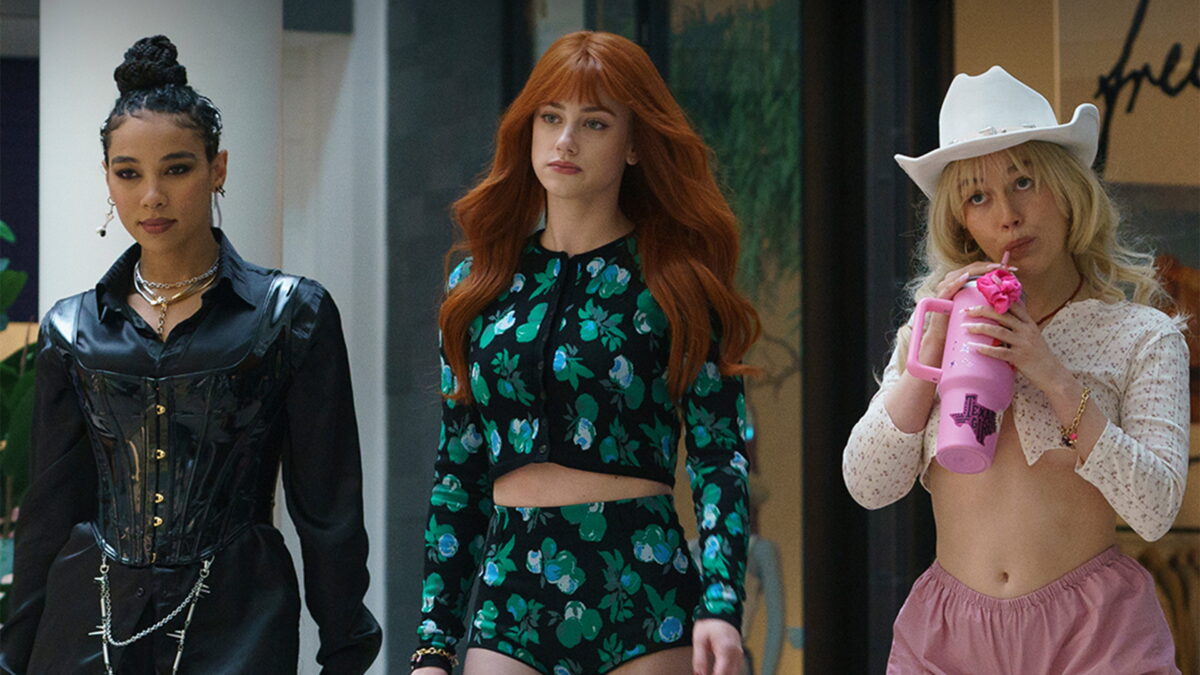
The film’s setting is a Dallas shopping mall, where a group of chic salesgirls working at a clothing store called Free Eden coax thousands of dollars out of customers by day and run a witchy femme cult in the back room by night. At the top of the food chain is queen bee Apple (Lili Reinhart), spaced-out Cherry (Victoria Pedretti), and secretive Fig (Alexandra Shipp). Their toxic-but-tidy sisterhood gets disturbed when a new hire from the food court pretzel kiosk, Pumpkin (Lola Tung), joins the group. Once she’s properly initiated, the foursome’s web of friendships slowly curdles into violence.
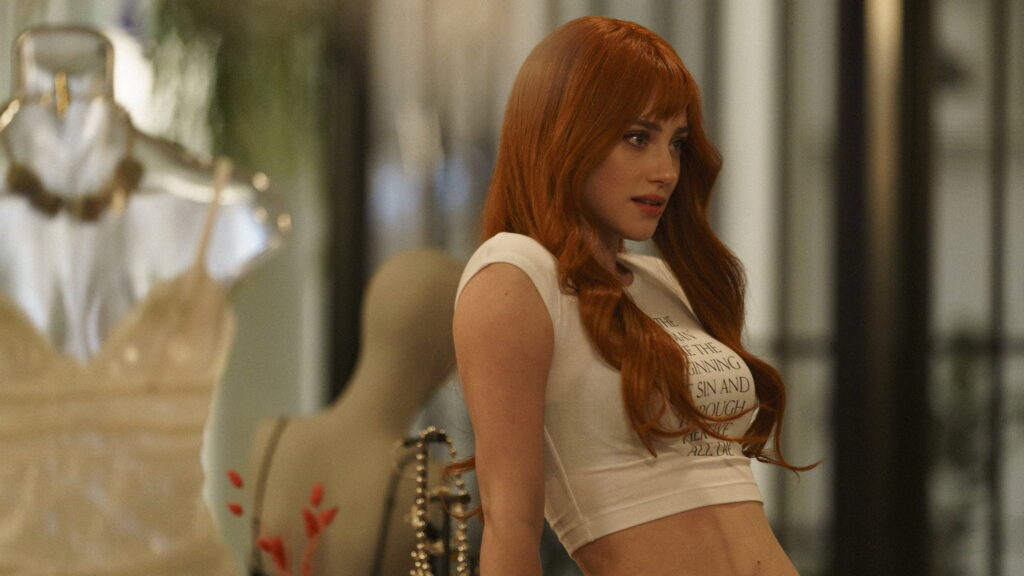
The film rests entirely on the four leads, who definitely elevate the material. At the top of the pack is Reinhart, who is absolutely sensational, ratcheting Apple up from sociopath-prom-queen archetype to something original and frightening. Reinhart has terrific screen command. I was especially struck by an extended, single-shot close-up on her face during a tussle with Pumpkin late in the film. Reinhart demonstrates electric facial acting straight out of great silent films. (Reinhart continues her rise in my rankings of favorite working actors, as she’s been the best part of practically everything I’ve seen her in.)
Beyond Reinhart, Pedretti is the most fearless and funny performer here, finding a Cherry who is a sexy airhead but full of turbulent emotions; she really hits Cherry’s highs and lows. Tung’s Pumpkin grounds the chaos with the richest arc of the four (innocence to villainy, then twisted into grayness). The four bring different approaches to their characters but have a tense, synergistic chemistry.
The script, by director Meredith Alloway and Lily Houghton, is an adaptation of a play by Houghton. The pair’s writing is clearly steeped in Juno and Jennifer’s Body. In fact, the Diablo Cody connection goes farther, as Cody is a producer on the film. And yet Alloway and Houghton are not quite Cody. Maybe I’m just a man in his upper thirties, but the exaggerated register grates a handful of times. The characters flit in and out of cartoon mode, sometimes dumbed down to the point of losing nuance, sometimes offering pricklier and more shaded portraits.
Alloway, in her feature debut, makes a wobbly but ultimately successful impression. You can quickly tell which scenes excited her, because they pop with one visual idea or another: a falling body unfocused in the background but still catching the eye, a zoomed-in shot of a shoelace in a moment of panic, etc. As a storyteller, she captures a deliberate amorality that is a little refreshing in the “elevated horror” era. But the flip side is that the film is quite dull when Alloway is not locked in; many scenes just flop on by. Even some moments that should leave an impression, like the reveal of Pumpkin’s slinky new look once she joins the cult, plod a bit.
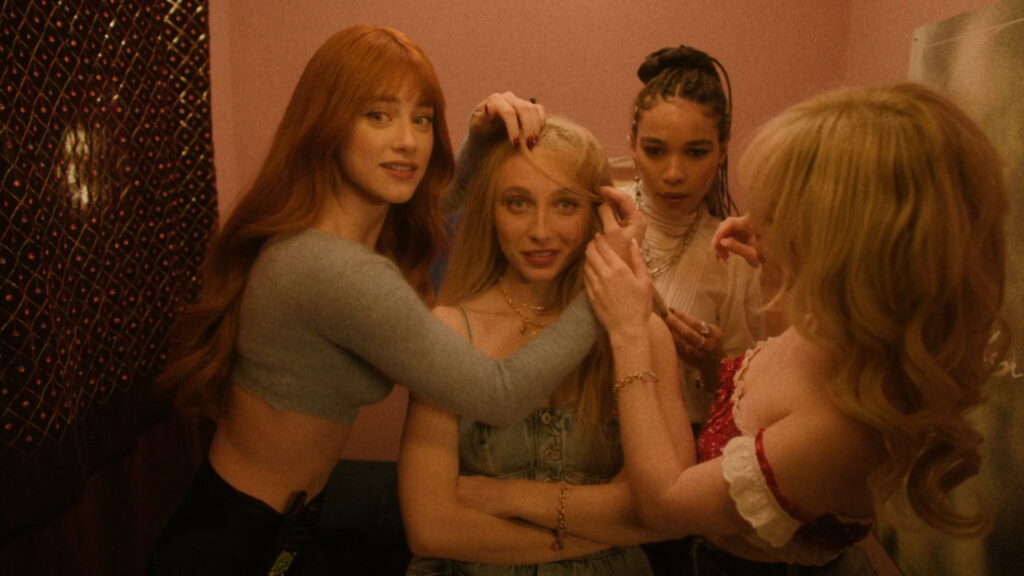
Karim Hussain’s cinematography is one of the film’s strengths. It is sharp and edgy, finding a tension between shiny mall glamour and curdling menace. I will say, though, that a horror-comedy with a recurring motif of fruits really should really have more lurid color than this. Pump those reds and greens.
One big win is the choice and execution of setting: the film almost never leaves the central mall. This choice probably saved the budget some, but centering the film entirely in one location has some strong storytelling effects: It amplifies the characters’ undercurrent of isolation despite their physical closeness, which is how a visit to a shopping mall often feels: busy but impersonal, all commodification and salesmanship.
Forbidden Fruits is messy enough that I understand why it vanished from theaters so quickly, and I’m not convinced Alloway has fully figured out how to make a polished movie yet. But the film has enough bite, cast charisma, and nastiness, not to mention sheer Reinhart electricity, to make up for the wheel-spinning and uneven screenplay.
Is It Good?
Good (5/8)
Dan is the founder and head critic of The Goods. Follow Dan on Letterboxd. Join the Discord for updates and discussion.
3 replies on “Forbidden Fruits (2026)”
This sounds gleefully trashy, in a very “Wait, this is one of those maniacally entertaining paperback books on film, yes?’ style: is it that sort of film, pray tell?
I think you’d like it ED! Good amount of “paperback” trash as you put it.
– Dons raincoat, false moustache and a wicked grin –
TALLY HO!