
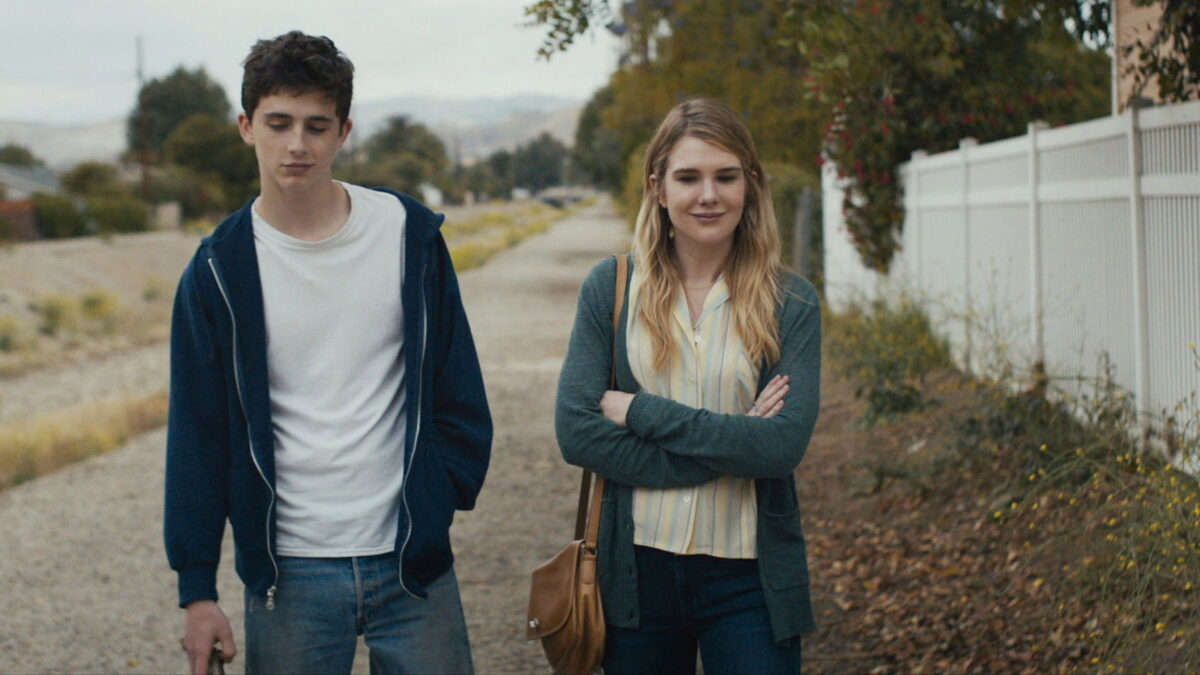
And here's to you, Miss Stevens
Julia Hart spent years as a high school English teacher before she was ever a filmmaker, and Miss Stevens, her 2016 directorial debut featuring a script she co-wrote, has a lived-in specificity and angst that could only come from someone who had experienced some version of the story first-hand. It is small, observant, allergic to inspiration porn, and not especially interested in whether anybody learns a lesson. Indeed, a key scene in the third act is built around Miss Stevens forgetting to give a student a lesson and a test.
This is the kind of movie I’m very willing to lend the benefit of the doubt because of its timbre and mission: It is a colorful, modest, ambivalent portrait that’s just funny enough you might start thinking about calling it a “dramedy.” It prickles with a little bit more edge than these SXSW/Sundance slice of life films really require, landing with a bittersweetness that still has generosity for its characters. I could watch a hundred movies like this a month.
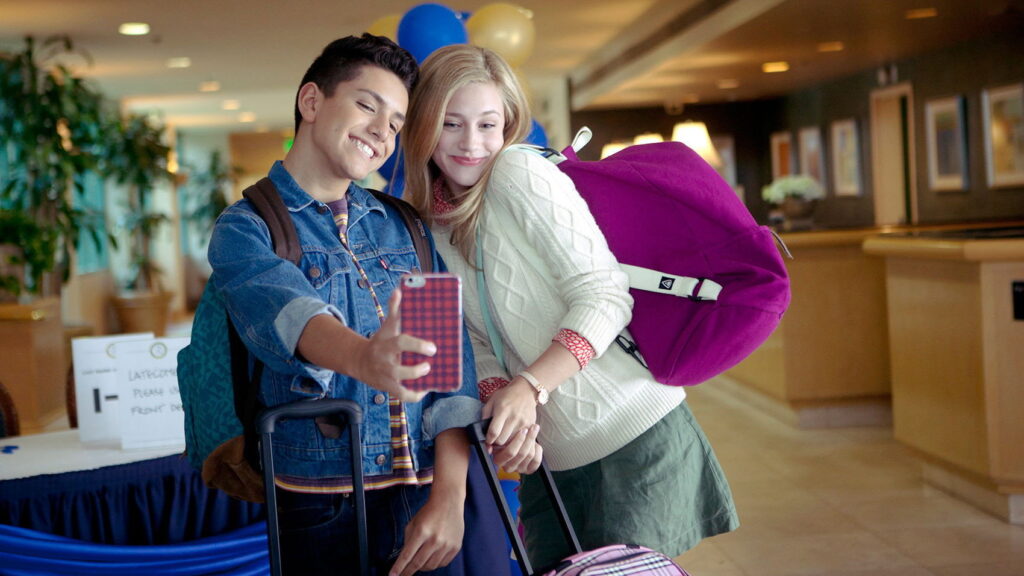
The film follows Rachel Stevens (Lily Rabe), a high school English teacher who pulls chaperone duty for a weekend state drama competition. She drives three students across California to get there: Billy (Timothee Chalamet), the gifted one with academic and behavioral issues; Margot (Lili Reinhart), a clipboard-clutching Type A; and Sam (Anthony Quintal), an extrovert considerably more invested in meeting a boy than winning a trophy. Each of them is still finding their personality and trying to shape what their lives will be; and Miss Stevens is doing the same.
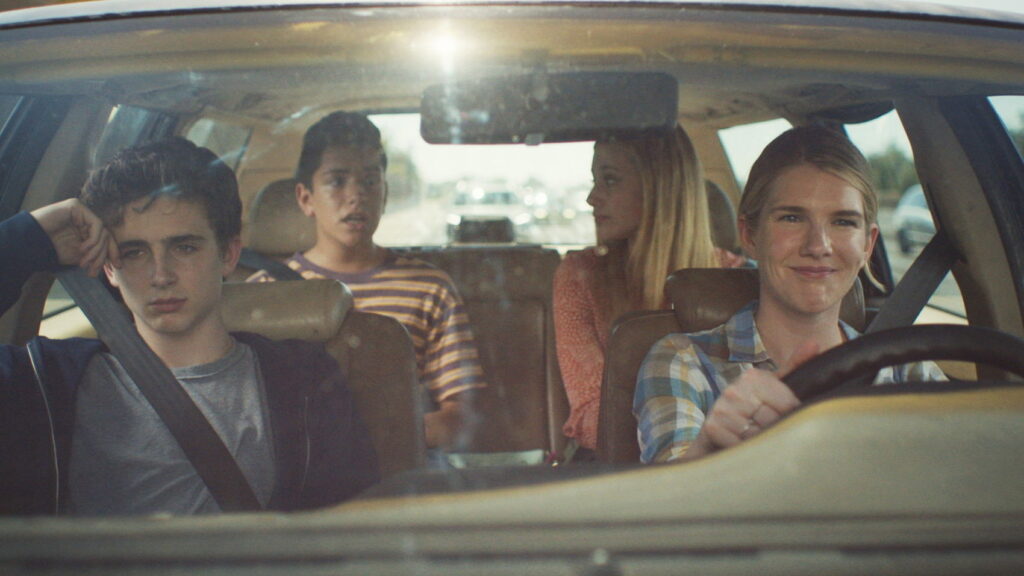
The acting is good across the board, led by a wonderful Rabe, capturing all the mixed feelings of someone in her thirties recognizing her youth is gone. She’s playing a woman who is technically the adult in every room she enters yet always aware that she hasn’t fully become one, and Rabe finds that in small physical business: wavering facial expressions and a posture of authority that melts into something distinctly adolescent the instant the students disappear. A tiny baby Chalamet hints at his potential by bringing to life a teen character who is a bit underwritten. Billy is really just a bundle of ideas that never cohere into anything that feels like a character (off his meds, distant parents, prodigious talent). Chalamet plays the ache and charm underneath all of that well; he is, if nothing else, already a terrific screen presence. He also gets a highlight acting reel moment when we see his actual monologue he performs for the drama competition. Reinhart, a year out from Riverdale, is doing what she always does, making a movie better: Reinhart finds a sweet middle between sanding her down and letting her devolve into a shrill cartoon. Quintal gets the least to work with and is accordingly the most forgettable performance of the three teens, but still likable. Rob Huebel plays the drama teacher of a competing school who offers some thematic counterweight: He shows the drawbacks of being too “together” as a grown up, how detachment framed as maturity from a teacher disconnects you from the students’ humanity and vulnerability. I remain a skeptic of the actor in dramatic roles, though this is a better-than-average usage of him, largely because Walter gets to be a bit of scumbag by the end of the runtime.
The script could have used a little more lovin’: Like practically all movies of this genre and disposition, it’s a bit soft and shaggy, though, again, I view that as more feature than bug. The writing has a habit of introducing complications and then tidying them too quickly. Billy in particular feels a draft or two away from having a clear character definition or arc, particularly in the low-confidence way the story approaches the spark between him and Miss Stevens. And yet I really like Hart’s control of tone, resisting the urge to make this too sentimental or heightened, opting mostly for restraint without resorting to anything you’d ever call minimalism. It’s very easy to imagine a much worse version of this film with a saccharine ending: She’s clearly working against the savior teacher tropes rather than inside them. Nobody stands on a desk. The best stretches are the ones where Rabe is alone or mostly alone, facing down the exhaustion of managing a group of students when she can barely manage herself.
I like bits of flavor on the fringes. The needle drop of “Sister Golden Hair” by America sets a perfect mood (and gets to be the butt of a joke), although the movie’s sound mixing features a quirk in the closing moments: The song is playing diegetically, then the film ends and the credits start, but the credits are also scored to the song, which starts over as the credits begin, and thus the song ends up looping like “Scarborough Fair” in The Graduate or “Hide and Seek” in Dear Sister. I genuinely cannot tell whether this is a deliberate flourish with some unclear thematic purpose, or a mixing bug they let slide. (I suspect the latter.)
One historical curiosity of the film is that it is produced and co-written by Hart’s husband Jordan Horowitz, who produced another 2016 film: La La Land. You might know Horowitz as the guy who held up the card showing Moonlight’s victory during the Best Pictute chaos onstage.
I’ve stated many times before that “well-observed” is a backhanded compliment, a way of calling a movie precise and pointless at once. No question about it, Miss Stevens is well-observed. And yet I like it. It’s short, warm but not syrupy, quietly sad, and built around a performance that deserved to launch a bigger decade for Rabe than it did. Sometimes precise and pointless is more than enough.
Is It Good?
Good (5/8)
Dan is the founder and head critic of The Goods. Follow Dan on Letterboxd. Join the Discord for updates and discussion.