
This was poor, man
These days I am a practicing Unitarian Universalist, but I grew up Catholic, and on one retreat we learned a breathing mantra: you pick a figure to venerate and attach a request for guidance to each half of the breath. Inhale: Jesus, be with me. Exhale: Jesus, guide me.
While watching The Whisper Man, I discovered a new breathing mantra. Inhale: You have GOT… Exhale: …to be kidding me.
Every breath of every scene, more or less.
What is especially frustrating is that this made-for-Netflix serial killer thriller is surprisingly functional in a few fundamentals, namely mood, cast, and screenplay structure. The atmosphere is tense and grim, the drip of plot twists is steady and compelling, the film is well-cast, and the actors are elevating the material. And yet practically everything that actually happens in the movie left me baffled. None of it makes sense. So much of the proceedings rely upon some mix of incredible dum-dum behavior and ridiculous contrivance. The beats are pulled mostly from David Fincher and The Silence of the Lambs, with bits of Prisoners and other suburban-kidnapping fare stewed in, and yet every character decision feels like it was written by Laura Dern after huffing spray paint in Citizen Ruth.
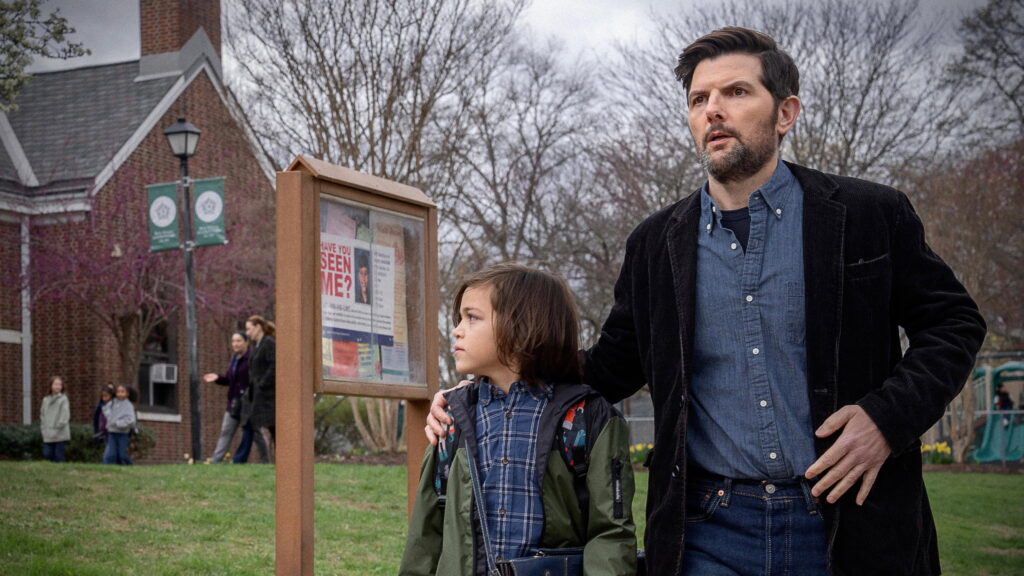
For example: after grumpy widowed novelist Tom Kennedy (Adam Scott) discovers a man has broken into his house, he chides his son Jake (Acston Luca Porto) that same evening for claiming he heard someone moving about the house, chalking it up to the kid’s overactive imagination and not considering for one moment that a dangerous intruder might be afoot… even though kids in the neighborhood have recently been kidnapped. Then, WOW, Jake promptly gets kidnapped. You have GOT to be kidding me.
Later, a witness with no previous suicidal inclination, the one person besides the killer who knows where Jake is being held, kills himself with a previously unseen knife rather than reveal the location to the protagonists, mainly, it seems, to drag the story out another twenty minutes. You have GOT to be kidding me.
In another scene, a key revelation arrives when the remains of a secret victim of long-incarcerated serial killer Frank Carter (Michael Keaton) (think Hannibal Lecter) turn up inside the very house Tom is renting, in a spot he magically never looked at despite it being where the previous break-in had occurred. You have GOT to be kidding me.
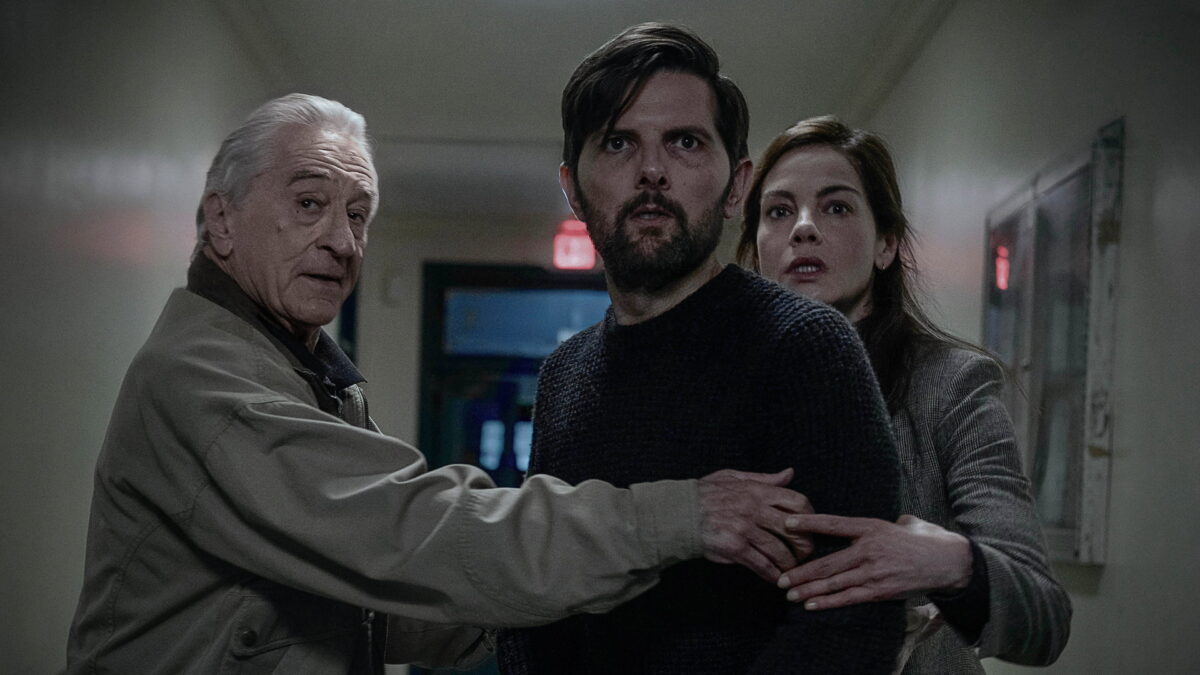
Maybe these don’t sound quite so ludicrous out of context. But the nonstop drip of illogic builds into a miasma of disengaging incredulity, all in service of a by-the-numbers procedural. By the third act, when the half-ludicrous-half-boring revelations start piling up and the final confrontation arrives, the move has fully deflated. I actually laughed out loud when the shrimpy killer (Owen Teague) manages to take out all of Robert De Niro, Adam Scott, and Michelle Monaghan in a single wrestling match. (You have GOT to be kidding me.)
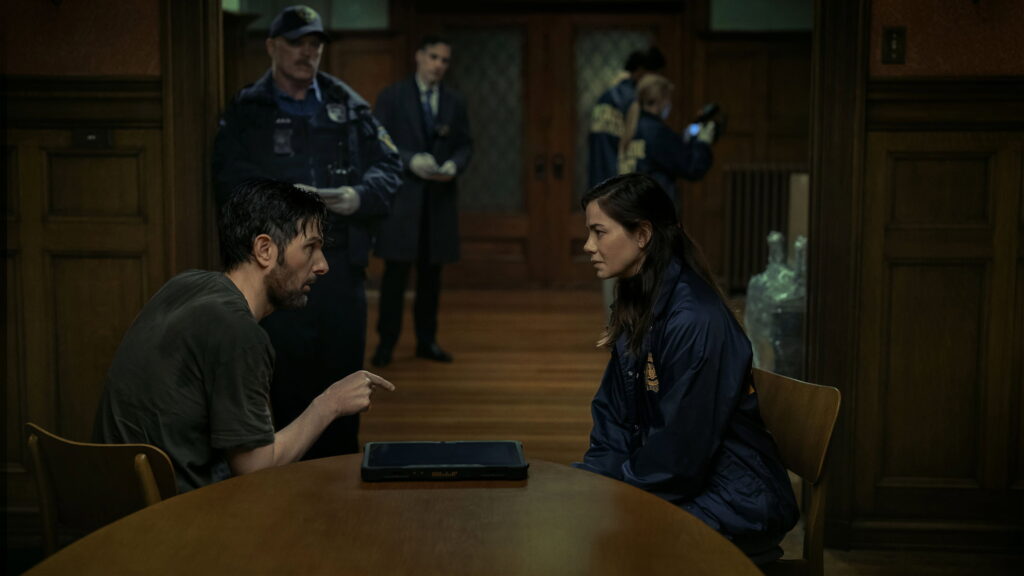
This is a shame, because the craft is not slumming it. Director James Ashcroft builds atmosphere and lands some visceral punches; he just cannot keep the story on the rails. The great cinematographer Peter Deming shoots in damp browns and teals, authentically unsettling and evocative of better crime films; you can feel his previous work with David Lynch in how patiently he sits in some moments. Colin Stetson’s unconventional score, more rhythmic than melodic, sustains dread the way his Hereditary work did. And the movie has some genuine sound design to it, especially in the recurring motif of cassette recordings the killer leaves behind, capped by the cleverly shot sequence following the delivery from its mailbox to the police office (a moment that feels especially Fincher-esque). The Whisper Man looks and sounds like a real theatrical release rather than the flat streaming slush Netflix usually ships.
The cast holds up its end well. Peter Willis (De Niro), Tom’s estranged father and the detective who put Carter away, is quiet, lived-in, unfussy; in other words, it’s still octogenarian De Niro on autopilot, but the unhurried demeanor fits a man who closed this case fifteen years ago and would rather not revisit it. Keaton gets maybe fifteen minutes and makes good use of those scenes, supplying a quiet and unsettling menace that at least demonstrates understanding of why Anthony Hopkins was so memorable as Hannibal Lecter without, of course, achieving those heights (though a solid Hopkins impersonation is nothing to sniff at). (Incidentally, this is Keaton’s first time onscreen with De Niro since Jackie Brown.) And I will always go to bat for Scott, who has proven he can slot into any mode and bring it a sarcastic ache. The weak link is Porto as the kidnapped kid, but it’s no worse than your average kid performance, I suppose.
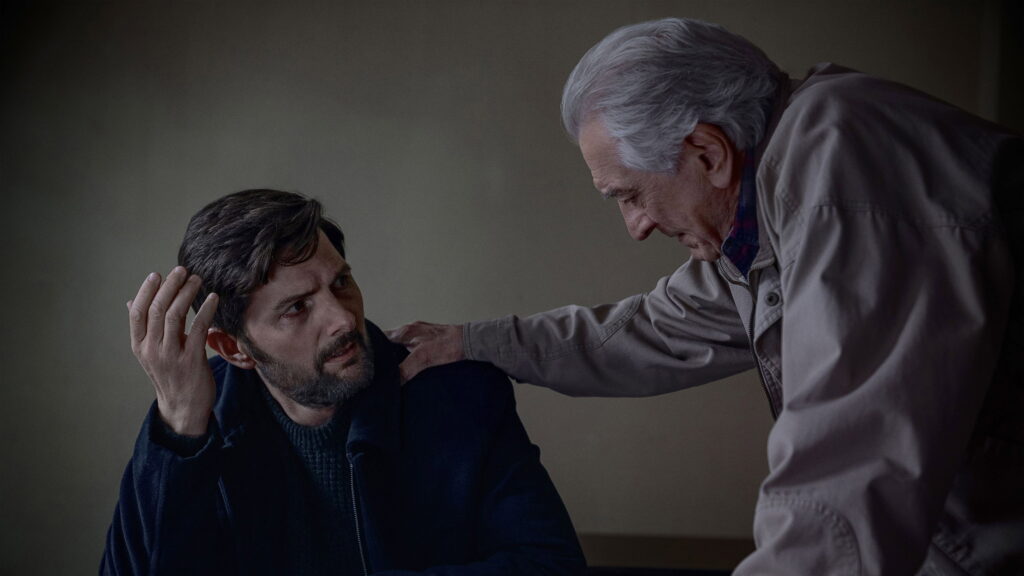
A better version of this film would find a lot of potent echoes and hooks in the story. You can squint and see the shape of a thematic spine in here: fathers and sons, guilt handed down like a family heirloom, skeletons in the closet (in one scene, literally). But The Whisper Man limply points towards at these ideas without ever taking hold of any of them.
What’s left is the kind of mid-budget crime picture made for grownups that used to turn up in theaters monthly: functional, disposable, blessedly unwilling to pander to short attention spans. I miss those movies and I want more of them. I just want them to hold together for longer than half a breath.
Is It Good?
Not Very Good (3/8)
Dan is the founder and head critic of The Goods. Follow Dan on Letterboxd. Join the Discord for updates and discussion.