

Acts 1:11
I spent most of 2013 listening to Bruce Springsteen albums, and one thing I noticed is that his earliest records are confessional and immediate even when he’s inventing stories. Those early ‘70s records always tethered to the sights and sounds of working class New Jersey where he came from. Then, around The River and Nebraska, Springsteen’s writing shifted toward Americana and literary characters. I found myself wondering for the first time what the interior life of one of my favorite artists must actually look like once the fame and money arrive. His day-to-day had drifted impossibly far from mine and from the average listener’s. The man had been doing nothing but writing, recording, and performing music since he was a teenager. What lived experiences could he possibly pull from to tell his stories? His music inevitably became more abstract and symbolic, filtered through his own struggles within the artistic experience itself.
That same conundrum applies on an even more expanded level to Steven Spielberg in the 2020s, who has been making movies nonstop since the Lyndon B. Johnson administration. It’s why I’ve come to believe that nearly every so-called “late-era” work by a great and prolific director — those ambitious, messy, heartfelt films we get from masters supposedly past their peak — is, at its core, about movies and about the act of making them. That’s all these people have done for most of their lives, sometimes for half a century or more. Of course it’s what surfaces. This is true, to varying degrees, of Robert Zemeckis’s Here, true of Francis Ford Coppola’s Megalopolis, and already true of Wes Anderson‘s recent run, though he’s still in his fifties.
Spielberg, of course, didn’t need to make a sweeping late-period statement about what cinema means to him, because he already did, point-blank, with 2022’s The Fabelmans. Unlike Here or Megalopolis, that one required no reading between the lines: It’s a barely fictionalized telling of how he started making movies and what it exposes about his world. But Spielberg has so often operated in the material of larger-than-life storytelling forces that his coming-of-age story, normally my favorite genre, never overwhelmed me or swept me away the way that I know Spielberg can do. Thus, The Fabelmans is a film I intellectually admire more than I deeply love.

This brings us to Disclosure Day, Spielberg’s spiritual alien-conspiracy thriller, harking back to at least a half dozen of his films, as far back as Firelight, his cobbled-together amateur feature from 1964. It is a movie I deeply love more than I intellectually admire. I find that Disclosure Day is, somehow, as much a statement of the man’s creative philosophy, his theory of communication and creation and wonder, as The Fabelmans. Tonally, it’s a slurry of basically all of his film, the work of someone who has grown both more suspicious of power and desperate for the salvation of a uniting, higher truth. I’ll grant that I might be over-projecting thematic heft onto a film that is, on the most basic level, a 145-minute chase sequence punctuated with ponderous exposition and philosophizing. Disclosure Day doesn’t have a single clean thesis the way some of his other works do. But hold that thought. I’ll take a stab at it before we’re through.
The story is credited to Spielberg, but the script itself is credited to David Koepp, who is responsible for a great number of movies you have seen, including several helmed by Spielberg (most memorably, Jurassic Park and another divisive alien flick). I don’t always love Koepp’s scripts, and I will admit that Disclosure Day hands him room to indulge a couple of his worst instincts. And yet he was probably the right man to turn Spielberg’s reported fifty-page story treatment across forty-plus drafts into something that provides adequate shape for Spielberg to crack his knuckles and build out a cinematic world — untidy and ungainly as the result frequently is.
The film follows two figures with complicated pasts as they criss-cross an alien coverup conspiracy: Margaret Fairchild (Emily Blunt) is a Kansas City meteorologist who, mid-broadcast, begins to channel a mathematical cipher on air. Meanwhile, Daniel Kellner (Josh O’Connor) is a reformed hacker turned goon for a shadowy outfit called Wardex. Daniel decides the world has a right to know what said outfit has been hiding, and plans to smuggle out data and tech. Noah Scanlon (Colin Firth) runs Wardex and would very much prefer that Daniel didn’t. Hugo Wakefield (Colman Domingo) is the head of Daniel’s cell of rebels, the film’s moral compass and its most patient explainer. The rest of the story is glorious, semi-coherent forward motion wrapped in a palpably sincere ache for a higher, humanity-forging truth.
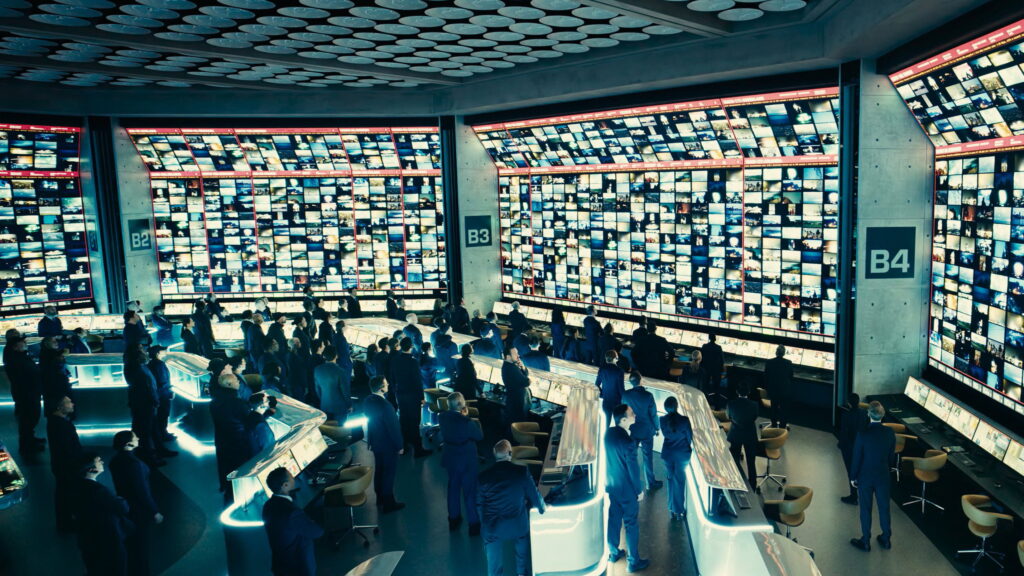
It would be easy, and not entirely unfair, to turn any review of Disclosure Day into a litany of what’s broken and dumb about it. I’ve read every negative and mixed notice I could get my hands on, and I agree with a lot of the specifics. Not all of them, but a lot.
So let’s get the litany over with. The script is relentlessly expository, forever telling instead of showing (though it goes down easier when Domingo is the one doing the telling). The villains rarely make sense, and their field agents are Stormtrooper-grade in their inability to hit, catch, or stop anyone. The plot holes are frequent and enormous — though this is a film where you can wave most of them away with the phrase “aliens did it.” (You can do the same, I suppose, for the crappy animal CGI. Perhaps their unshakable fakeness is because they’re a space-tech projection.)
I also wish I loved the performances more than I do. Blunt is by an order of magnitude the most commanding presence here, helped enormously by having the most interesting character in the picture, and her take is really good, verging on great. Through the years, I’ve occasionally found Blunt’s line readings to stiffen and go slightly synthetic when she’s working in an American accent, and that’s true again — except, here, that’s exactly what the role asks for. The film parks itself in close-up on her face for what feels like an eternity, over and over, and she earns that real estate with amazing face acting. (I will be mean-spirited for a single sentence: the long looks at her face also highlight that she has clearly had some face-stiffening cosmetic work done.) O’Connor has been steadily growing on me (I gave him my Best Supporting Actor B.A.D.S. award for Wake Up Dead Man this past year) but he never quite finds the through-line on Daniel, and I won’t be handing him any trophies this time, even if it would be unfair to call his work bad. He burrows into Spielberg’s angst with appropriate gravity. Eve Hewson, playing Daniel’s religiously-inclined girlfriend Jane, drifts toward outright dull, though most of that falls on a character who exists chiefly to exude uncertainty and to ferry the plot from one place to the next. (She does make the most of her one big set piece scene, dynamic and scary for a few minutes.)
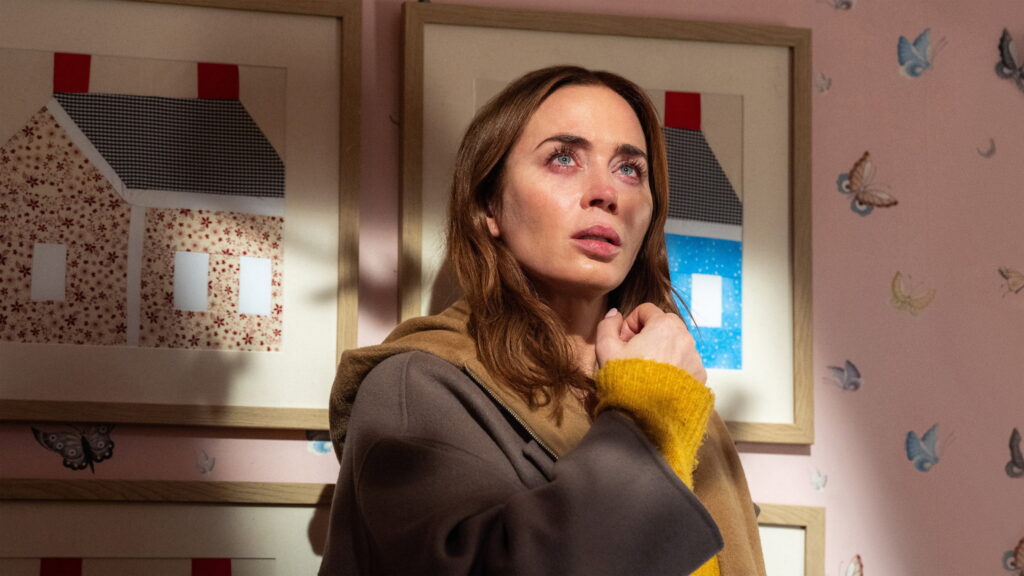
What I admire with very little reservation is the filmmaking itself. Janusz Kaminski’s camera directed by Spielberg is almost never at rest: It circles the actors, crosses axis lines it isn’t supposed to cross, and ties together visual concepts gracefully. There’s a single take gliding up on a farmhouse that’s pure silk, and a collision of car and train that I’d rank among the best action beats Spielberg has staged in many years. (It is one of few pieces of proper action spectacle, which is not a complaint in my eyes; Spielberg is making other good use of this runtime.) And John Williams, in his thirtieth (thirtieth!) collaboration with the director, is always welcome: rousing, unmistakably his, thick with French horn, and laced with eerie strings and dissonances that reach back across his career, particularly Close Encounters, as if he’s playing up the rhyme between them. Decades in, the Spielberg-Williams partnership is one of the great sustained acts of artistic communion in American movies. And yet I confess the score is a bit reserved and low energy compared to Williams’ best; perhaps that is thematic and intentional, but I will not begrudge the 94-year-old master hanging up the baton, sad though the thought makes me. (The main theme, “listen…” is magnficent, though.)
But, the cast and the rest of the crew be damned: Disclosure Day is above all a chance for Steven Spielberg to lock in and take us on a journey, physical and spiritual. He does not hold back in drowning the story with overtones, undertones, and whatever other tones you might have in mind. Disclosure Day is immersed in scripture even though it is not purely religious. Its depiction of techno-demigod aliens reads as gnostic, but the film is fascinated with many aspects and contradictions of religious experiences. The film plays like a dozen Bible stories running at once, the Tower of Babel and the serpent at the Tree of Knowledge and Noah’s ark and the stable at Bethlehem, all of it strained through Koepp’s archly sincere script and Spielberg’s flawless control of the image. Spielberg is especially focused on eyes and hands. Consider one of the movie’s best scenes, which centers on Hewson’s Jane: First, her hand, gripping a crucifix to the point of stigmata, suggesting humans suffering in the resistance of oppression and the search for truth. Second, her eyes, morphing between blue and brown as her soul struggles between possession and release.
It goes beyond the body, though: Like in Fabelmans, Spielberg is fascinated with shadow and light and, especially, reflection as vessels of life. Never before has Kaminski’s predilection for blowing out diegetic and background lights felt so thematic, especially when they ramp up in the film’s climax: It captures a divine force from above or a light at the end of the tunnel. Some of the film’s most interesting shots are characters mirrored onto each other through glass, shadows on semi-transparent objects.
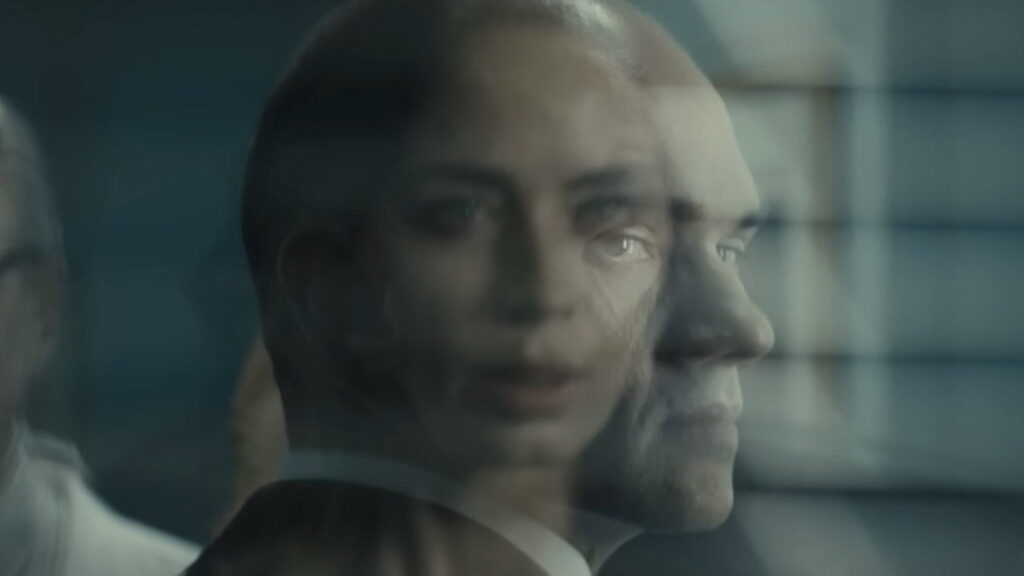
But the film’s biggest ideas and images are about communication, and subsequently control, in many forms: Margaret’s uncanny gift for reading a stranger’s entire life in a glance; a small “device” invading and overwriting a person from the inside (like our phones and tablets do to us daily); grainy footage of traumatic, unspeakable truths. The film’s third act has two halves: First an elaborate meta-movie, where the truth arrives to Margaret not from the sky but through a reconstruction of her youth on, essentially, a film set. The second half of the climax gathers all the movie’s characters, and then the entire population of earth, to share and embrace a higher truth via a newscast.
And with “the news” as such a central point, Disclosure Day also reads as a film haunted by current headlines. The textual topic is UFO conspiracies, and those are definitely on the top of Spielberg’s mind (he’s said, point blank, he believes we’ve been visited by intelligent alien life in recent interviews). But the film carries the weight of a messy, terrified mix of modern news coding, evoking mass shootings, constant violence in the Middle East, the Epstein files, the toxic dysfunction of the Federal government, the systemic erosion of traditional media, 9/11, January 6, and so much more. Spielberg makes the peculiar choice of having the aliens as complete stereotypes: “greys” like they are on the cover of a sci-fi novel, from Roswell, piloting saucers and shuttles. I think this is Spielberg (unsuccessfully) twisting a little irony in front of us, that all the tin foil crackpot stories we’ve been dismissing for decades are no stranger or less plausible than the real headlines. I still wish the aliens were a little more original or vivid.
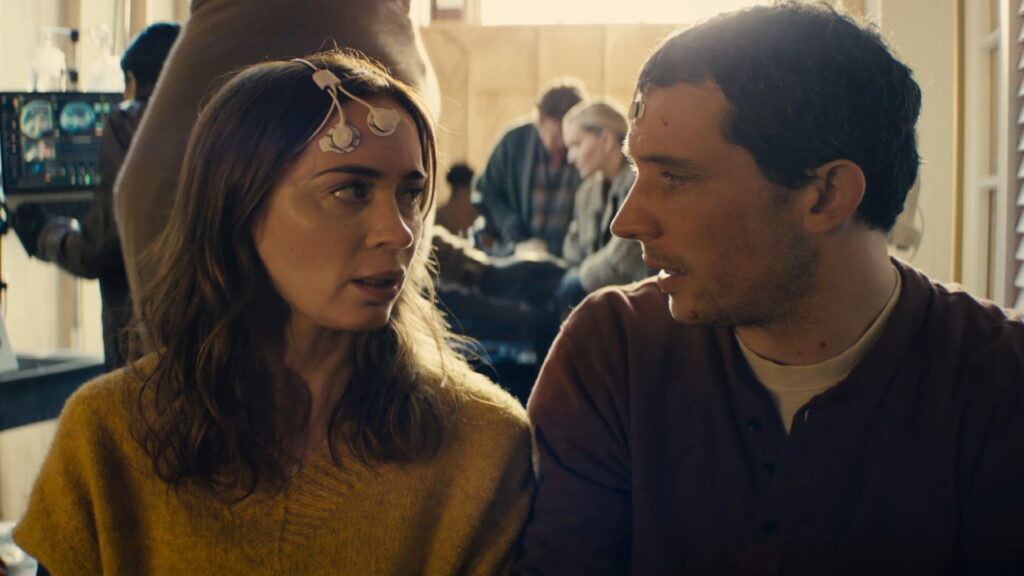
Okay, but what does it all mean? I promised I’d try to give my answer. The frustration and beauty of Disclosure Day is that it is not about one thing, but a summation of Spielberg’s thematic fascinations, so you can read it any number of ways. It’s a memorial for the end of the monoculture and its trusted institutions, like The Post, and a fairy tale of us reuniting around a single image. It is also, in many deep-seated ways, about Steven Spielberg’s parents getting divorced, and his impossible, divine fantasy of bringing them back together (or returning to the time before they split) as a way to heal his world. It’s about empathy (“listen”ing to each other) and about appreciating the beauty of a world we don’t understand nearly as much as we think we do (“listen”ing to everything else). It’s about reckoning simultaneously with blind faith and observable fact, and a vision of what the world would be like if the act of trusting both wasn’t a contradiction.
Above all, Disclosure Day is a messy film about belief and love, and that is no small or narrow thing to be about. It asks every question in the mind of Spielberg the dreamer. And, because Spielberg has known little else for 50 years, Disclosure Day, in the end, is a movie about movies, about sharing and shaping stories as the means to process all those questions he dreams: After all, you can find the answer to everything when the lights go down in a cineplex.
- Review Series: Steven Spielberg
Is It Good?
Very Good (6/8)
Dan is the founder and head critic of The Goods. Follow Dan on Letterboxd. Join the Discord for updates and discussion.
7 replies on “Disclosure Day (2026)”
“The rest of the story is glorious, semi-coherent forward motion wrapped in a palpably sincere ache for a higher, humanity-forging truth” that’s all it all is!! Not just this story
Indeed, LIFE “plays like a dozen Bible stories running at once”
I don’t know why people keep picking O’Connor. Blunt, yes.
I was glad the alien design was in keeping with the most famous iteration.
“a memorial for the end of the monoculture and its trusted institutions, like The Post, and a fairy tale of us reuniting around a single image.” Doggone that’s good. The least, last thing we can do in its wake (I think I’m hijacking that colloquialism) is to listen.
Critics are calling it the most Mitch-core movie of 2026
Acts 1:11 nod rips
I’m glad you liked this Dan and I begrudge no one their affection for it (I mean, I *liked* it).
But y’know, I have seen here and there the idea that the aliens should be more original, and if I’m to understand Spielberg just, like, believes in this crap now, then I don’t see any way around the classic styles because that’s just what it reportedly looks like. It’d be like making Air Bud and deciding he wasn’t extreme enough, so the basketball playing dog will be played by a (budget CGI) hyena.
Also, I keep saying this, but I really wish the invisible pratfallery were someplace other than the last twenty-five minutes. Marion doesn’t hit some adversary in the head with a frying pan in the last twenty-five minutes of Raiders. E.T. doesn’t get Eliot drunk in the last twenty-five minutes of E.T.
It hadn’t occurred to me until your comment that the apparent end of live animal actors in movies, with only a small handful of exceptions (like Good Boy last year) might mean the end of long line of Air Bud sequels.
But I do think you’re onto something that the movie might be compromised a little but Spielberg’s unabashed alien trutherism. Whatever he depicts needs to seem real to him, I guess.
Yeah the invisibility hijinks definitely stick out a little bit. To your comparison points, we get the famous scene of Indy short-cutting the swordfight scene with his gun, which has some of that spirit, but I don’t think that’s the last 25 minutes.
Begging Spielberg to release the “ET teaches Eliot to party” cut.
I’ll have you know they are bringing Air Bud back in January!
Crying tears of joy