
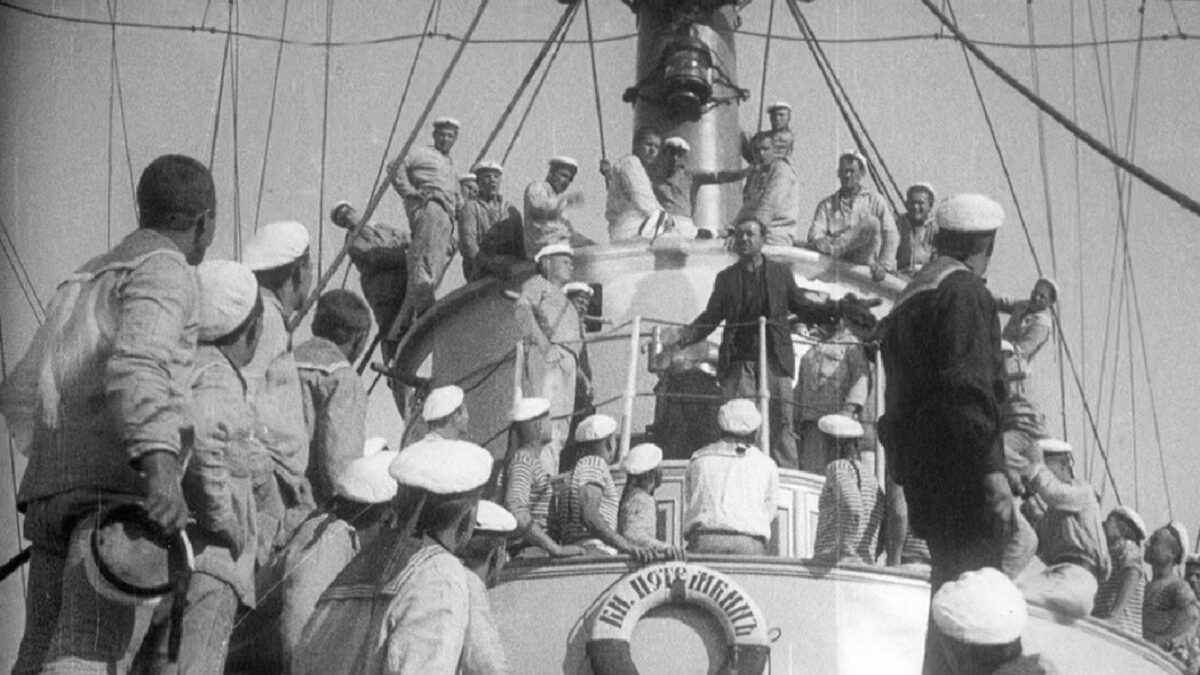
Shoulder to shoulder. The land is ours. Tomorrow is ours.
Few movies in the history of the medium have been more relegated to the “film school” shelf than Battleship Potemkin: It’s one of those movies you don’t watch for fun or personal enlightenment, but because they’re important documents of the evolution of the medium. “Soviet montage cinema”: it just sounds daunting. This is the film that gets projected in a darkened lecture hall while a TA explains the Kuleshov effect to a room of freshmen probably checking their phones (I dunno, I didn’t get a smartphone until after I graduated). It arrives pre-labeled as Important in a way that diminishes rather than elevates it. It’s a piece of old Russian silent propaganda formalism, and each one of those preceding five words makes it seem more alien and arcane. I want to be clear that I carried a lot of assumptions about the film’s academic stodginess and impenetrability into my watch, and I want to be clear that I was wrong about basically all of them.
Battleship Potemkin is a thriller. Seventy-odd minutes, no fat, built like a fuse burning toward one of those old Looney Tunes Acme bombs, then a couple scenes witnessing the boom, and finally the heroes rising from the ashes afterwards. The leap from Strike, which I found far easier to admire than to actually enjoy, is tremendous. And yet Battleship Potemkin and Strike come from the same year, the same crew, the same studio, the same political impetus. But Strike was a laboratory for Sergei Eisenstein proving out his image-making and editing technique; and Potemkin is the payoff of that experimentation.
In 1925 a Soviet state commission organized the twentieth-anniversary observances of the failed 1905 Revolution, and a big commemorative picture was part of the program. The job went to Sergei Eisenstein, a leftist artist and newly-minted filmmaker, who was twenty-seven and whose only prior feature had just come out. What he handed back is the most famous propaganda film ever made; and because we’re a century on from the political landscape that birthed it, one that plays more like Star Wars than political persuasion: Evil empires, resilient rebels; violent repression; heroic victories. That comparison is not purely rhetorical; George Lucas has cited Eisenstein as an influence, and Star Wars’ whole runtime is ripe with images and technique from silent cinema.
Eisenstein’s cinematic project was montage: the notion that the cut between two shots generates meaning present in neither one, and that a filmmaker can therefore assemble an entire language of symbols by arranging them in a specific order and rhythm. For the director and his peers, montage went beyond storytelling; they saw it as a means of revealing political and humanistic truths in their art. It is a genuinely radical idea, one of the most important insights in the history of cinematic technique, and Eisenstein wrote books on the topic that are still being translated and printed. (Unlike the film itself you can probably hold off on Eisenstein’s writing until film school.) But I’d wager that Battleship Potemkin can work on people who have never heard the word montage, people for whom Lenin is a misspelled Beatle. While the idiosyncratic approach he used is in some ways completely outdated (Soviet approach to montage is essentially incompatible with sound cinema, which was only a few years away), it’s also more modern in certain ways than other silent cinema. The fast-cut, close-up, action-packed editing of Battleship Potemkin feels texturally and viscerally closer to Michael Bay and The Fast and the Furious than, e.g., The Last Laugh‘s sinuous extended takes, even if the narrative design of the latter, character-driven and continuous where Soviet montage tends to be conceptual and episodic, feels more intuitive to modern tastes.
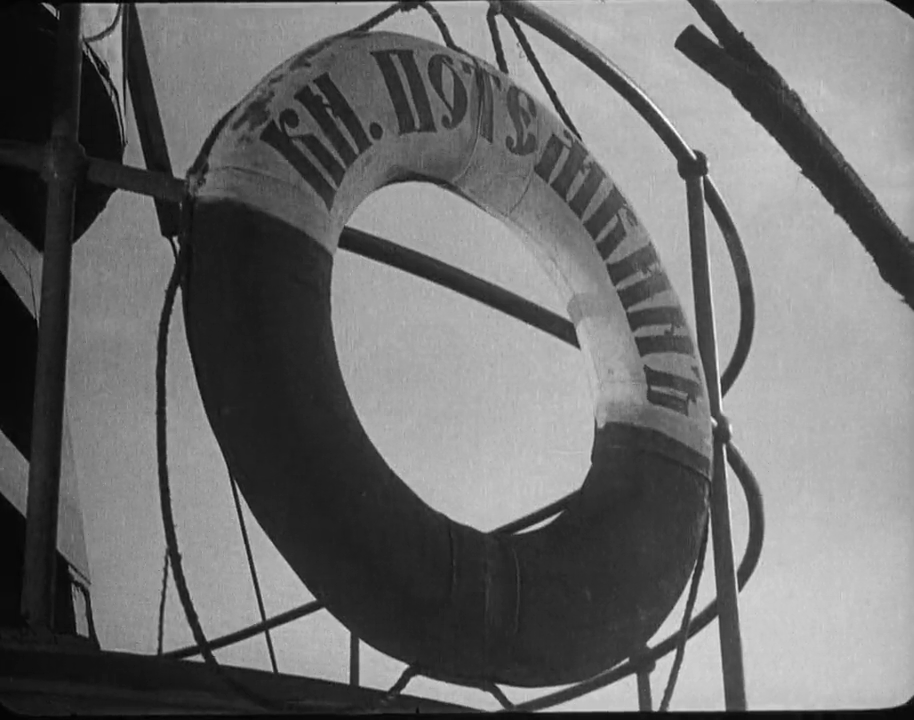
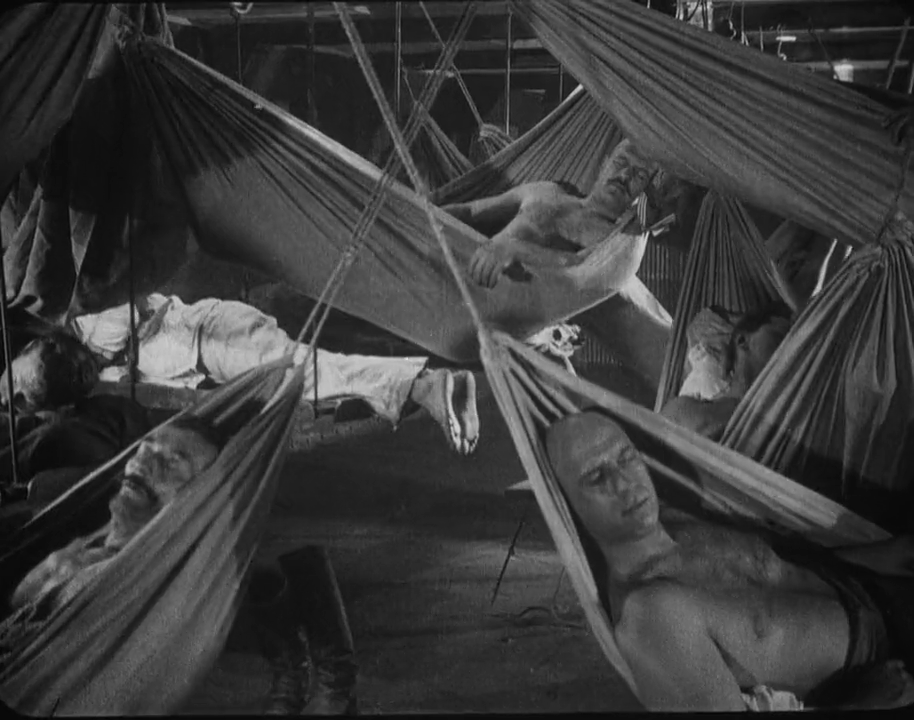
Potemkin places us in June 1905. The Russo-Japanese War is going catastrophically, unrest is fomenting into anti-imperial fervor on shore, and aboard an armored cruiser called Potemkin anchored off the seaport city of Odessa, sailors speak in the dark about the change that is coming. Vakulinchuk (Aleksandr Antonov) and some of his fellow sailors start whispering that the fleet owes its allegiance to those they really serve and protect, the people of Odessa, not the imperial officers; that a brewing revolution on land is the navy’s business too. The unrest on the boat is fed by some serious mistreatment and gaslighting by the naval officers: Below decks the crew sleeps in hammocks packed so densely the frame turns into a lattice of unified bodies (a key image both in theme and political resonance), and the officers are unsympathetic taskmasters.
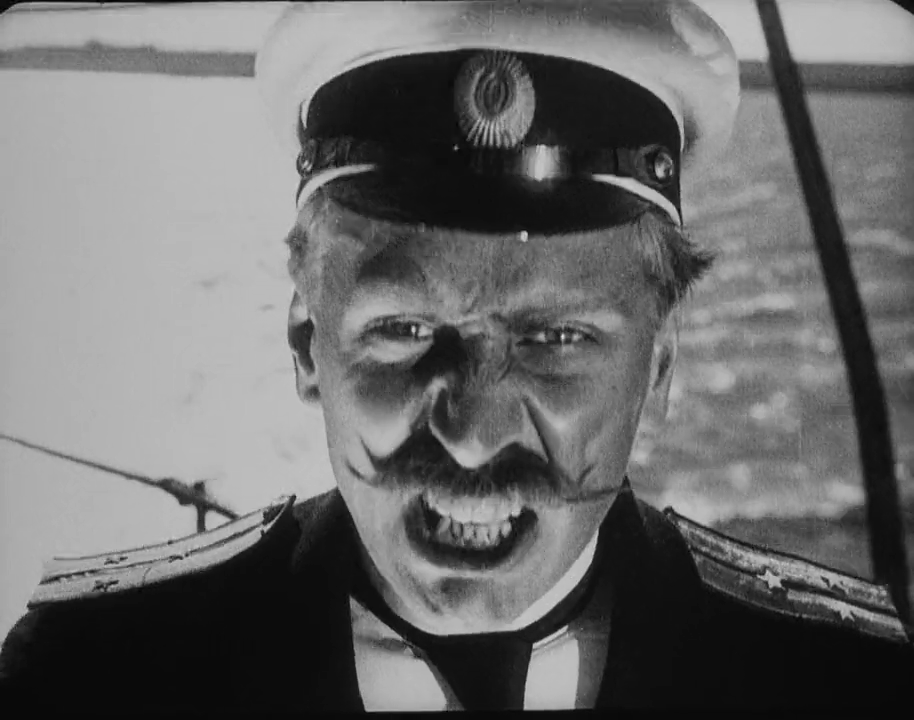
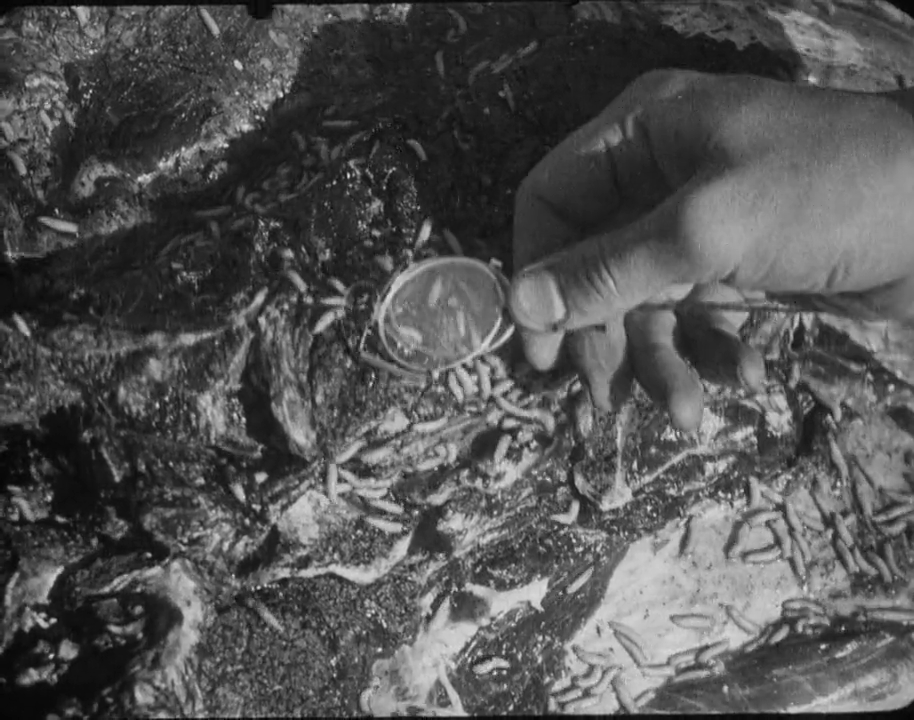
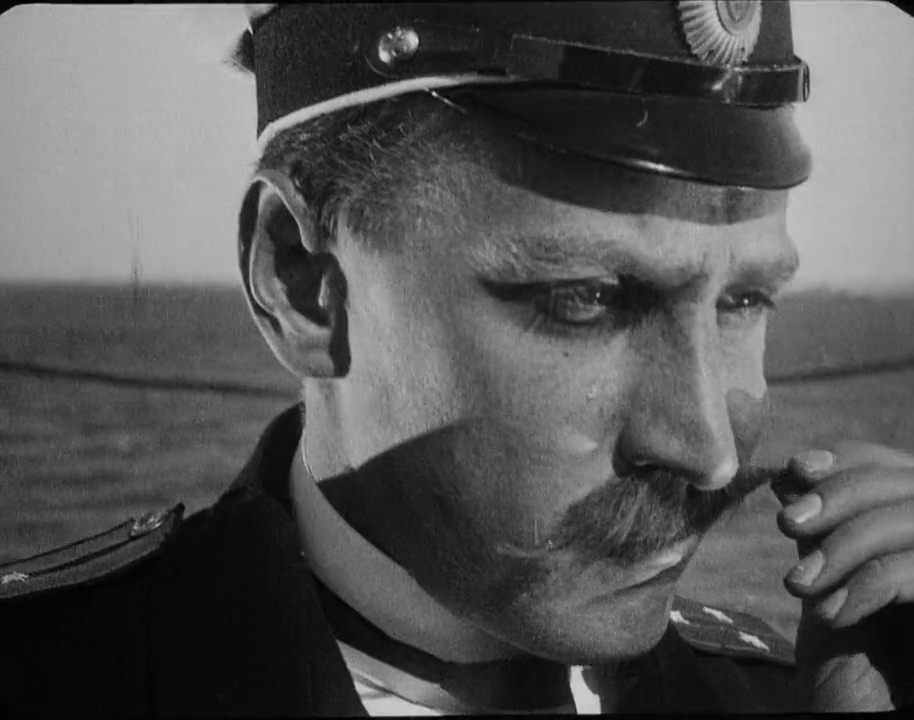
A turning point comes when the sailors’ food goes bad. Potemkin really makes you feel how nasty the meat is: The carcass hanging on deck is visibly writhing with maggots. The ship’s doctor is summoned, peers at it through his pince-nez, and pronounces the larvae harmless: just dead flies’ eggs! Wash it in brine, cook it, he yawns (though he and the other officers won’t have to eat it). It is one of the great moments of villainy in silent cinema and it’s just a man refusing to acknowledge the (literal and figurative) rot in front of him. The sailors reject the stinky borscht. The captain tries to restore order by insisting the crew accept the meager, gross soup and move on. When some of the men resist, the captain asserts his authority and has a tarpaulin thrown over the condemned. He calls up a firing squad to murder those who will not submit.
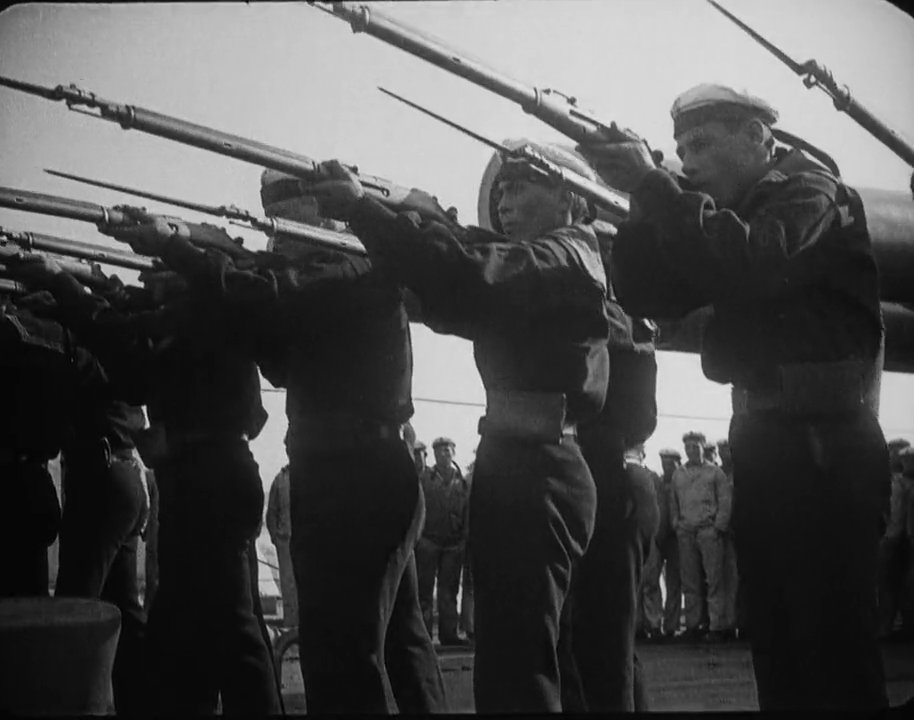
Then the rebellion begins. A brave voice from under the tarp sparks a resistance, and then a revolution: Vakulinchuk shouts at the riflemen, “Brothers! Who are you shooting at?” The trigger fingers falter. The rifles lower.
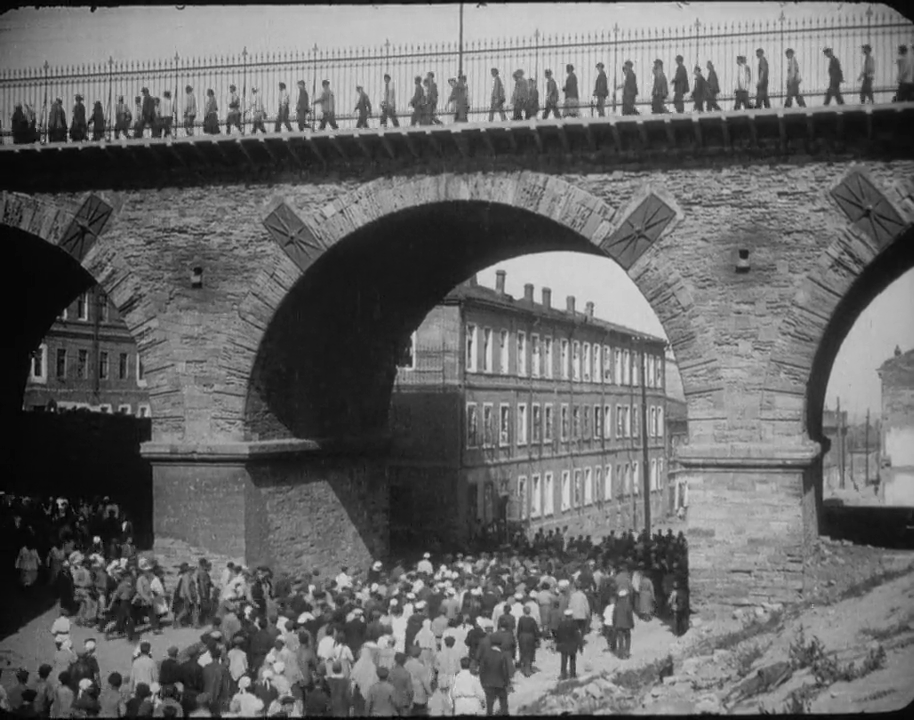
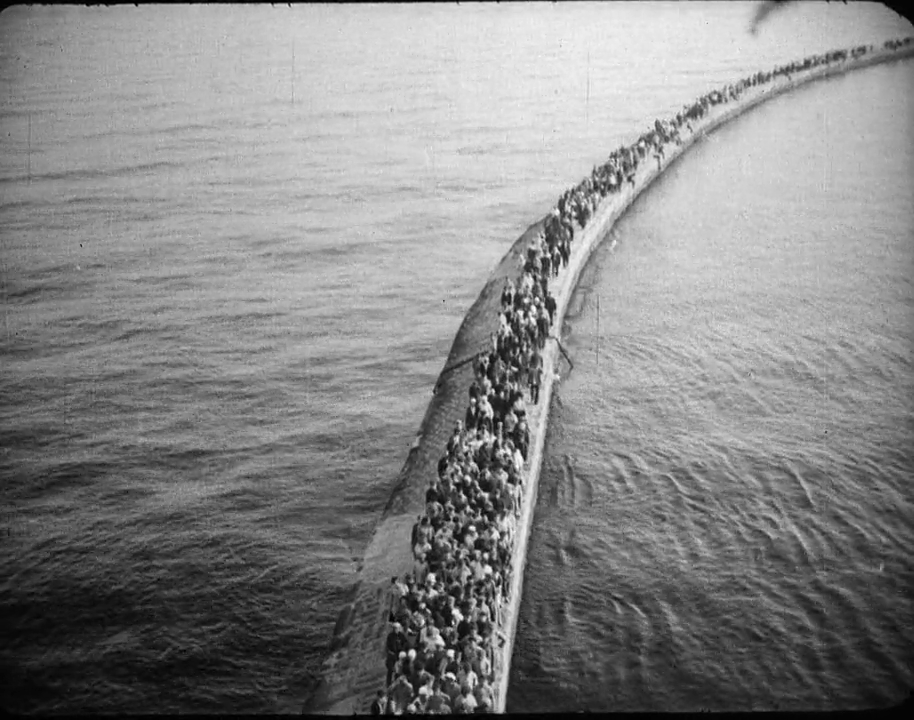
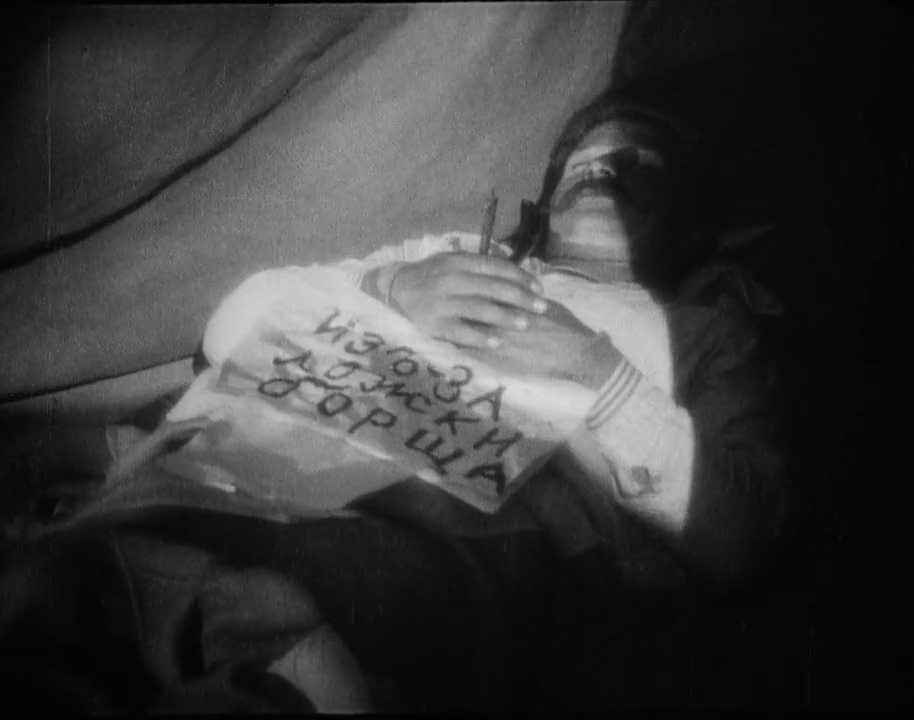
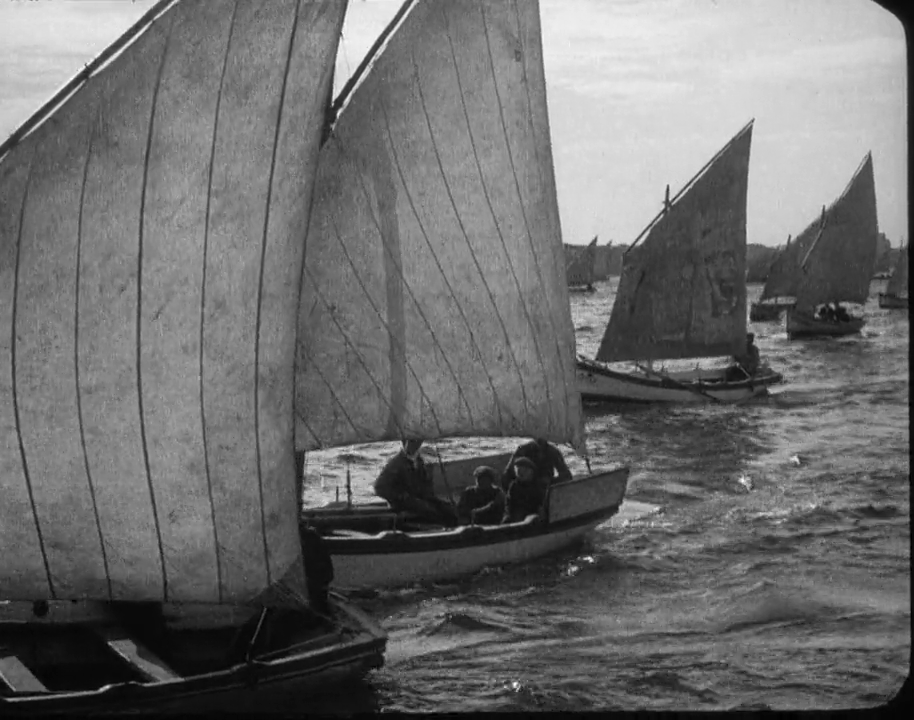
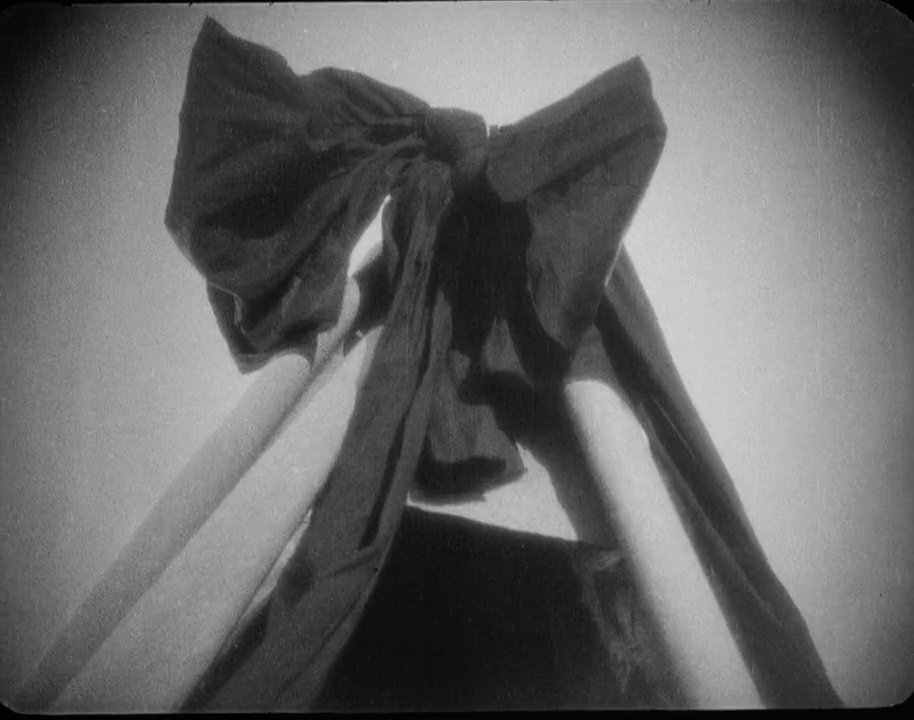
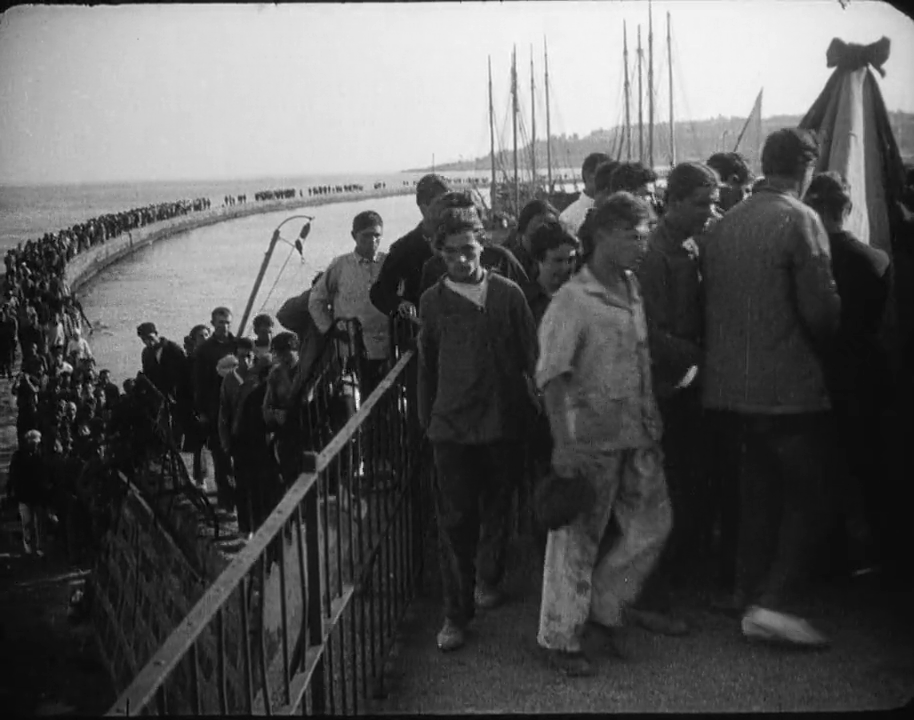
The mutiny that follows is won by the sailors, though it costs the crew its first martyr: Vakulinchuk’s body comes ashore at dawn and is laid out in a tent on the Odessa quay with a note pinned to the chest, and the citizens of Odessa arrive to pay tribute: a trickle, then a river, then an unbroken procession filing past a corpse. The revolution begins taking shape. Anger at the oppression and sympathy for resisters rises. Demonstration hardens into solidarity, with small boats streaming out of the harbor with food for the mutineers.
This stretch is the toughest in the film to get through. While the pacing of the movie is muscular overall, the gathering of the masses around the body of Vakulinchuk takes a solid chunk of that lean runtime.
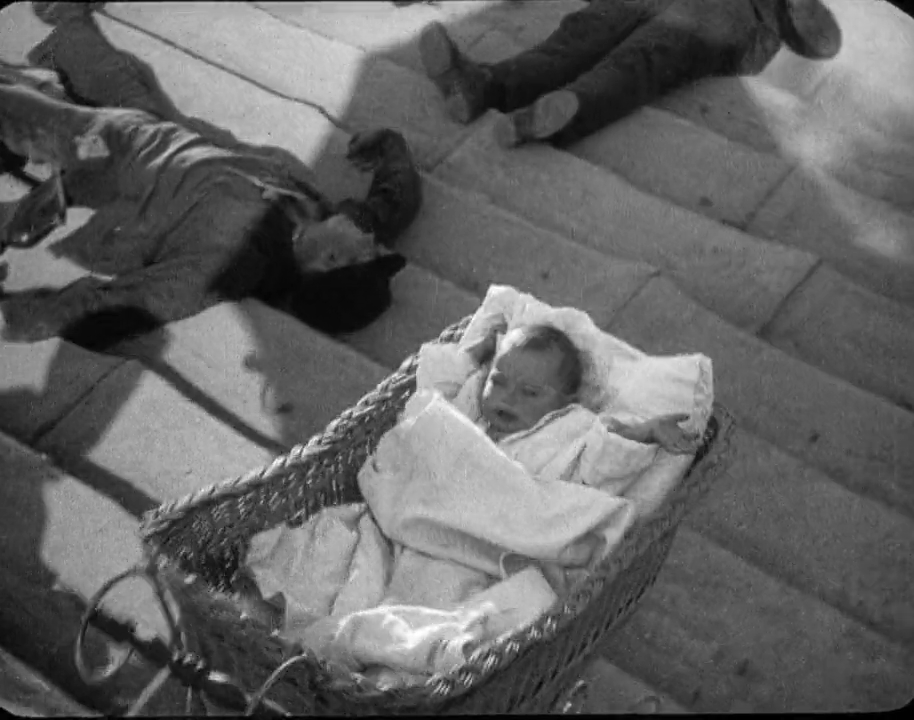
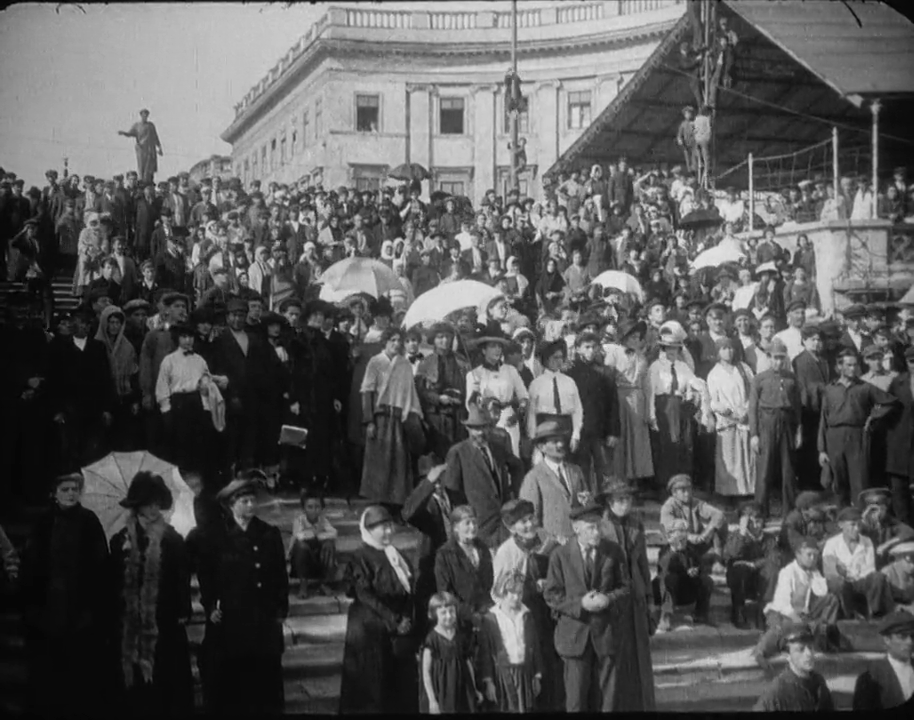
You know what happens next. You know even if you don’t think you know, as it’s one of the most influential and referenced scenes in film history. If you’ve ever seen a show or movie show an unattended baby stroller as a symbol of vulnerable innocence or a line of marching feet as a symbol for imperial severity (e.g. Dune), then you know. Some Cossack soldiers arrive and, before long, start gunning down not just protesters but every civilian in the vicinity. It’s the hallowed Odessa Steps sequence. (To bring it back to Star Wars: Alderaan is a distant flash and a single line of dialogue telling you about silenced voices. This is the reverse; drawn out, in front of our faces, all showing and no telling.)
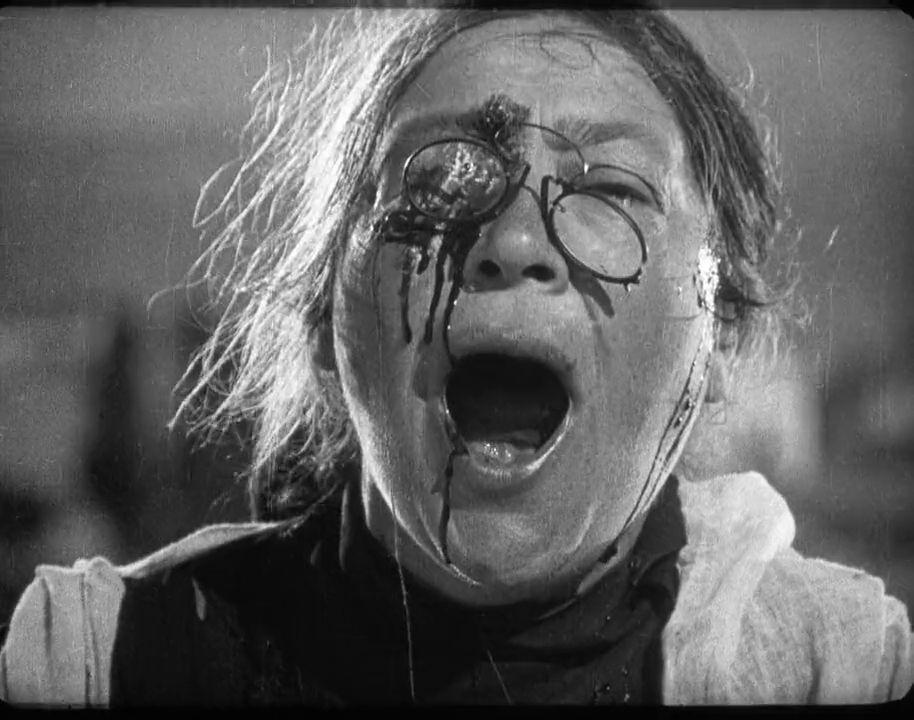
The Odessa Steps scene, in about twelve minutes, depicts mass slaughter. No bullets pierce flesh in close up, but we understand what’s happening. The camera focuses not merely on the broad scope of the suffering, but on the specific faces. The mother with the wounded, trampled boy. The woman losing her pram. The schoolteacher, pleading for mercy, a bullet shattering her pince-nez. Eisenstein learned from his biggest self-critique of Strike: he felt he was so focused in that film on capturing the collective that he forgot audiences react more to individual figures and faces. He recalibrated here and found a perfect huge-vs.-small balance, a tremendous achievement of synecdochic suggestion. Strike showed you one huge act of violent oppression, blurring into a haze; Potemkin shows you a hundred small ones and lets you assemble the massacre yourself.
(If you’ve read me awhile, you know I don’t care too much about historical fidelity in biographical or period films, so long as the story is good, but it’s still worth noting: The Odessa Steps sequence as staged did not happen. While around a thousand protestors died in Odessa during those June days, it played out much more chaotically and spread out around the city. Eisenstein invented the geometry of it, the column of soldiers descending, unannounced, on an enormous staircase in lockstep. The invention has so thoroughly overwritten the record that people visit the steps as a way to pay tribute to the 1905 revolution.)
This sequence is still frightening. Part of that is the associative editing, the way a boot and a rifle and a face and a wheel accumulate into something far worse than any of them would be individually. Part of it is the agonizing pace: Eisenstein does something to time that nobody had done before, at least to this degree, stretching an event that would have been a few seconds into several minutes of dread by cutting between simultaneous actions without making it feel like a time loop or repetition. Space expands just as time does: The steps themselves seem to grow longer the further down the soldiers step, the more the civilians panic and try to flee, like a nightmare of running down an endless hallway.
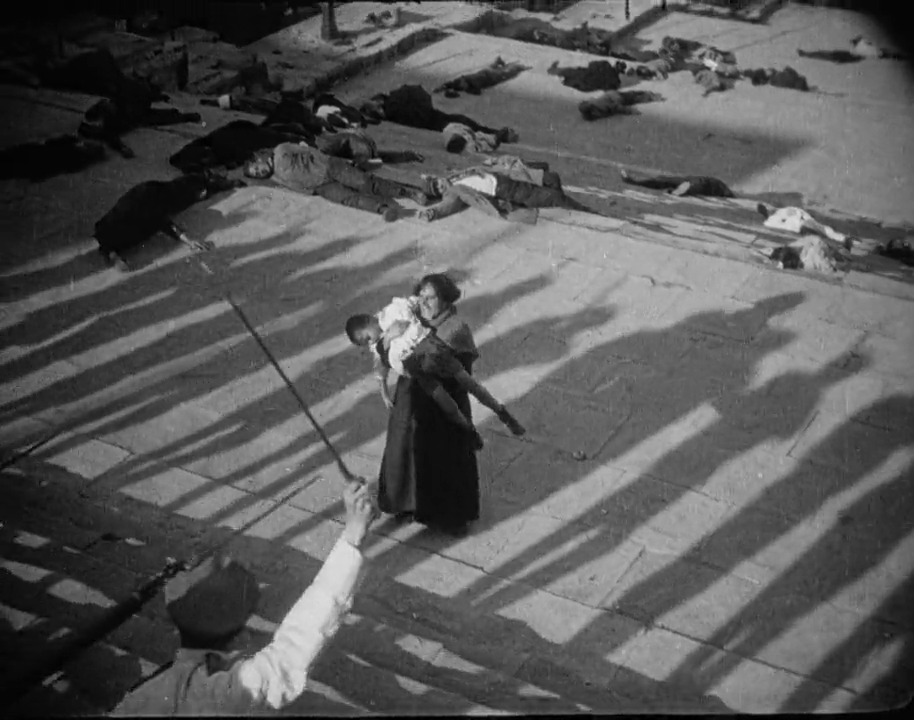
In the Odessa Steps, I see another seminal masterpiece that followed: Psycho. This is the shower scene, a single piece of violence that has exploded into galactically huge scope through sheer technique of camera and editing. Both refuse to show you the violence whole: You never get a single continuous act, only fragments assaulting you, arriving faster than you can assemble them, and the mosaic effect of them is what makes it so overpowering.
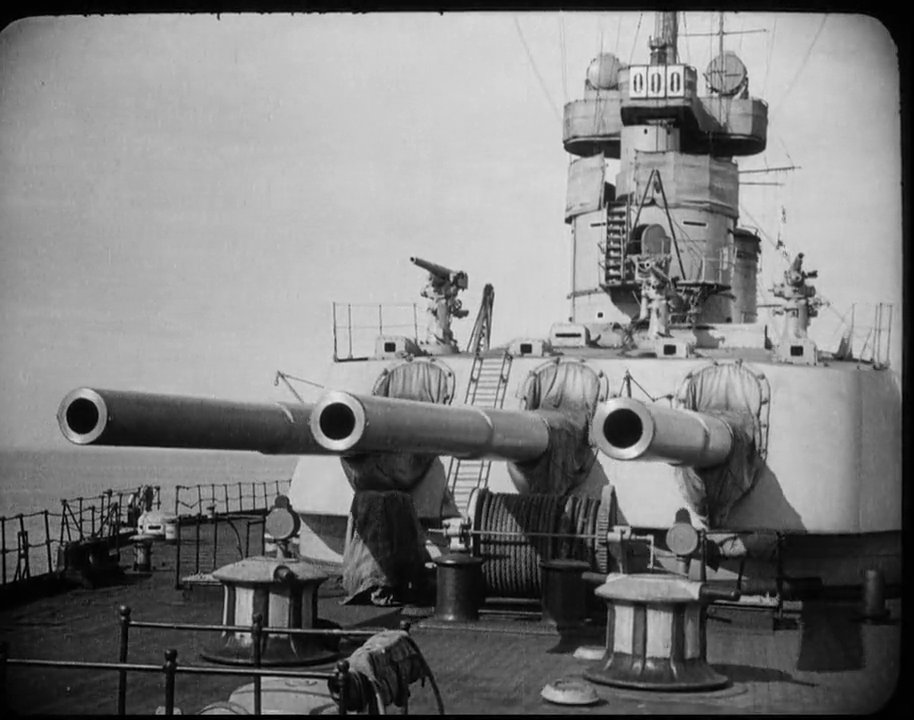
The final leg of the story is the rebels’ counterpunch to Odessa, and it’s where Battleship Potemkin’s political and symbolic ambitions take strongest hold. It’s here where you might genuinely accuse the film of letting its ideas take priority of legibility of incident. The mutineers turn the ship’s guns on the Odessa Theatre, where the tsarist generals have set up shop, the oppressed firing back with the empire’s own artillery, which is about as satisfying a piece of political wish fulfillment as anything this side of Inglourious Basterds. Then word arrives that an admiral’s squadron has been dispatched from deeper waters to approach Potemkin and sink it.
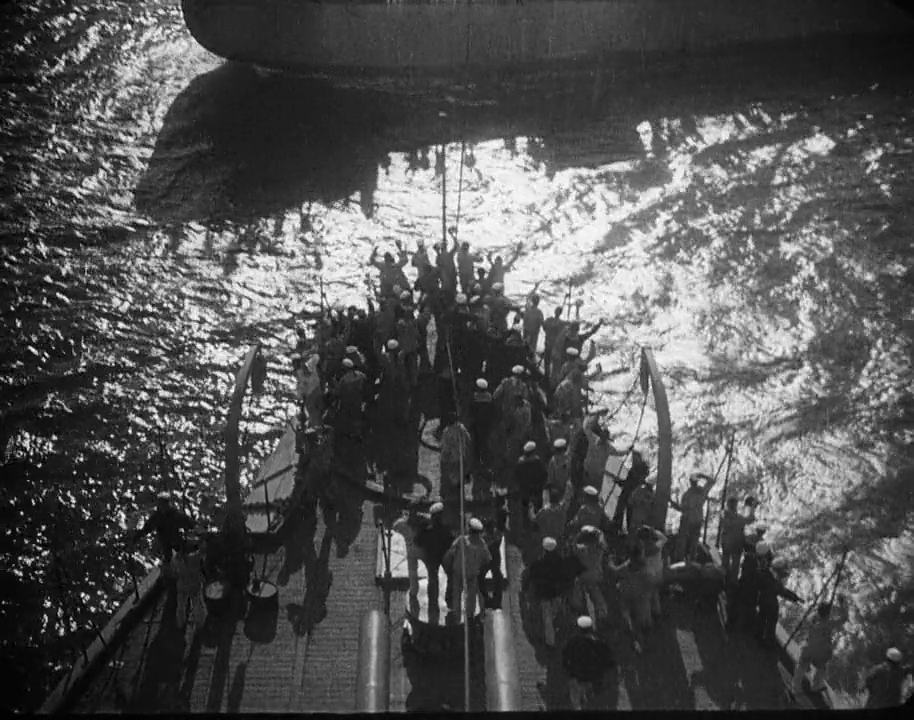
The crew debates and decides not to run in cowardice, nor to hide in fear, but to sail out and meet it. Night falls; the engine room becomes kinetic abstraction, pistons and rods hammering like a heart under load; men stand at the guns in the dark. At dawn the empire’s machines of war appear on the horizon and begin to close, and the Potemkin — alone, outnumbered, outgunned — runs up a signal to the fleet sent to destroy it: Join us. It’s a bold, cinematic gambit.
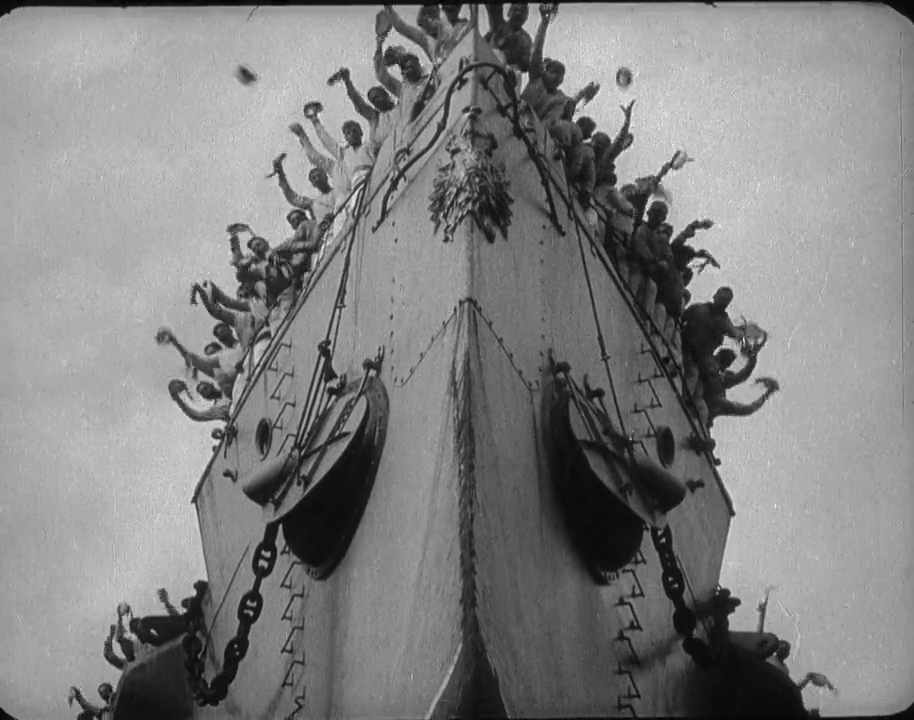
At the decisive moment, the rebels’ only weapons are their bleeding hearts and human spirits. And, against all odds, it works. The Potemkin gets let through the armada peacefully, the rebels able to spread their word. It is a triumphant, though slightly misleading, ending: In reality the Russian revolution of 1905 was only a partial success that ultimately fizzled, and the bigger political transformation occurred in 1917; but Battleship Potemkin makes the case, dramaturgically, that this moment opened the gates for the change to come, and many historians agree.
It’s during the surge back against the tsarists that the film produces its most enduring image outside of the steps: three stone lions, one asleep, one waking, one up on its feet, cut together in rapid succession so that a single animal appears to rear back and roar. Nothing in any of the three shots moves. The lion does not exist as a living creature. The motion is manufactured entirely in the gaps between the frames, which makes it the purest demonstration of the idea Eisenstein spent his early career writing about: the meaning lives in neither shot, but in the suggested connection therein. You can really feel the idea here: the trio of lions suggests the unbreakable stone itself rising like a phoenix, the inanimate world getting up off the ground because the injustice was loud enough to wake it. If you only ever watch five seconds of Soviet montage, watch the lions. It explains the entire movement’s techniques and politics in one go.
What makes Battleship Potemkin work as timeless storytelling is that it manages to invoke both the collective and the individual. We spend the first half roused by specific men in a specific hell: the rotten meat, the packed hammocks, the officers’ casual contempt, a day-to-day so squalid that mutiny is the reasonable path out. Then Vakulinchuk, the center of the mutiny, perishes about halfway in, and so Eisenstein pulls the Marion Crane move thirty-five years early, and it works a very similar trick: The death doesn’t end our connection to the story; rather it transfers it to a new perspective. Our empathy gets handed off: to the citizens filing past his body on the quay, to the crowd murdered on the steps, and eventually to the crews of the very ships sent to kill the people he stood for.
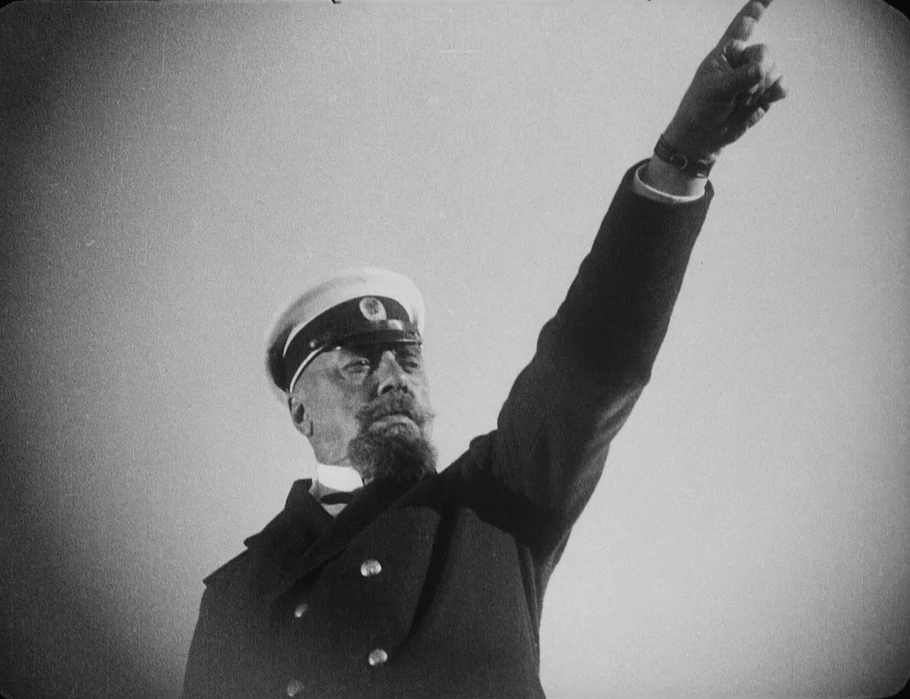
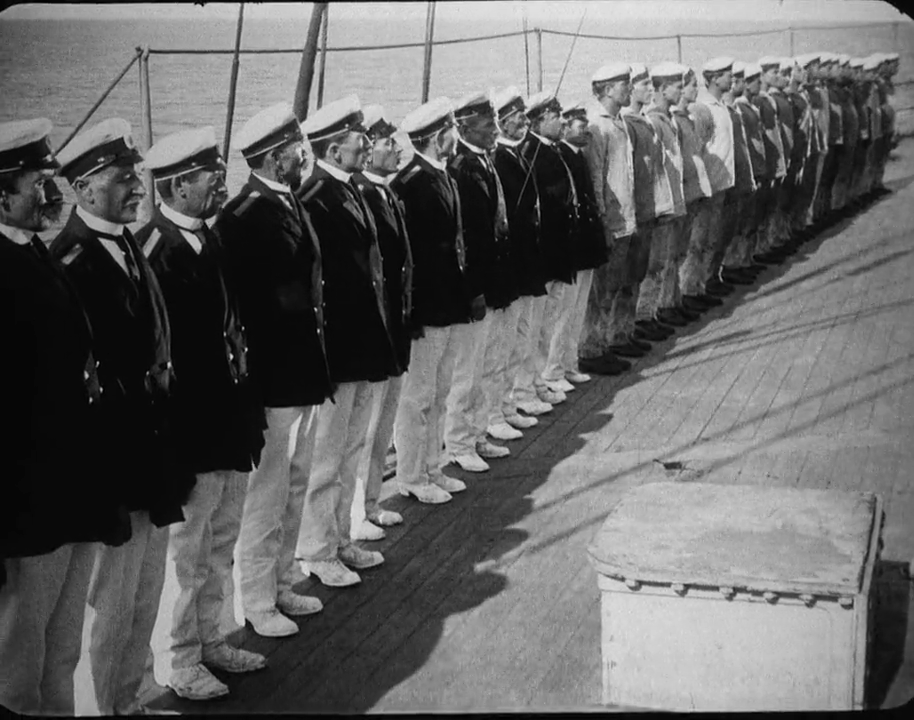
The imagery in this film is practically unparalleled in cinema for sheer stirring power. Eisenstein composes shapes and forms within the frame wonderfully, and gets terrific power out of contrast: Expressive human faces set against the cold geometry of war machines. A roaring open sea cut against the stone and dust of city streets. Men in uniform looking each other in the eye and visibly considering, in real time, whether they are cogs of an empire or human beings with agency and obligations to the people standing next to them. The cumulative impact of all these shots in a row is staggering. It’s like the iconography of a Renaissance fresco cycle telling a biblical story as you walk through a cathedral. For everything else he was — theorist, propagandist, leftist — Eisenstein was one of the finest makers of images the medium has ever produced.
Critical reverence for Battleship Potemkin developed almost immediately. Even as a shameless piece of propaganda, it earned near-universal accolades. (I say “near-universal” because it was banned in some places for its political content.) It is one of the very few films to have appeared on every single Sight and Sound critics’ poll, 1952 through 2022, and in the first seven of those eight polls it landed in the top fifteen in all of cinema history. At the legendary Expo 58 in Brussels — the world’s first international film poll of its kind, with critics from across the world anointing a canon while sitting together in a room — the attendees named Battleship Potemkin the greatest film ever made, full stop. Its position has slipped to #58 in the most recent Sight and Sound poll, but chiefly because all of silent cinema has slipped. Sadly, the pre-talkie form is losing its grip on the critical canon. Even so, Potemkin ranks among just nine silent films to place in the top 100 of the 2022 poll. For a state-commissioned picture made by a twenty-seven-year-old a full century ago, that’s a staggering run.
For all that Battleship Potemkin is a film whose modern relevance is burdened by the idiosyncrasies of its extremely specific time and place, it is also the beneficiary of them: Only at that moment, with that particular intellectual and political fervor, created by such a visionary hitting his full powers all at once, could something this passionate and this formally daring cohere into something eternal.
The film includes a detail that feels, to me, emblematic of Eisenstein’s magic artistic touch. Twice in the film, Potemkin raises its banner. And the film, black and white for most of its duration, suddenly explodes with a tiny, deeply moving, splash of color: Eisenstein had the flag hand-painted red, frame by frame: First, when the Potemkin enters Odessa’s ports to unite the city’s people; and second, when it sails outward in the film’s closing moments, to spread the solidarity across Russia and across the world. (Steven Spielberg would steal this visual trick of two moments of red among a black and white film for a much more somber purpose in Schindler’s List.) It’s the bold touch of an artist telling his story with total command. A century has passed, and the film is still out there with its guns run out and its flag up, asking us to join.
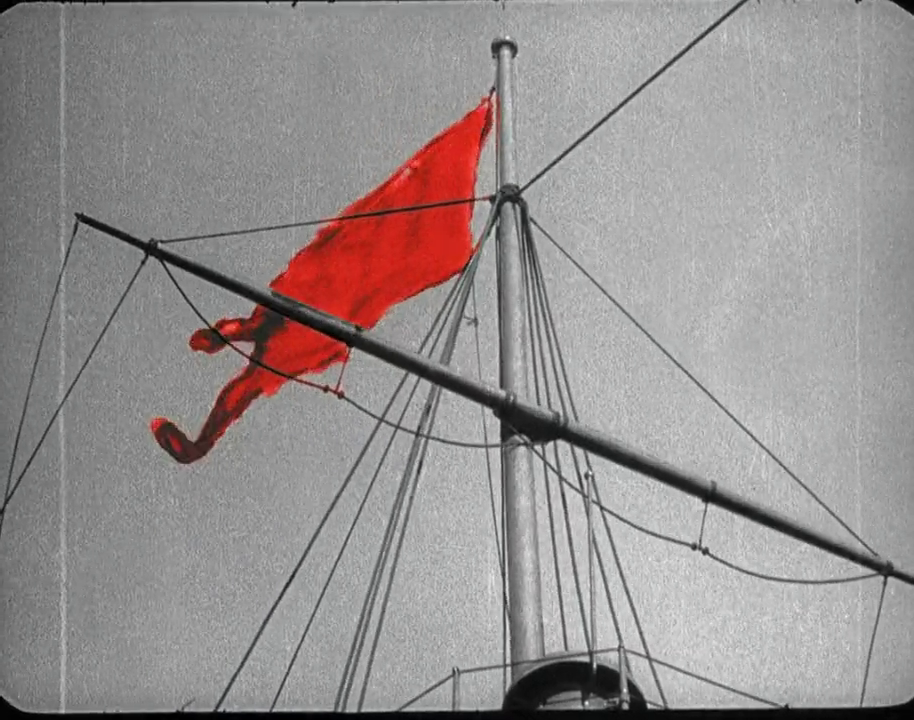
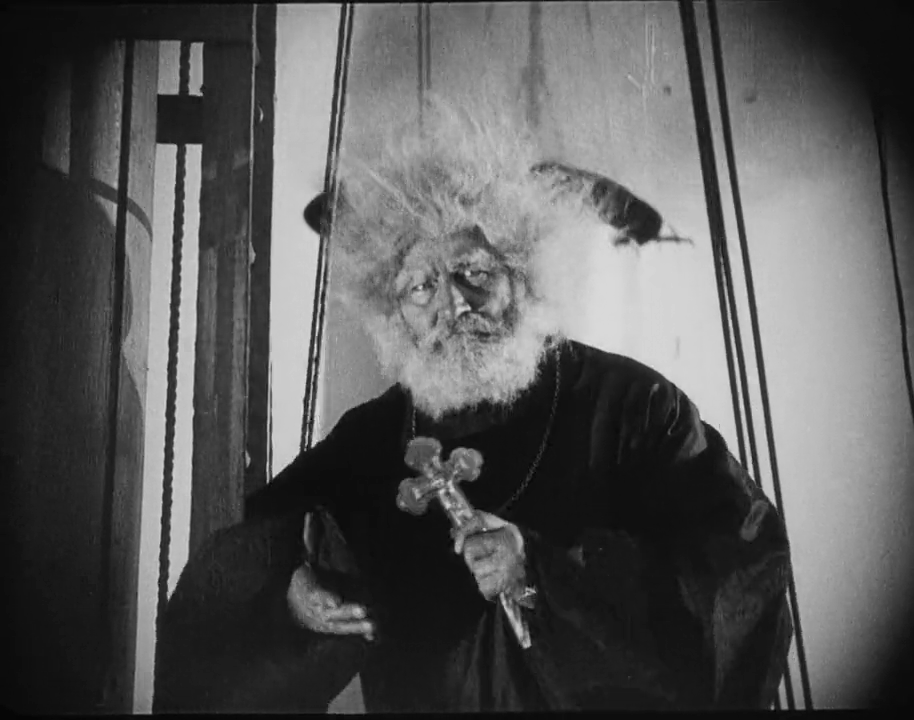
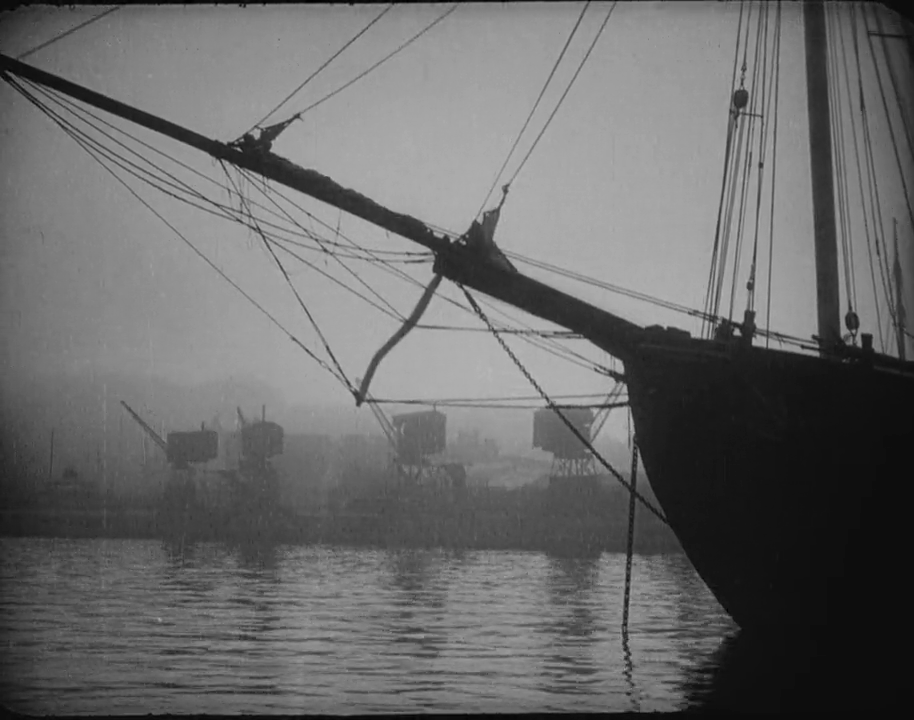
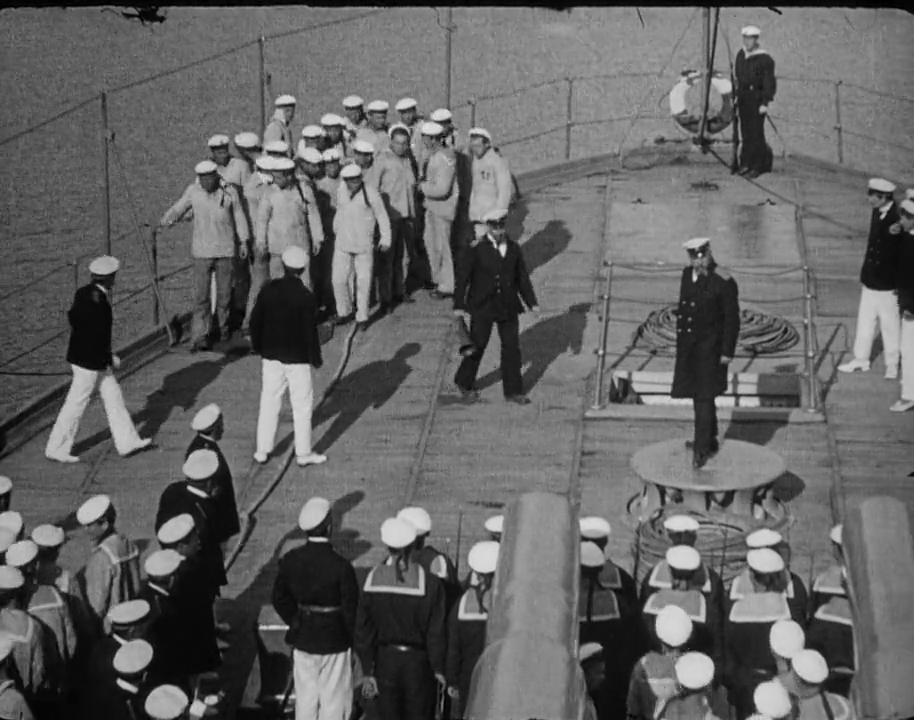
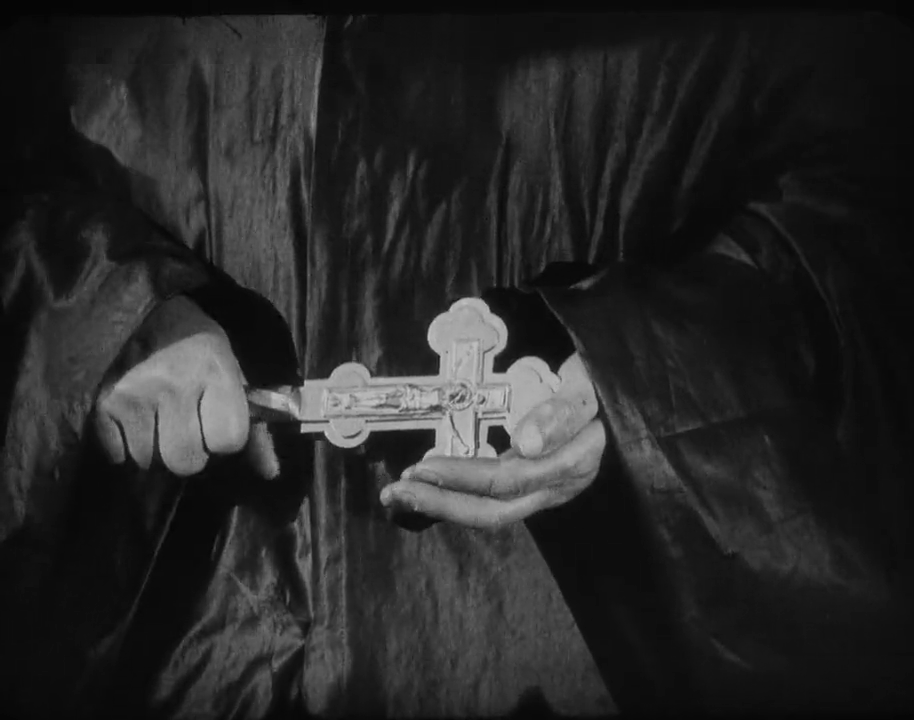
A few more images from the film:
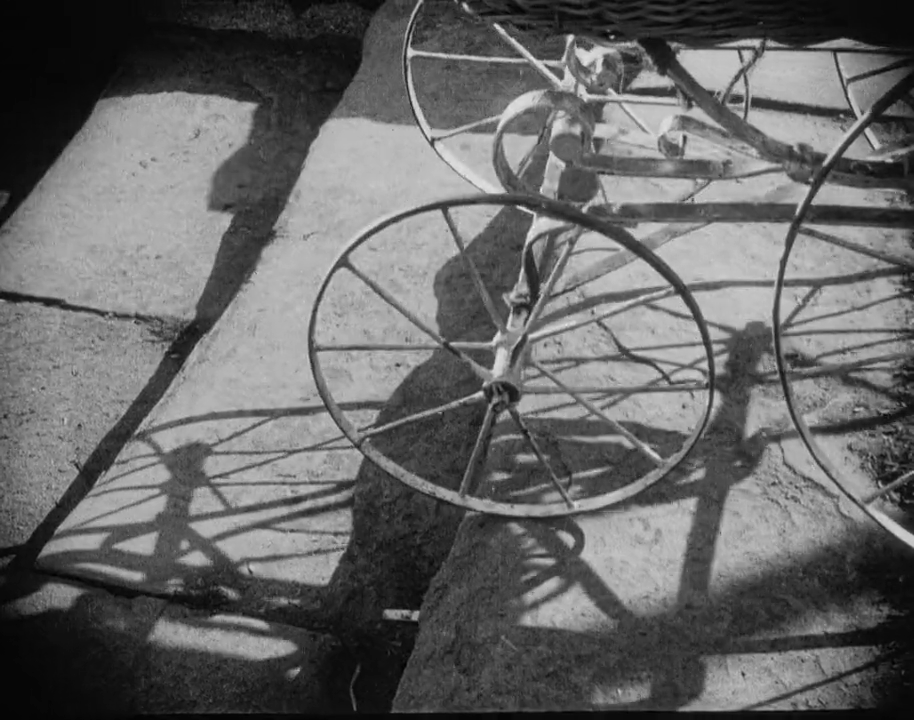
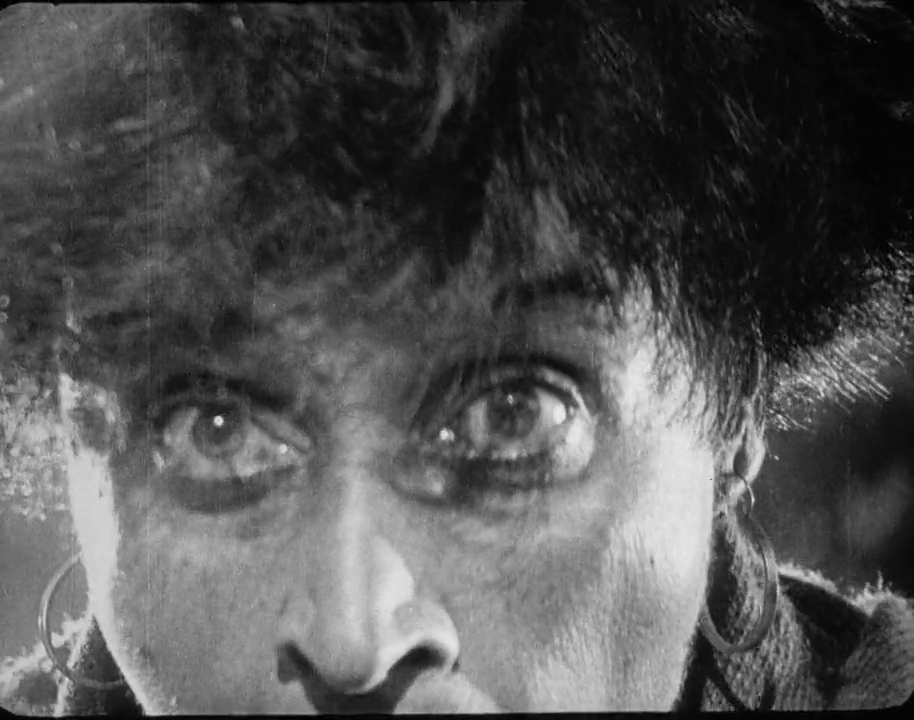
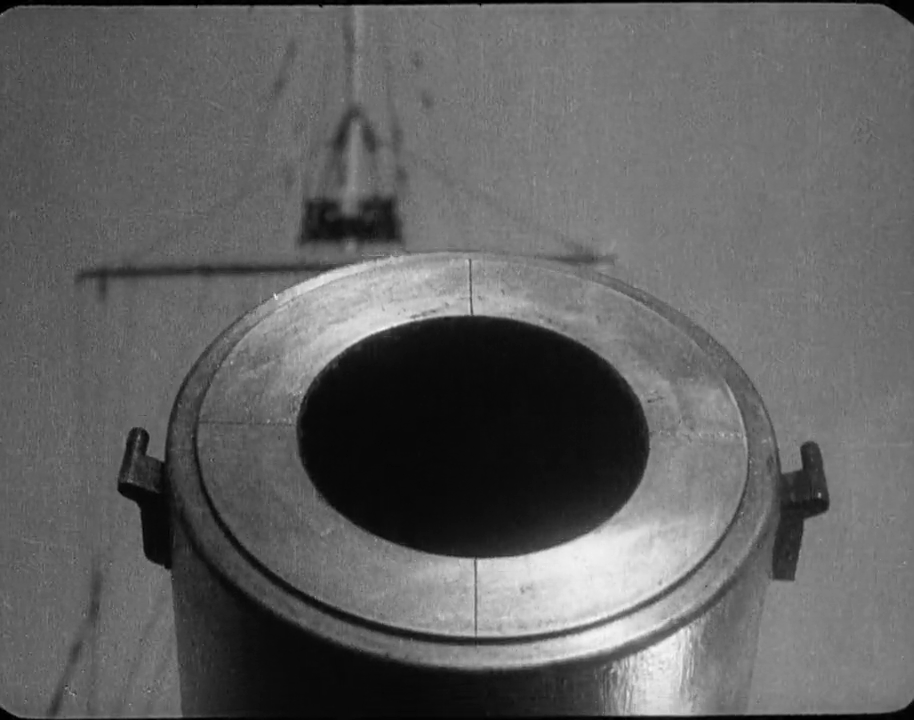
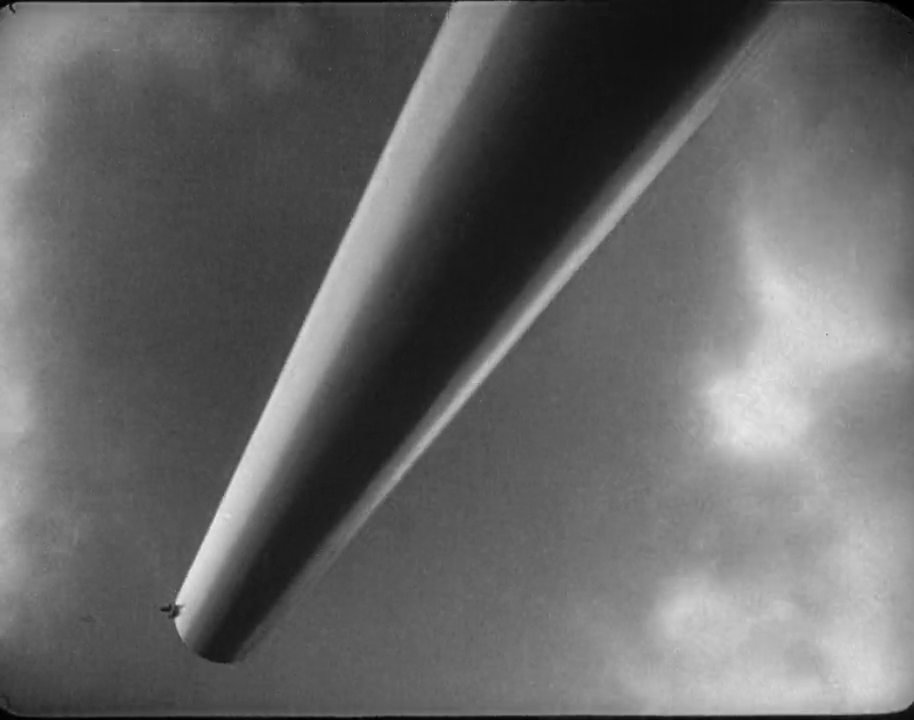
Is It Good?
Exceptionally Good (7/8)
A few words on "Is It Good?" ratings for early cinema.
Dan is the founder and head critic of The Goods. Follow Dan on Letterboxd. Join the Discord for updates and discussion.
5 replies on “Battleship Potemkin (1925)”
Good write-up! I don’t know if I ever really thought of it as work or if I was insistent that I could hack it or what, but I don’t think it was actually the first time I’d watched it when I got to go see it at a young age (twelve, thirteen?) with a live orchestra. (In Greenville, South Carolina; have some doubts that would happen today.)
And then with the challenge completed, I’ve still never watched another Eisenstein film or possibly even any other Russian films of the 20s-40s? 🙁 Should correct that sometime, should give this particularly another watch.
If I’m reading your comment correctly, you saw Potemkin multiple times before leaving middle school, which is impressive youthful film geekery. I’ve shown my kids multiple silent comedies but no dramas. I’m not sure exactly what I’d start with (some of them are just too long). But I aspire to have them be able to tell all their peers where all the cinematic images and tropes in whatever blockbuster they’re into originally came from. (Then again, how many of them are even seeing the original Star Wars? Maybe if it’s on D+.)
That live orchestra screening sounds so cool. Venues occasionally have similar events scheduled in the suburbs of DC where I live but never silent films that I’ve ever seen on a calendar. Never been to one. One aspect of film history I am not clear on is how accurate the scores we see attached to modern silent film restorations are. I have to imagine it was pretty inconsistent until the sound was embedded in the film itself.
I guess this is me
“One aspect of film history I am not clear on is how accurate the scores we see attached to modern silent film restorations are.”
My understanding is that the vast majority of the time they’re complete inventions, sometimes very obviously so (unless John Carpenter is a time traveler), sometimes covertly with composers attempting to ape silent film accompaniment (I probably tend to prefer them not pretending), sometimes because the original photoplay music is actually lost, sometimes for the hell of it.
I just learned this minute that in Brazil’s silent theaters they’d use live singers (I think this would be great fun) and in Japan they used a live narrator (I think the novelty would wear off real quick).
Re: Potemkin I’m genuinely unsure if I’d seen it before I saw the orchestral screening. Seems like I wouldn’t have wanted to commit to it if I didn’t already like it. Anyway, it had always been presented to me as “the fun one.”
Re: old irrelevant culture for the youth curricula, I have no idea where I’d go to from comedies either. The non-comedies that would immediately occur to me are arguably too grown-up for little kids (I mean, leaving aside the PG-13 content and gotta-have-a-conversation problematism, they’d be as likely to find a Garbo movie boring without an adult frame of reference), or they’re too long (Thief of Bagdad, for instance; Black Pirate is real nice and short, though, and *technically* in color). I feel like I might try to ease a kid into it via stuff from the 30s and 40s, which are similarly old-timey in storytelling, but do have dialogue to command one’s attention.
Yeah that explanation makes sense (regarding silent scores). Some of the film history books I’ve read talk about how places would hire piano players to just play whatever, so even if a score had been written, there was no guarantee it would be played. I’d imagine some of the glitzier theaters closer to the industry (LA/NY) had better presentation, but it’s not surprising that standards would be inconsistent. Heck, I’ve read it was not unusual for theaters to make their own edits of reels sent into them in the early days.
We’ve watched some 30s and 40s for sure, but it’s actually be a bit tougher than I predicted. My younger kid especially has a hard time with the fact that the dialog isn’t as crisp and they have the transatlantic accent; like she had a hard time keeping up with Bringing Up Baby, though she ultimately liked it quite a bit. Silents you can just read the title cards. (They both loved Robin Hood and It’s a Wonderful Life, though. The Disneys are a given.)
I haven’t actually seen The Black Pirate! But a Fairbanks swashbuckler is not a bad idea.